Business Courses Online: Boost Your Career with Top NZ Programs
Explore business courses online to compare NZ providers, qualify, and enroll with confidence.
Staring at a crossroads in your career, wondering how you can get ahead without putting the rest of your life on hold? This is exactly where business courses online come in. They’ve quickly become the go-to for busy Kiwis who want practical, job-ready skills that actually fit around work, family, and everything else life throws at you.
Why Online Business Courses Are a Game Changer
The old way of upskilling often meant sacrificing your evenings, weekends, or even pausing your career entirely. That model just doesn’t work for most people anymore. Today, learning isn’t confined to a classroom. For anyone looking to add a new skill set to their CV, switch industries, or climb the corporate ladder, the freedom of online study is a massive advantage.
Think about it. Instead of a stressful commute to a campus after a long day, you’re logging into your course from the comfort of your couch. Forget rigid lecture times—you learn when it suits you. That could be during your lunch break, on a Sunday morning, or after the kids have gone to bed. This isn’t the future of education; it’s the reality right now.
The Shift to Flexible, Career-Focused Learning
This move towards accessible education isn't just a fleeting trend. It's a fundamental change in how we approach professional growth. The modern workplace demands that we keep learning, and online courses are perfectly built to meet that need. They’re designed with real-world application in mind, focusing on skills you can use at your job tomorrow, not just theories from a dusty textbook.
You can see this preference for digital learning in the numbers, too. In 2025, New Zealand's online learning market is expected to pull in US$38.12 million in revenue, which shows just how many Kiwis are looking for flexible ways to study. This growth is all about people wanting to stay competitive and keep their skills sharp throughout their careers.
The real power of online learning is its ability to remove barriers. It makes quality education available to anyone, no matter where they live or what their schedule looks like, so they can chase their ambitions.
What This Means for You
For a busy New Zealander, this opens up a world of opportunity. You no longer have to choose between earning a living and earning a new set of skills. Online business courses are structured to support your journey, not get in the way of it. To dig deeper into how this works, it’s worth checking out the benefits of online employee training for modern businesses for a broader perspective.
So, what are the biggest wins?
- Study on Your Terms: You decide when and where to learn, fitting your education neatly around your life.
- Practical Skill Development: The courses focus on job-ready skills that Kiwi employers are actually looking for.
- Diverse Specialisations: Whether you're after foundational admin skills or specialised marketing know-how, there’s a path for you.
If you’re thinking this could be the right move, our guide covering the essentials of online study in NZ is a great next step to get you started with confidence.
Choosing Your Online Business Course
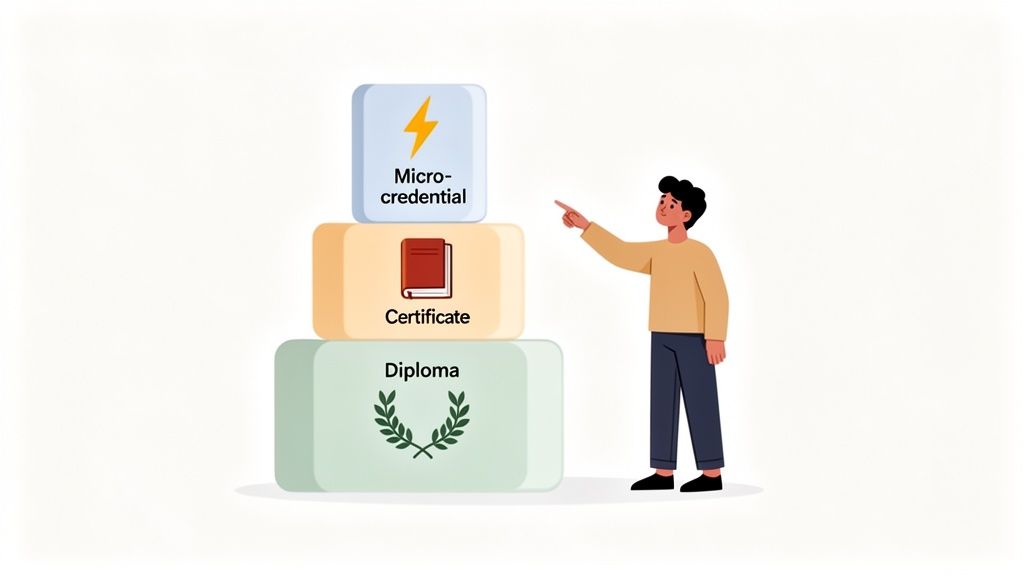
When you first start looking at business courses online, the sheer number of options can feel a bit much. You’ll come across terms like certificates, diplomas, and micro-credentials, and it’s not always obvious which one is the right fit for your career goals.
Let's break them down. Think of your career as a house you're building. Each course is a different tool or blueprint that helps you construct the next part. Some are for quick, specific jobs, while others are for laying major foundations.
Micro-credentials: The Precision Tools
Micro-credentials are the precision tools in your kit. These are short, sharp courses laser-focused on teaching you one specific, in-demand skill—and fast. Think of it like learning how to use a new piece of software or run a social media ad campaign. It’s a targeted skill that makes you more capable right away.
They're perfect if you're already in a role but need to add a new skill to stay ahead. For example, a marketing assistant might take a micro-credential in Google Analytics to better track campaigns, or an office administrator could learn new project management software to improve workflow.
- Who they suit: Professionals looking to upskill quickly without the commitment of a long course.
- What you learn: A single, practical skill like data analysis with a specific tool or digital marketing essentials.
- Expected outcome: You can apply the new skill immediately in your current job, often boosting your performance and value to the team.
Certificates: The Solid Foundation
If micro-credentials are single tools, a Certificate is like the blueprint for a specific room. It gives you a well-rounded introduction to a field, covering all the core knowledge you need to start a new career or step into a different role with confidence.
A Certificate in Business Administration, for instance, won't just teach you one task. It provides a solid grounding in office procedures, communication skills, and essential software—everything you need for a range of entry-level admin roles. It's your ticket into a new professional area.
A certificate is designed to make you job-ready. It focuses on the practical, day-to-day skills that employers look for when hiring for foundational roles, making it a powerful first step in a new direction.
Diplomas: The Master Blueprint
A Diploma is the master blueprint for a major part of your career house, like the entire structural framework. These courses offer a deep dive into a subject, preparing you for leadership, specialised, or senior-level positions. They go far beyond the basics, getting into strategy, management, and advanced concepts.
Someone studying a Diploma in Leadership and Management, for example, is aiming to become a team leader or manager. They’ll learn not just how to do tasks, but how to lead teams, manage complex projects, and make strategic decisions. This level of study signals a serious commitment to mastering a field.
You can explore how these courses build on each other by looking into different online business pathways.
Matching Your Goals to the Right Course
Not sure which path is for you? This quick comparison should help you see which online business course lines up best with your career ambitions.
Ultimately, the right choice comes down to where you are now and where you want to be. Whether you need a quick skill boost or a comprehensive new blueprint for your career, there’s an online business course that fits.
Diving into Popular Business Specialisations
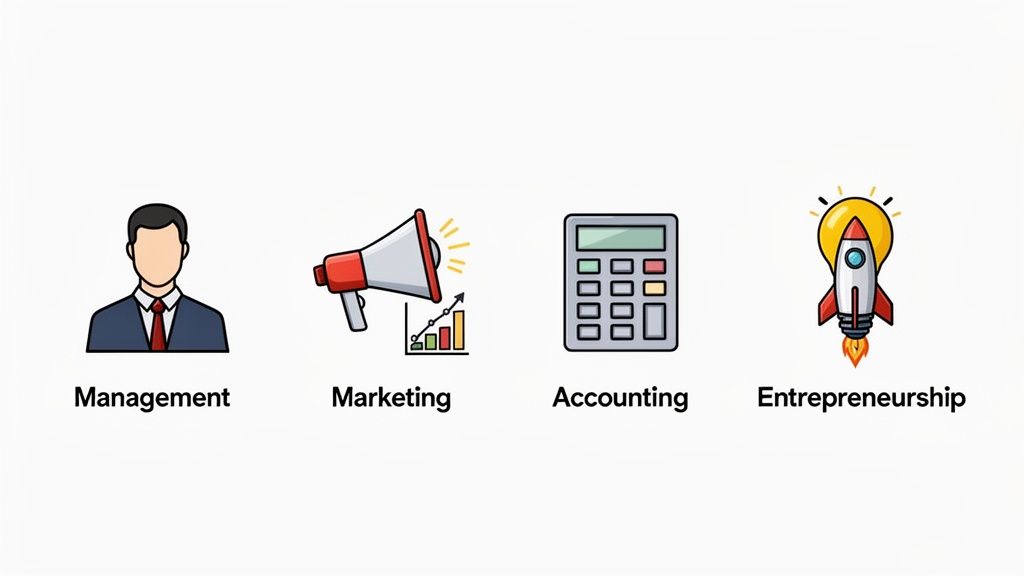
Once you’ve got a handle on the course level that fits you best, it’s time for the fun part: picking your focus. This is more than just choosing a subject; it’s about sketching out what your future career could look like. The best business courses online are built around specific, in-demand skills that lead directly to real jobs.
Think of it like being on a construction site. The builder, the plumber, and the electrician all work together to build a house, but each has a completely unique and essential job to do. It’s the same in business. A manager, a marketer, and an accountant all play their part in a company’s success, but what they do day-to-day is worlds apart.
Let’s explore some of the most popular specialisations. We’ll connect the skills you learn with the real-world jobs they set you up for, helping you picture not just what you’ll be studying, but who you could become.
Management and Leadership
Do you find yourself naturally organising things or getting people excited about a shared goal? If that sounds like you, then a specialisation in management and leadership could be a perfect fit. These courses are designed for people who want to guide teams, keep projects on track, and make important decisions.
You’ll learn both the art and the science behind great leadership, covering everything from communication and conflict resolution to strategic planning and managing performance. It’s about much more than just being "the boss." It’s about knowing how to inspire your team, delegate tasks smartly, and build a positive, productive work environment.
A course in this area could set you up for roles like:
- Team Leader: You’ll be on the ground, responsible for the day-to-day supervision and motivation of a small team to help them hit their targets.
- Project Coordinator: You’ll be the organiser, juggling project timelines, resources, and people to make sure everything runs smoothly from start to finish.
- Operations Manager: You'll oversee how a whole department works, focusing on making things more efficient and keeping quality high.
Marketing and Digital Marketing
Are you a creative at heart who’s fascinated by what makes people tick? Marketing might be right up your alley. In today’s world, that almost always means digital marketing. This specialisation is for the storytellers and the big-picture thinkers who want to build brands, connect with customers, and drive business growth.
These courses teach you how to create and run powerful campaigns. You'll get stuck into social media management, search engine optimisation (SEO), content creation, and email marketing. The whole point is to use digital tools to get the right message to the right people at the right time.
A marketer’s job is to build a bridge between a company and its customers. A digital marketer does this using the powerful tools of the internet, turning online engagement into real business results.
With these skills, you could step into roles such as:
- Digital Marketing Coordinator: You’ll help put online marketing campaigns into action across different channels, from social media to email.
- Social Media Manager: You’ll become the voice of a brand online, creating content, chatting with followers, and growing a community.
- Content Creator: You’ll produce blog posts, videos, and other cool stuff designed to grab the attention of a target audience.
Accounting and Bookkeeping
If you have a way with numbers, a sharp eye for detail, and a love for keeping things organised, then a specialisation in accounting and bookkeeping is a brilliant choice. These skills are the absolute backbone of every successful business, ensuring everything is financially sound and above board.
You'll learn how to manage accounts, process payroll, put together financial statements, and use essential accounting software like Xero or MYOB. This path is less about abstract theory and all about the practical, hands-on skills needed to keep a company's finances in perfect shape. It's a highly respected and stable career path. If you want to dive deeper, you can find more information about specific business career pathways and what they entail.
Potential job outcomes include:
- Accounts Administrator: You'll be handling daily financial tasks like sending invoices, paying bills, and checking that the numbers add up.
- Bookkeeper: You will be responsible for keeping a company's entire set of financial records accurate and up-to-date.
- Payroll Officer: You'll make sure everyone in the company gets paid correctly and on time, managing all the tax and leave details.
How To Vet Online Course Providers
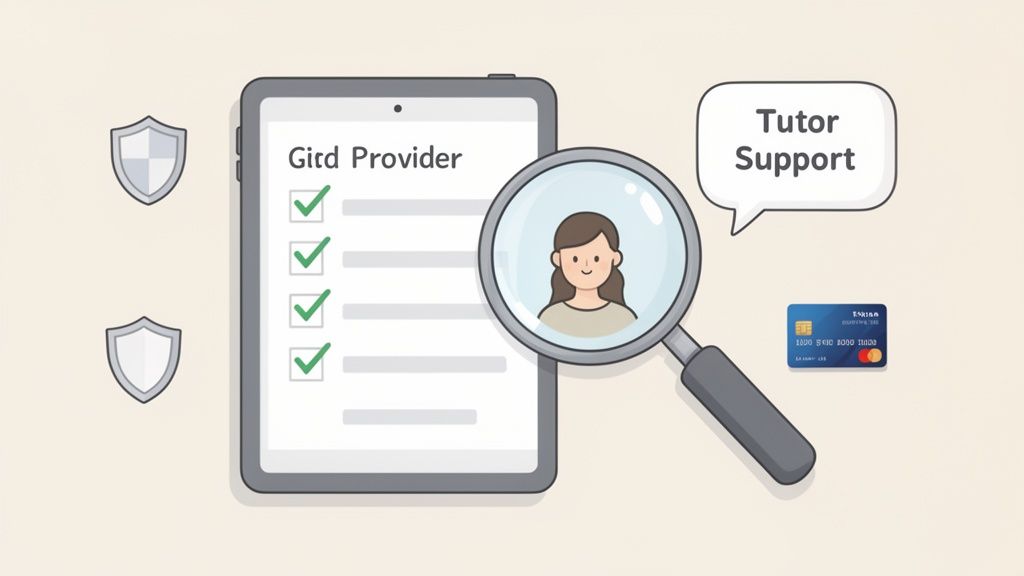
Choosing what you want to study is only half the battle. The other half—and arguably just as important—is picking the right learning partner to guide you through your business courses online. Not all providers are created equal, and finding one you can trust is the key to making your investment of time and money worthwhile.
This isn’t about finding a traditional university experience. It’s about partnering with a modern provider who gets the reality of life for busy Kiwis. You need a partner who delivers on their promises of flexibility, genuine support, and skills you can actually use in the real world.
Course Delivery And Flexibility
The very first thing you need to check is flexibility. Is the course truly 100% online and self-paced? For anyone juggling a job, family, or other commitments, this is an absolute deal-breaker.
Look for providers that put you in the driver’s seat of your own learning schedule. You should be able to log in and study whenever it works for you, without being chained to fixed lecture times or deadlines that just don't fit into your life.
A truly flexible course respects your time. It’s built around your schedule, not the other way around, empowering you to learn at a pace that feels comfortable and sustainable.
Quality Of Tutor And Student Support
Studying online shouldn't mean studying alone. Think of support as your safety net—it’s there to catch you when you’re stuck on a tricky concept or just need a motivational boost. Before you even think about enrolling, get a clear picture of the support you’ll actually receive.
Here are a few essential questions to ask:
- Who are the tutors? Are they genuine industry experts with recent, practical experience in the New Zealand market?
- How do you reach them? Is help available through email, phone, or a dedicated student portal?
- What’s the turnaround time? Will you get a response within 24 hours, or will you be left hanging for days?
A good provider will have a dedicated team ready to help with everything from complex assignments to tech glitches, making sure you never feel isolated.
Course Materials And Relevance
The course content itself has to be current, engaging, and directly relevant to the New Zealand business scene. Outdated material is a massive red flag. You need to know that what you're learning was created by people who actually understand the local market.
It’s also smart to understand what platforms different providers use, as this affects your whole learning experience. Checking out the best online course platforms can give you a feel for what quality looks like. Ultimately, the materials should be designed for practical application, giving you skills you can start using on the job right away.
Transparency In Cost And Payment Options
Finally, any provider worth your time will be completely upfront about costs. The price you see should be the price you pay, with no hidden fees for materials or assessments popping up later. Look for providers that offer flexible payment plans, like interest-free options, which make education much more accessible.
In New Zealand, flexible online business courses typically cost between NZD 2,000 and NZD 4,000 for a 6–12 month part-time programme. This affordability is a major reason why online education is booming, with the market expected to hit US$400.58 million in New Zealand. This kind of transparency means you can plan your finances properly, without any nasty surprises.
Your Step-By-Step Enrolment Guide
Ready to jump into one of the many business courses online and give your career a boost? Deciding to upskill is the exciting part, but let's be honest, the actual enrolment process can sometimes feel like a bit of a maze. We’re here to make it simple, clear, and totally stress-free.
Think of this guide as your personal roadmap. We'll break the journey down into five straightforward steps, taking you from that first spark of curiosity all the way to logging in for your first lesson.
Step 1: Clarify Your Goals
Before you even glance at a course list, take a moment. What are you really trying to achieve here? Are you chasing a promotion, looking to pivot into a whole new industry, or finally ready to launch that business idea you've been dreaming about? Knowing your "why" is the single most important part of this whole process.
It’s also crucial to be realistic about your time. How many hours a week can you genuinely set aside for study? A clear picture of your goals and your schedule will help you find a course that slots neatly into your life, rather than becoming another source of stress.
Step 2: Research and Shortlist Courses
Alright, now for the fun part. With your goals clearly in mind, you can start exploring courses that actually line up with your vision. Dig into the specifics of each programme – what skills will you walk away with, and how do they connect to the jobs you’re aiming for?
Pull together a shortlist of two or three courses that really catch your eye. Compare what they cover, how long they take, and any unique features they offer. The idea isn't to find the perfect course straight away, but to narrow the field to a few strong contenders that feel right for you.
The goal here is to find a course that doesn't just teach you new skills, but genuinely sparks your interest. When you're excited about what you're learning, motivation takes care of itself.
Step 3: Connect With a Course Advisor
Once you have your shortlist, it’s time to talk to a real person. A course advisor's entire job is to help you get clarity and answer every single question you have, no matter how big or small. This is your chance to make sure a course is everything you think it is.
Go into the conversation prepared. Jot down a few questions like:
- What does a typical day or week of learning actually look like?
- If I get stuck on something, how quickly can I expect a tutor to get back to me?
- Are there any hidden costs, or are all materials included in the fee?
This quick chat will give you a proper feel for the provider and their level of support, making sure there are no nasty surprises waiting for you down the line.
Step 4: Understand Your Payment Options
Money should never be the thing that stops you from learning. Before you commit, get a crystal-clear understanding of the costs and the payment options on the table. Good providers are always upfront about their fees and offer flexible ways to pay.
Keep an eye out for interest-free payment plans. These let you spread the cost over a period that works for your budget, making the investment in your future feel much more manageable. That way, you can focus on your studies without the financial stress.
Step 5: Finalise Enrolment and Get Started
You’ve done all the groundwork, and you're ready to make it official. The final enrolment step is usually just a simple online form. After you've filled out the paperwork and set up your payment plan, you'll get access to your student portal, course materials, and all the support channels.
Congratulations—you’re officially a student! Now it’s time to log in, have a look around the platform, and dive into your very first module.
Answering Your Top Questions About Online Study
Deciding to jump into an online business course is a big move, and it’s totally normal to have a few questions swirling around. Think of this final section as your friendly FAQ, here to tackle those common queries head-on so you can move forward with confidence.
Let's clear up some of the usual uncertainties and get you ready for your learning journey.
Can An Online Business Course Lead To a Real Job?
This is usually the biggest question on everyone's mind, and the answer is a definite yes. These days, employers in New Zealand are far more interested in what you can do than where you learned it. Practical, job-ready skills are what really count.
When you finish a well-structured online business course, you don’t just get a certificate of completion; you get a portfolio of real-world abilities. You'll know how to manage accounts in Xero, build a digital marketing campaign, or see a project through from start to finish. These are the exact skills that hiring managers are actively searching for on a CV.
Employers are looking for problem-solvers. An online course doesn't just show you have specific business skills—it proves you’re self-motivated, disciplined, and comfortable with technology. Those are all highly valuable traits for any employee.
Ultimately, completing a course is what gets your foot in the door for an interview. But what lands you the job is showing them how your new skills will add real value to their business from day one.
How Many Hours a Week Will I Need To Study?
One of the best things about self-paced learning is that you’re in the driver's seat. But having a realistic plan is smart. While there are no strict deadlines breathing down your neck, consistency is your key to success. Most students find that setting aside 5-10 hours per week is the sweet spot.
Think of it more like training for a marathon than a sprint. A couple of hours after work here and there, a solid study block on a Sunday morning—it all adds up. The goal is to find a rhythm that fits into your life without leading to burnout.
Here are a few tips to make it work for you:
- Block it out: Treat your study sessions like any other important appointment and schedule them in your calendar.
- Break it down: Instead of one marathon four-hour session, why not try two-hour chunks? Shorter, more focused periods are often way more productive.
- Use your peak time: If you’re a morning person, maybe you can squeeze in some study before work. Night owl? Use those quiet evening hours to your advantage.
This approach helps you make steady, meaningful progress towards your goal without feeling like your studies have taken over your life.
What Kind Of Support Is Available If I Get Stuck?
Studying online absolutely does not mean you're studying alone. Good course providers know that support is essential for success and have solid systems in place to make sure you never feel lost or isolated.
When you hit a bump in the road—whether it's a confusing concept in an accounting module or a technical hiccup with the learning platform—help is always there. This support system usually has two main parts.
First, you’ve got your expert tutors. These aren't just academics; they’re industry pros who know their stuff inside and out. They are your go-to for questions about the course material, giving feedback on your assessments and helping to clarify tricky topics. Most providers offer support through email or a student portal, often with a promise to get back to you within 24-48 hours.
Second, there’s a dedicated student support team. Think of them as your cheerleaders and problem-solvers. They’re there to help with admin questions, tech issues, a much-needed motivation boost, or any other challenge that comes up. Their job is to make sure your learning experience is as smooth and stress-free as possible.
Do I Need Previous Experience To Enrol?
For most foundational and entry-level business courses online, the answer is a simple no. These courses are built from the ground up to be accessible, welcoming people from all walks of life—whether you're changing careers, just left school, or are returning to the workforce.
The whole point of a Certificate-level course, for instance, is to build your skills from scratch. The curriculum assumes you’re starting with little to no knowledge in that area. This makes them the perfect launchpad for anyone wanting to get into a new field like business administration, bookkeeping, or project management.
While some of the more advanced Diplomas might have certain prerequisites, most providers are more interested in your passion and commitment than your past job titles. If you’ve got basic computer skills and a real desire to learn, you already have everything you need to get started and succeed.
Ready to find the perfect online business course that fits your career goals and your life? At Get Course New Zealand, we make it easy to discover and enrol in flexible, self-paced courses designed for busy Kiwis. Start exploring your options today at https://getcourse.co.nz.
Find Your Course
Compare courses across every field we write about, and enquire in under a minute.