How to become a project manager: Your Roadmap to Certification & Success
Discover how to become a project manager with a clear path to essential skills, experience, and certifications for a successful career.
Thinking about a career as a project manager in New Zealand? It's a fantastic move. You're essentially the captain of the ship, steering projects from a simple idea right through to the finish line. It’s a role that demands a sharp mind for strategy and a natural flair for leadership, making it one of the most valuable positions in just about any Kiwi industry. But getting there takes the right mix of skills, on-the-ground experience, and sometimes, a specific qualification.
What a Project Manager in New Zealand Actually Does
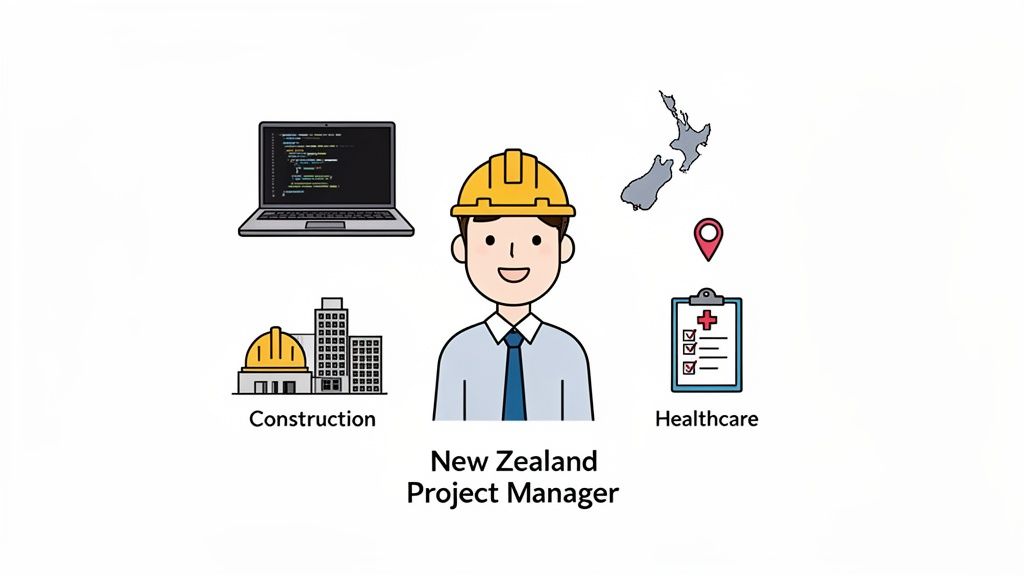
Before we jump into the "how-to," let's get a clear picture of what the day-to-day really looks like. A project manager (PM) is far more than a glorified task-assigner. Think of them as the central hub of a project, the person who ensures all the moving parts—people, budgets, deadlines—are working together smoothly. Their job is to navigate the chaos and steer the project to a successful landing.
Picture this: a construction firm in Christchurch is building a new community library. The PM isn't just watching the builders pour concrete. They're coordinating with architects, locking in supplier contracts, keeping the city council updated, and making sure everything stays on budget and meets safety standards. They are the glue holding it all together.
Or, over in Wellington's buzzing tech scene, a PM might be spearheading the launch of a new app. That means wrangling developers, syncing up with the marketing team on the launch plan, and reporting progress back to the higher-ups.
A Look at Core Project Manager Responsibilities
At its core, the role of a project manager boils down to a handful of key functions. These responsibilities are pretty universal, whether you're managing a construction site, a software build, or a healthcare initiative. The table below breaks down what that means in practice.
These functions are the bread and butter of project management, requiring a blend of hard and soft skills to execute well.
A Rewarding Career Path
The demand for good project managers is clearly reflected in what you can earn. The median salary for a project manager in New Zealand is around NZ$97,524 per year—that's a solid 58% above the national median salary. Even at the entry-level, you can expect to start around NZ$58,127, while experienced senior PMs can pull in NZ$148,000, with bonuses often pushing that figure up to NZ$164,000. You can dig into more salary specifics over at Jobted NZ.
But it’s not just about the money. There’s a huge amount of satisfaction in seeing something tangible come to life because of your efforts. A great PM doesn’t just tick off tasks on a list; they build relationships, solve genuinely tricky problems, and create an environment where their team can do their best work. It's a mix of strategic thinking and practical action. If you're keen to build on those leadership skills, exploring broader management skills can give you an extra edge.
A successful project manager is a master communicator and a strategic problem-solver. They don’t just follow a plan; they adapt, innovate, and inspire their team to overcome obstacles and achieve the project’s vision.
Ultimately, being a project manager in New Zealand is a dynamic, influential role. It's a chance to make a real, visible impact—whether that's watching a building you managed rise into the skyline, seeing an app you launched hit thousands of downloads, or helping a local clinic improve its services for the community.
Building Your Foundational PM Skills and Knowledge
Before you can lead a project, you need to build a solid foundation of skills. It’s not just about ticking boxes on a timeline; it's about mastering that sweet spot between technical know-how and the people skills that actually get the job done.
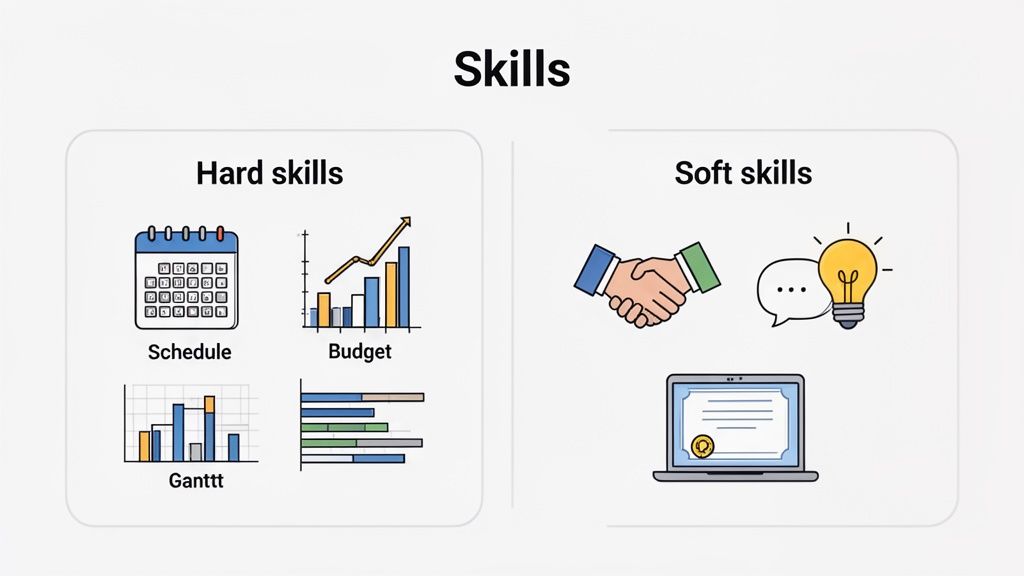
Think of it this way: your skills are split into two essential toolkits, the hard skills and the soft skills. To really thrive as a PM, you need to be a master of both.
Mastering the Hard Skills
Hard skills are the nuts and bolts of project management. They're the practical, teachable things you'll rely on every single day to plan, execute, and keep projects from going off the rails.
These are the tangible mechanics of the role. You’ll need to get comfortable building out detailed project schedules, often using Gantt charts to map out every task and dependency. Then there's budget management – a massive part of the job that involves everything from initial cost estimates to tracking every dollar spent.
To really prove your project is on track, you'll also need a firm grasp of essential project management metrics. This is how you measure performance and make smart, data-driven decisions.
Here are the core hard skills to start honing:
- Scheduling and Time Management: Building realistic timelines, prioritising what needs to get done, and making sure deadlines are met.
- Budgeting and Financial Management: This covers everything from that first cost estimate to ongoing tracking and reporting back to stakeholders.
- Risk Management: Spotting potential problems before they happen, figuring out how bad they could be, and making plans to stop them in their tracks.
- Project Management Software: Getting fluent in tools like Asana, Trello, Jira, or Microsoft Project is pretty much non-negotiable for any modern PM.
The best way to develop these is by doing. Start small. Manage a personal project or volunteer to lead a small piece of work in your current job.
Cultivating Essential Soft Skills
If hard skills are about managing the project, soft skills are all about leading the people. These are the interpersonal traits that separate a decent project manager from a truly great one. They dictate how you communicate, motivate your team, and navigate tricky situations.
Honestly, effective communication is probably the single most important skill you can have. You’re the central hub, the person making sure everyone from the dev team to the CEO knows what’s going on.
Leadership is right up there, too. This isn’t about just telling people what to do. It’s about inspiring your team, building a sense of trust, and creating a space where people feel empowered to do their best work.
A project manager’s true value lies in their ability to translate a complex vision into a clear, actionable plan and then empower a team to bring that vision to life. This requires a delicate balance of technical oversight and human-centric leadership.
Key soft skills you'll want to cultivate include:
- Communication: Clearly explaining goals, giving useful feedback, and genuinely listening to what others have to say.
- Leadership: Motivating your crew, sorting out conflicts, and fostering a collaborative vibe.
- Negotiation: Finding common ground with stakeholders, vendors, and team members when everyone wants something different.
- Problem-Solving: Thinking on your feet to tackle unexpected roadblocks and keep things moving forward.
These skills are really built through experience and self-awareness. Look for chances to lead meetings, present to your team, or help mediate a disagreement.
Choosing Your Learning Pathway
Okay, so you know what skills you need. Now, how do you actually get them? The good news is you don’t always need a formal university degree to break into the field. There are plenty of flexible pathways into a project management career.
That said, a formal qualification can seriously fast-track your journey. Having a recognised certification or completing a structured course can cut down the time it takes to land that first PM role by as much as 40%. Here in New Zealand, a whopping 85% of advertised positions ask for some form of qualification. Not to mention, certified PMs are known to deliver projects 28% more on-budget, which makes them incredibly attractive to employers.
For many people, self-paced online courses offer the perfect mix of flexibility and structured learning. They let you build up your knowledge without having to quit your day job. You can check out the huge variety of short courses online in NZ to find a style that fits you. This way, you can build your knowledge bit by bit and even start applying what you learn in your current role—creating a powerful bridge to your first official project management position.
How to Gain Experience Before You Have the Title
It’s the classic catch-22 that trips up so many aspiring project managers: you need experience to land a PM job, but you need a PM job to get any experience. It can feel like you’re stuck in an impossible loop.
But here’s the secret: project management isn't just a job title. It's a set of actions, skills, and responsibilities. And the great news is that opportunities to practice these things are everywhere—often hiding in plain sight in your current role or community.
By actively seeking out these chances, you can start building a solid portfolio of real-world experience long before your official title changes. This proactive approach not only sharpens your skills but also gives you powerful stories and concrete examples to showcase on your CV and in interviews, proving you’ve already got what it takes.
Find Project Management Opportunities at Work
You don’t have to wait for a promotion to start acting and thinking like a project manager. Your current job is probably the best training ground you have. The key is to start identifying "unofficial" projects and putting your hand up to lead them.
Look for small-scale initiatives that could use an organised leader. Maybe your department is adopting a new software tool, or perhaps the team’s internal processes desperately need documenting. These are mini-projects just waiting for someone to take the reins.
Here are a few practical ways to get started:
- Volunteer for small departmental projects. This could be anything from organising the next team-building day to researching and presenting a new efficiency tool.
- Coordinate tasks that cross team lines. If a job needs input from multiple people, offer to be the central point of contact. You'll be the one tracking progress and making sure everyone is aligned.
- Take charge of event planning. Organising a company event, even a small one, involves all the core elements of project management: budgeting, scheduling, coordinating with vendors, and keeping stakeholders happy.
- Ask to shadow an existing PM. Show your interest to a project manager in your company and ask if you can help with smaller tasks, like taking meeting minutes or tracking a specific part of their project.
Every time you take on one of these responsibilities, you're building a track record of planning, executing, and delivering results.
Don't wait for permission to lead. The best way to demonstrate your project management potential is to start managing the projects that no one else has claimed. Every small success is a building block for your future career.
Build Your Portfolio Through Volunteering
Beyond your 9-to-5, volunteering is a fantastic—and often overlooked—way to build a robust project management portfolio. Non-profits and community groups are frequently under-resourced and will welcome a skilled volunteer who can help them achieve their goals.
This is your chance to take on significant responsibility in a lower-risk environment. You could find yourself managing the logistics for a fundraising event, coordinating volunteers for a local conservation project, or helping a small charity launch a new community outreach programme.
These experiences are incredibly valuable. They let you practise the full project life cycle, from initial planning and budgeting right through to execution and the post-project review. You'll also be developing those crucial soft skills as you work with diverse groups of people, negotiate for resources, and solve unexpected problems on the fly.
Frame Your Experience for Success
Once you've started collecting these experiences, the final, crucial step is to frame them effectively. It’s all about translating your actions into the language of project management for your CV and interviews.
Instead of just saying you "helped organise an event," rephrase it. Describe how you "managed the event project from conception to completion, overseeing a budget of X and coordinating a team of Y volunteers to deliver a successful outcome."
Always focus on the results you delivered. Did you complete the project on time? Did you stick to the budget? Did you improve a process or solve a specific problem? Use metrics and numbers wherever possible to make your accomplishments tangible.
Even without the official title, you can highlight your potential. If you're unsure where to start, looking into how to write a resume with no formal experience can be a huge help. This approach transforms your hands-on learning into compelling proof that you're ready for the role.
Choosing the Right Certification for Your Goals
Navigating the world of project management certifications can feel a bit like trying to read a map without a legend. With so many acronyms and specialisations floating around, it’s easy to get overwhelmed. But trust me, choosing the right one is a strategic move that seriously boosts your credibility and opens up a lot of doors.
Think of a certification as a clear signal to employers. It shows them you understand a specific methodology and are committed to the profession. It’s not just about adding letters after your name; it’s about gaining a structured framework you can actually apply to real-world projects, making you a more effective and confident leader from day one.
The trick is to match your choice with where you're at in your career, the industry you're targeting here in New Zealand, and what you want to achieve long-term.
Foundational Certifications for Beginners
If you’re just starting out, diving straight into an advanced, experience-heavy certification isn’t the best first move. It’s like trying to run a marathon before you’ve even jogged around the block. Start with a foundational certificate to build your core knowledge and prove you grasp the fundamental principles.
These entry-level qualifications are designed to give you a solid grounding in project management concepts without needing years of prior experience. They’re perfect for showing your initiative and that you’re ready to learn.
Look for options that cover the basics of:
- Project Lifecycle Management: Understanding the key phases of a project, from initiation and planning through to execution, monitoring, and closure.
- Core Methodologies: Getting a high-level introduction to different approaches like Waterfall and Agile.
- Essential PM Tools: Learning about key documents like project charters, risk registers, and communication plans.
These certificates are an excellent way to bridge the gap between your current role and a future PM position. For a deeper dive into what's available, exploring a list of the best project management courses in NZ can give you a clear overview of quality online options to get you started.
Getting your first certification isn't about becoming an expert overnight. It's about building a solid foundation of knowledge and showing potential employers that you are serious about a career in project management.
Industry-Recognised Certifications in New Zealand
Once you have some experience under your belt, you can look towards the more specialised, globally recognised certifications that are highly valued in the New Zealand job market. The right choice often comes down to the industry you want to work in.
To help you decide, here’s a look at some of the most popular project management certifications and where they fit into the New Zealand career landscape.
Comparing Top Project Management Certifications in NZ
This table breaks down the big players to help you figure out which certification aligns with your career path in Aotearoa.
Think about where you see yourself in five years. If you envision a career managing large-scale infrastructure projects, something like PRINCE2 or PMP would be a logical path. On the other hand, if you’re drawn to the dynamic world of tech startups, an Agile certification will be far more relevant and immediately useful.
Ultimately, your choice of certification is a direct investment in where you want your career to go. Choose wisely
5. Crafting Your CV and Nailing the PM Interview
Alright, you've put in the hard yards building your skills and getting some real experience. Now comes the crucial part: showing a hiring manager you're the right person for the job. Your CV and interview are where you connect the dots between what you've done and what their company needs.
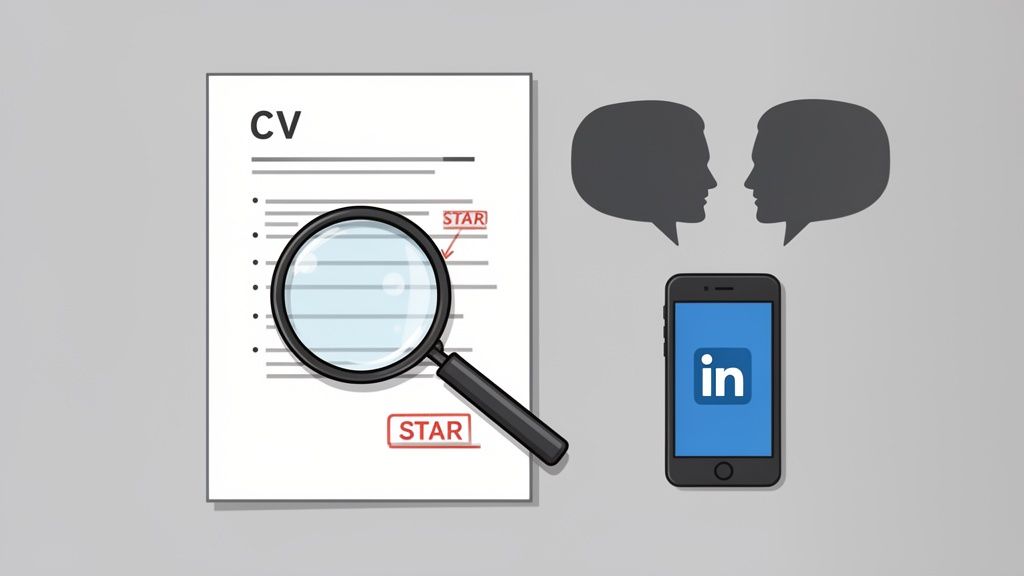
Think of your CV as your highlight reel, not a boring list of duties. It's your one shot to grab their attention and prove you have project management chops, even if your job title never said "Project Manager".
Build a Project-Focused CV
Most CVs just list responsibilities. Yawn. For a project manager role, you need to showcase results. Your goal is to prove you can get things done, on time and on budget. The best way to do this is by framing your experience around specific projects you’ve influenced.
A brilliant way to structure this is by using the STAR method. It’s a simple storytelling framework that hiring managers love because it’s clear, concise, and shows your direct impact.
Here’s the breakdown:
- Situation: Briefly describe the background. What was the challenge?
- Task: What was your specific goal or what were you asked to do?
- Action: What specific steps did you take? Get into the details here.
- Result: What was the outcome? This is where you need to use numbers and data to quantify your success.
So, instead of a bland line like "Responsible for team coordination," you reframe it into a powerful story:
Situation: I noticed our department's onboarding for new staff was all over the place, which caused a lot of confusion and slowed everyone down.
Task: I put my hand up to lead a project to standardise and properly document the whole process from start to finish.
Action: I got together with three team leaders to map out how things were being done, found the major hold-ups, and then built a central online hub with checklists and templates.
Result: This single project cut the time it took for a new hire to get up to speed by 25% and got great feedback from both new staff and their managers.
See the difference? You’ve just turned a routine task into a mini-project that demonstrates leadership, problem-solving, and a focus on measurable results. That’s pure gold for a recruiter.
Polish Your Online Presence
Don't forget your LinkedIn profile—it's just as vital as your CV. Recruiters in New Zealand live on this platform. Make sure your headline isn't just your current job title; aim for something like "Aspiring Project Manager | Coordinating Cross-Functional Teams."
Sprinkle keywords like "project planning," "stakeholder communication," and "risk management" throughout your 'About' section. Most importantly, make your 'Experience' section a mirror of your project-focused CV. And don't be shy—ask colleagues or managers who’ve seen you in action to write you a recommendation.
Ace the Project Manager Interview
When you land an interview, solid preparation is what will set you apart. Project manager interviews are almost always full of behavioural questions. They want to know how you think and how you’ve handled tricky situations in the past.
Get ready for questions like these:
- Tell me about a time a project was failing. What did you do to get it back on track?
- How do you deal with stakeholders who all want different things?
- Walk me through how you’d kick off a brand-new project.
The best way to answer these is to pull out the STAR method again. It stops you from giving vague, waffly answers and forces you to provide concrete evidence. Practice telling your project stories out loud until they roll off the tongue.
Finally, come armed with a few smart questions of your own. Asking about the team's biggest project challenges or how they define success shows you're engaged and already thinking like part of the team. It’s this level of thoughtful prep that makes you memorable long after you've walked out the door.
Got Questions About Becoming a PM? We've Got Answers.
As you start piecing together your career plan, it’s completely normal to have a few questions. To help you move forward with a bit more clarity, here are some straight-up answers to the queries we hear most often from aspiring PMs in New Zealand.
Do I Need a Specific University Degree to Become a Project Manager?
Honestly? Not necessarily. While a background in business, IT, or engineering gives you a good head start, plenty of brilliant project managers come from completely different fields. That arts or science degree of yours could be just as valuable.
What really counts are your transferable skills. Employers are far more interested in seeing proven organisation, sharp communication, and a natural knack for leadership. Often, bolting a professional certification or a focused online course onto your existing experience is a much faster and more direct route into the industry than starting a whole new three-year degree from scratch.
How Long Does It Take to Become a Project Manager in NZ?
This one really depends on where you're starting from. If you’re coming in fresh, you could realistically spend six to twelve months on a foundational course while you actively hunt for small projects to cut your teeth on.
But if you’re already in a related role—say, a business analyst or a team coordinator—your journey can be much quicker. You can lean on your existing skills and might only need a certification to formalise what you already know. A focused person in this position can usually aim to land a Junior Project Manager role within one to two years.
The biggest thing that will speed up your timeline is being proactive. The more you put your hand up for opportunities to manage tasks, coordinate people, and get things done—even on a tiny scale—the faster you’ll build the real-world proof you need for that first official PM job.
What Is the Single Most Important Skill for a New PM?
While technical abilities like budgeting and scheduling are must-haves, exceptional communication is the absolute game-changer for any new project manager. Think about it: a PM is the central hub of information for the team, stakeholders, clients, and senior leaders.
Your success will be defined by your ability to articulate goals clearly, give constructive feedback that lands well, and expertly manage everyone's expectations. If you can get the communication piece right, you’ll be in a great position to handle almost any challenge a project throws at you. It’s the bedrock all other PM skills are built on.
Which NZ Industries Have the Highest Demand for Project Managers?
Right now, the tech and construction sectors in New Zealand are crying out for skilled project managers. The constant churn of digital projects and software development keeps IT PMs in high demand, especially if you have any experience with Agile ways of working.
At the same time, major infrastructure projects and the relentless need for new housing mean construction PMs are in a very strong position. Outside of these two powerhouses, you'll also find plenty of demand in government, healthcare, and professional services, with each offering its own unique set of challenges and rewards.
Ready to build the skills that Kiwi employers are looking for? At Get Course New Zealand, we offer a range of flexible, self-paced online courses designed to fit around your life. Have a look at our project management and business qualifications to find the perfect launchpad for your new career. Find your course and enrol today.
Find Your Course
Compare courses across every field we write about, and enquire in under a minute.