How to Manage Stress at Work Practical Tips for Lasting Relief
Feeling overwhelmed? Learn how to manage stress at work with actionable strategies for immediate relief, long-term resilience, and career empowerment.
Feeling the pressure at work? You’re definitely not alone. Figuring out how to manage stress on the job is all about pinpointing what’s causing it—whether it’s a mountain of work or worries about job security—and then using smart strategies to get back in the driver's seat. It's about building sustainable habits and practical skills to not just survive, but actually thrive professionally.
Why Workplace Stress Is a Growing Concern in New Zealand
Workplace stress isn't just a one-off bad day or a looming deadline anymore. For a lot of Kiwis, it’s a constant pressure cooker that takes a toll on mental wellbeing, productivity, and how we feel about our jobs. The modern workplace has a nasty habit of blurring the lines between our professional and personal lives, making it tougher than ever to properly switch off and recharge.
This always-on culture, mixed with a dose of economic uncertainty, has created a perfect storm for stress levels to skyrocket. Many of us are juggling heavier workloads with fewer resources, leaving us feeling permanently swamped.
The Alarming Rise of Burnout
Recent studies paint a pretty stark picture of what’s happening across Aotearoa New Zealand. Job insecurity has shot up, pushing the risk of burnout to levels we haven't seen before. The data is sobering: a massive 57% of the workforce now falls into the high burnout risk category. That’s more than double the 25% recorded previously. This huge jump is largely driven by fears over job security, which leaped from 22% to 48.4% in the same timeframe. You can dig into the full findings on job insecurity from Massey University to see the whole story.
These aren't just numbers on a page; they represent real people facing daily battles that affect their health and happiness.
When stress becomes chronic, it stops being a temporary hurdle. It starts to fundamentally change your relationship with your work, often leading to total disengagement and exhaustion.
Common Triggers for Kiwi Workers
Getting a handle on workplace stress starts with knowing what’s setting it off. While every job has its unique challenges, a few common culprits keep popping up for New Zealanders:
- Overwhelming Workloads: That feeling of being constantly behind or that the expectations are simply impossible to meet is a major source of stress.
- Lack of Control: When you have little say over your own tasks, deadlines, or how you work, it’s easy to feel powerless and frustrated.
- Poor Management Support: Vague communication, no feedback, or a general lack of empathy from the higher-ups can make an already stressful situation feel ten times worse.
- Job Insecurity: Constantly worrying about whether your role is stable creates a low-level hum of anxiety that kills focus and morale.
This guide is designed to move you beyond just patching things up. It’s a clear roadmap to help you build the resilience you need to tackle these pressures head-on.
Find Calm in the Chaos with Immediate Stress Relief Techniques
When the workday spirals and the pressure starts to build, you need tactics that can bring you back to centre right now, not next week. Long-term strategies are absolutely essential, but knowing how to handle a surge of stress in the moment can stop a bad day from turning into a full-blown crisis.
These techniques are designed for immediate impact, helping you regain your cool and find a bit of clarity when you need it most.
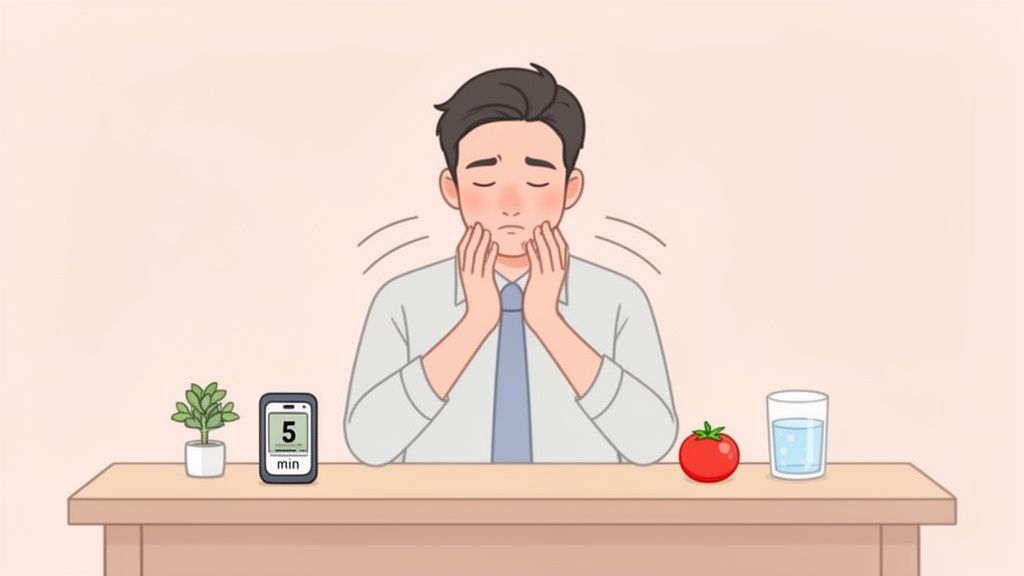
Think of it as having a mental first-aid kit ready to go at your desk, between meetings, or whenever that familiar spike of anxiety hits. These aren't complicated solutions that require hours of practice; they're simple, powerful actions to ground yourself.
Ground Yourself with Discreet Mindfulness
Mindfulness isn’t about sitting cross-legged for an hour chanting "om." It's simply about pulling your focus into the present moment, which you can do discreetly, even in the middle of a tense meeting. One of the most effective ways to do this is with a quick sensory check-in.
The next time you feel your heart rate climb, just pause and silently name:
- Five things you can see (your computer monitor, a pen on the desk, the colour of a colleague's shirt).
- Four things you can physically feel (the chair supporting you, your feet flat on the floor, the texture of your keyboard).
- Three things you can hear (the quiet hum of the air conditioner, distant typing, your own breathing).
- Two things you can smell.
- One thing you can taste.
This simple exercise forces your brain to switch gears from spiralling, anxious thoughts to concrete, immediate sensations. It effectively hits the brakes on the stress response, pulling you out of your head and back into the room.
Another powerful tool is controlling your breath. A simple ‘box breathing’ technique—inhale for four seconds, hold for four, exhale for four, and hold for four again—can physically lower your heart rate and signal to your nervous system that it’s safe to calm down.
Master Your Time with the Pomodoro Technique
Staring down a massive, overwhelming project is a classic recipe for stress. The Pomodoro Technique is a brilliant time management method that slices up big tasks into focused, 25-minute intervals, each separated by a short break. This approach makes even the most daunting projects feel manageable.
Instead of facing an intimidating eight-hour block of solid work, you only have to focus for the next 25 minutes. After that, you take a five-minute break to stretch, grab some water, or just stare out the window. Every four "Pomodoros," you reward yourself with a longer break of 15-30 minutes.
This method does more than just organise your day; it almost gamifies your work and helps build momentum. Each completed interval is a small win, creating a positive feedback loop that fights back against that feeling of being overwhelmed and boosts your sense of control and accomplishment.
Build Long-Term Resilience to Workplace Pressures
While those in-the-moment techniques are a lifesaver, real, lasting change comes from building a more resilient work life from the ground up. This is about shifting your focus from putting out fires to proactively designing a work environment where stress doesn't get the upper hand in the first place. Think of it as building foundational habits that give you more control, support, and breathing room.
Taking this proactive approach is particularly crucial here in New Zealand. The numbers paint a stark picture: work-related stress impacts a staggering 60% of all Kiwi workers. On top of that, 31% report anxiety and 20% experience depression directly linked to their jobs over the past year.
When you learn that 35% of workers have also dealt with offensive behaviours like bullying or threats, it becomes crystal clear that having a robust personal strategy isn't just a nice-to-have—it's essential. For a deeper look at the context, WorkSafe NZ offers detailed infographics on psychosocial risks for New Zealand workers.
To build a complete toolkit, it helps to understand the difference between quick fixes and sustainable solutions. Immediate coping strategies are great for getting through a tough day, but long-term resilience requires a different set of skills.
Short-Term Relief vs Long-Term Resilience Strategies
Balancing both types of strategies is key. The short-term tactics help you manage acute stress, while the long-term ones reduce the frequency and intensity of those stressful moments over time.
Prioritise Your Energy with Smart Frameworks
Feeling overwhelmed by a never-ending to-do list where every single task feels urgent is a massive driver of stress. One of the most powerful tools to fight this is the Eisenhower Matrix. It’s a simple but brilliant way to sort your tasks by urgency and importance, helping you protect your energy for what actually matters.
Here’s how it breaks down:
- Urgent & Important: These are your fires. Do them immediately.
- Important but Not Urgent: This is where the magic happens. Schedule time for these tasks—they’re your strategic, long-term goals.
- Urgent but Not Important: Most of these are just distractions pretending to be priorities. Delegate them if you can.
- Not Urgent & Not Important: Get rid of them. These tasks just drain your time and energy for zero return.
When you start sorting your workload this way, you transform from a reactive firefighter into a strategic planner who's actually in control of their day.
Set and Enforce Professional Boundaries
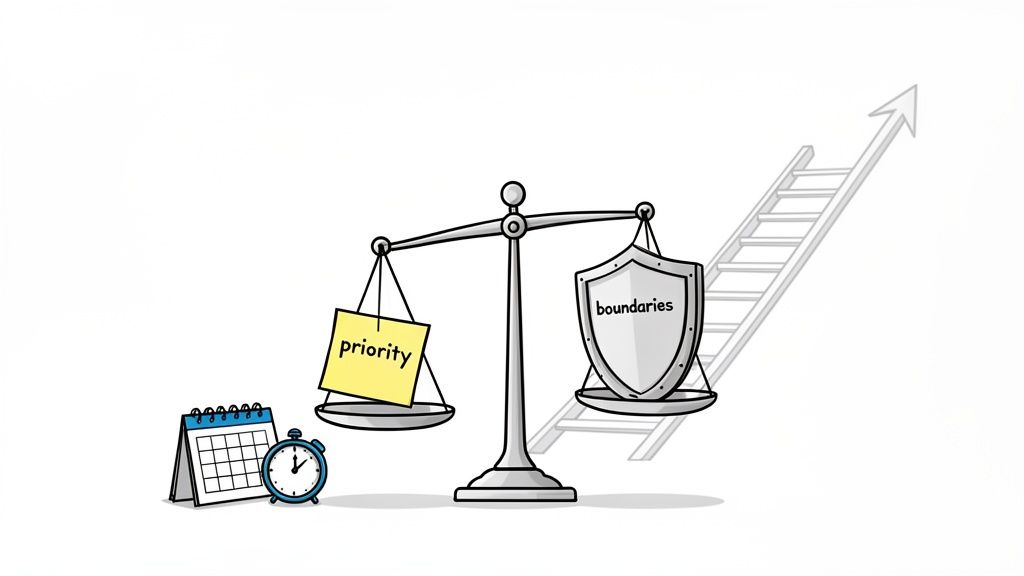
Think of boundaries as the guardrails that protect your wellbeing. Under pressure, they're often the first thing to get pushed over. A huge part of building long-term resilience is learning how to maintain work-life balance by setting and—crucially—enforcing clear limits.
Saying 'no' can feel incredibly awkward, but it’s a non-negotiable skill. The good news is, you don’t have to be blunt or unhelpful. It’s all about how you frame it.
For instance, if you're asked to take on a new project when your plate is already overflowing, you could try saying something like this:
"I'm keen to help with that, but my focus is currently on completing Project X and Y to meet their deadlines. Could we discuss which task should be the priority, or if there's flexibility in the timeline for this new request?"
This simple script completely changes the dynamic. It shifts a hard 'no' into a constructive negotiation. You've communicated your current workload, reinforced your commitment to existing priorities, and positioned yourself as a proactive problem-solver, not a roadblock.
Learning how to navigate these conversations is a core skill. It's also a great example of how counselling can help with stress and anxiety, as it gives you the tools to communicate your needs effectively.
Turn Career Anxiety into Empowerment Through Upskilling
Feeling stuck, underappreciated, or just plain worried about where your career is heading is a huge source of chronic stress. That kind of career anxiety can really chip away at your confidence and make you feel like you're not in the driver's seat of your own life.
But here’s the thing: that unease can also be a powerful nudge towards making a positive change.
One of the best ways to tackle career-related stress head-on is by committing to learning. Upskilling isn’t just about adding another bullet point to your CV; it’s about taking back control and actively building the future you want.
Gaining Control Through New Skills
Something powerful happens when you learn a new, in-demand skill. Your confidence gets a real, tangible boost because you have fresh proof of what you're capable of. This self-assurance is the perfect antidote to feelings of inadequacy or the fear of being left behind.
Instead of just worrying about job security, you start building it for yourself. This simple shift in approach changes your entire mindset from feeling trapped to feeling empowered, which is an absolute game-changer for managing long-term stress.
Taking charge of your own professional development is one of the most direct ways to turn anxiety into action. It gives you a sense of forward momentum and reminds you that your career trajectory is in your hands.
And this doesn't have to add more to your already full plate. The key is to find learning that fits into your life, not blows it up. Flexible, self-paced online learning means you can pick up skills in areas like IT or business without the pressure of a rigid schedule.
Turning Uncertainty into Opportunity
Career uncertainty often comes down to a skills gap—that nagging feeling that your current abilities might not cut it for future demands. Proactively closing that gap is a brilliant way to dial down the stress.
Take a moment to think about what specific skills could make a real difference in your current job or open doors to a new one.
- Project Management: Learning how to organise projects, manage timelines, and lead a team can immediately boost your value and your sense of competence.
- Digital Marketing: Even a basic understanding of SEO or social media marketing can make you an indispensable asset in almost any industry these days.
- Business Administration: Nailing skills in office management or basic accounting provides a super stable foundation for career growth.
By focusing on practical, career-focused skills, you're making a direct investment in your own peace of mind. Every module you finish is a concrete step towards a more secure and fulfilling professional life.
Exploring online courses can be a great, no-pressure way to kickstart your upskilling journey and figure out what you're passionate about. It's a proactive step that helps you build a solid plan for what's next.
Instead of letting career anxiety call the shots, you can channel that energy into building a stronger, more resilient professional self. This shift doesn't just help you manage stress at work; it opens up a future with more choices, better roles, and a renewed sense of purpose.
Design Your Personal Workday Wellness Routine
A truly effective stress management plan isn’t something you pull out only when you’re in a crisis. It's woven into the fabric of your daily life. Creating a personal wellness routine that fits your job and lifestyle is one of the most proactive things you can do to build a buffer against work pressure. It adds structure and predictability, which is a powerful way to keep overwhelm from taking over.
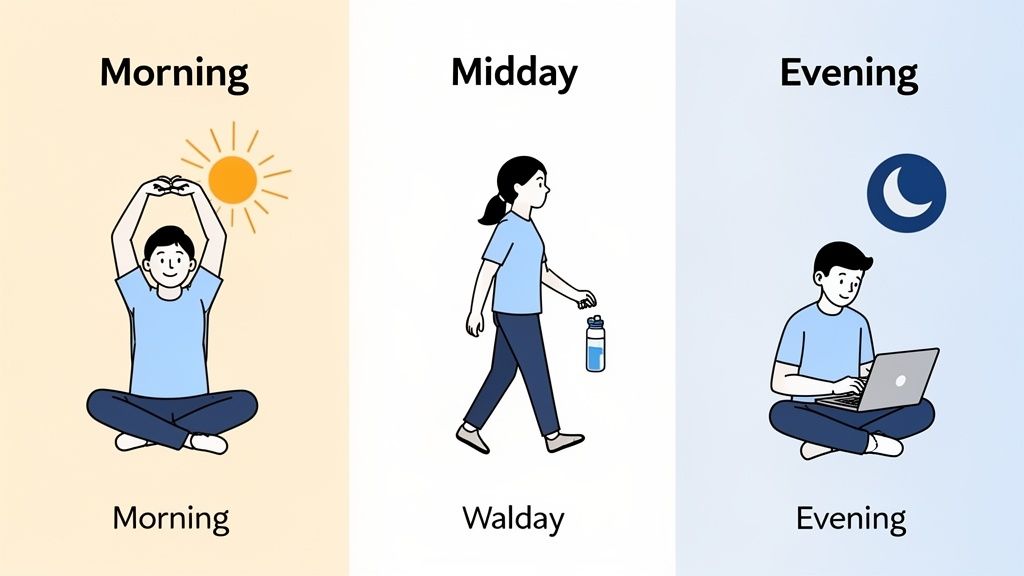
The idea is to intentionally break your day into phases—the morning launch, the midday reset, and the evening wind-down. By embedding small, supportive habits into each phase, you can manage your energy, sharpen your focus, and create clear, healthy boundaries between your professional and personal life.
The Morning Launch
How you start your day sets the tone for everything that follows. So many of us begin by diving straight into a chaotic inbox, which immediately puts us in a reactive, defensive state. It’s far more powerful to start intentionally.
Even a five-minute session to set your intentions and identify your top three priorities for the day can completely change your outlook.
Consider adopting these morning habits:
- No Screens for the First 30 Minutes: Before you check a single email or news alert, give yourself some space. Use this time to stretch, enjoy a quiet moment, or make a proper breakfast.
- Review Your Priorities: Take a look at your to-do list and decide on the single most important task for the day. This creates clarity before the inevitable distractions of the day start pulling you in different directions.
- Hydrate First: Have a glass of water before your coffee. It’s a simple act of self-care that rehydrates your body and brain after a night's sleep.
The Midday Reset
The middle of the day is a critical point. It's when energy and focus naturally dip, leaving you more vulnerable to stress. A deliberate midday reset helps you recharge and tackle the afternoon with renewed clarity. This doesn't mean you need a long lunch; even a short, scheduled break can make a massive difference.
Building small, restorative breaks into your routine isn’t a luxury; it’s a strategic way to sustain your performance and protect your mental health throughout the workday.
Overwhelming workloads are a massive issue here in New Zealand. A recent Public Service Census revealed that 44% of public servants feel workload stress often or always, and 65% report that their workload is above capacity. Taking structured breaks is one way to push back against this trend.
The Evening Wind-Down
Just as important as how you start your day is how you end it. A dedicated "shutdown ritual" is an incredibly powerful tool for setting boundaries. It signals to your brain that the workday is officially over, allowing you to properly unplug and be present in your personal life.
This is absolutely crucial for anyone struggling to balance their commitments. You can find more practical tips on this in our guide on https://www.getcourse.co.nz/blogs/how-to-manage-work-life-study.
Your shutdown ritual could be as simple as this:
- A Final To-Do List Check: Quickly review what you accomplished and jot down priorities for tomorrow. This gets them out of your head.
- Tidy Your Workspace: A clear desk can genuinely lead to a clearer mind.
- Log Off Completely: Close all your work-related tabs and turn off notifications. The workday is done.
To build a more productive and less stressful work environment, especially from home, explore these practical strategies for staying focused while working from home.
Got Questions About Handling Stress at Work?
As you start putting these strategies into action, it's natural for a few questions to pop up. You might be wondering about specific scenarios or trying to figure out what's "normal" and what's a red flag. Let's tackle some of the most common queries people have when it comes to managing stress on the job.
What Are the First Signs of Burnout I Should Look For?
The early whispers of burnout are easy to dismiss, but they're persistent. One of the biggest tells is a bone-deep exhaustion that a good night's sleep just doesn't fix. You might also notice a growing sense of cynicism or find yourself feeling disconnected from your work, almost like you're just going through the motions.
Another key sign is that feeling of ineffectiveness—you're working hard, but it feels like you’re not actually achieving anything. Keep an eye on physical symptoms, too. Things like frequent headaches, stomach troubles, or a messed-up sleep schedule can all be your body's way of waving a red flag. Catching these signs early is your best bet for turning things around before burnout really takes hold.
How Can I Talk to My Manager About My Workload Without Sounding Like I'm Complaining?
The trick here is to frame the conversation around solutions, not problems. Instead of walking in and saying, "I've got way too much on my plate," try a more collaborative approach.
Something like, "I'm committed to making sure I'm delivering top-quality work on all my projects. Could we sit down and review my current priorities to make sure my focus is where it needs to be right now?" works wonders.
Come prepared. Having a clear list of your current tasks and their deadlines shows you're proactive and serious about finding a workable solution. It transforms a potentially awkward chat into a strategic planning session.
Should I Look for a New Job or Try to Fix the Stress Where I Am?
This really boils down to the root cause of the stress. If you're dealing with a genuinely toxic culture, a major clash with the company's values, or ongoing bullying, then finding a new job is often the healthiest move you can make for your long-term wellbeing.
But if the stress is coming from things that can be managed—like disorganisation, poor time management, or unclear expectations from a manager who is otherwise supportive—it's absolutely worth trying to fix things first. Give the strategies in this guide a real shot. Setting better boundaries and improving how you communicate can make a world of difference. If you put in the effort and nothing changes, you'll know it's time to move on with confidence.
How Can Online Courses Actually Help with Work Stress?
So much of workplace stress comes from feeling powerless or stuck. Taking an online course is one of the most direct ways to grab the steering wheel of your career again. When you're actively learning new, in-demand skills, it does wonders for your confidence and makes you more valuable professionally.
This isn't just about a certificate; it's about creating a tangible sense of forward momentum. It opens up new possibilities and dials down the anxiety you might feel about the future. And because most courses are self-paced, you can invest in your own growth without piling more pressure onto your schedule. You're turning that career anxiety into an empowering project, one lesson at a time.
Ready to turn career anxiety into empowerment? At Get Course, we make it easy to find flexible, 100% online courses designed to help you gain in-demand skills and build the future you want. Explore your options and take the next step in your professional journey today.
Find Your Course
Compare courses across every field we write about, and enquire in under a minute.