Online Degree in Early Childhood: Flexible NZ Programs
Explore an online degree in early childhood with flexible NZ options, practical training, and clear career paths for aspiring ECE teachers.
New Zealand's Early Childhood Education (ECE) sector is looking for passionate people, and an online degree in early childhood is the most flexible way to answer that call. It's a pathway that lets you earn a respected qualification right from your own home, fitting your studies around your life, not the other way around.
Your Journey into Early Childhood Education Starts Here
The idea of shaping young minds is an incredibly rewarding one. But for many working adults or those looking for a meaningful career change, the thought of heading back to a campus full-time feels impossible. This is where modern, flexible study options change the game, making a career in ECE a real possibility for more people than ever.
Think of this guide as your personal roadmap. We'll walk you through the different qualifications you can pursue and show you how essential, hands-on experience is cleverly woven into an online learning format.
Why Choose an Online Pathway?
Studying online puts you firmly in the driver's seat. Instead of upending your life to match a rigid university timetable, you can wrap your learning around your existing commitments. It's an approach that's perfectly suited for anyone who needs to keep working or looking after family while they study.
The real-world benefits are hard to ignore:
- Flexibility: You get to learn at your own pace. Whether you're an early bird or a night owl, you complete your coursework when it works for you.
- Accessibility: All your course materials, lectures, and support are available anywhere with an internet connection. Say goodbye to the daily commute.
- Balanced Learning: You get the best of both worlds—gaining theoretical knowledge through digital resources and then applying it with practical skills in real ECE centres.
This blend of theory and practice is the secret sauce. It ensures you graduate not just with a piece of paper, but with the confidence and skills to make a real difference from day one. It closes the gap between knowing child development principles and actually using them in a bustling classroom.
Getting a solid grip on the fundamentals is key, and you can dive deeper into the importance of early childhood education in our detailed article. Deciding to study is your first step towards a truly fulfilling career where you can positively shape the next generation. This guide will give you the clarity you need to take that step with confidence.
Choosing the Right ECE Qualification for Your Goals
Figuring out the difference between a diploma and a degree is the first real step in mapping out your career in early childhood education (ECE). Choosing the right online qualification isn't just about getting a foot in the door; it's about setting yourself on a path that truly lines up with where you see yourself in the long run.
Both options offer a rewarding start in this vital field, but they are built for different career outcomes and levels of responsibility. Think of it like deciding whether to build a solid foundation for a house or to construct the entire multi-level structure at once. Both are crucial, but they serve different purposes at different stages.
This choice is especially important in a growing sector. New Zealand's preschool education industry, covering everything from kindergartens to playcentres, hit a market size of $2.1 billion in 2024. And it's not slowing down, thanks to government policies pushing for universal access to early learning. This means more demand for qualified professionals at every level.
Diplomas: Foundational Skills for Immediate Impact
A Diploma in Early Childhood Education is a brilliant starting point. It's designed to get you into the workforce with practical, hands-on skills in a relatively short amount of time. If your main goal is to become a confident and capable educator working directly with tamariki, this is the perfect choice.
The coursework zeroes in on the essentials: child development, health and safety, creating positive learning spaces, and getting to grips with curriculum frameworks. It’s intensely practical, so you're ready to step into an ECE centre and make a real contribution from day one.
A diploma is ideal for:
- Career Starters wanting a direct path into a teaching role.
- Career Changers who need a recognised qualification to switch into the ECE field.
- Individuals who'd rather have a shorter, more focused study period before they start working.
Degrees: Deeper Knowledge for Leadership Roles
An online degree in early childhood, like a Bachelor of Teaching (ECE), takes your learning to a much deeper, more strategic level. It absolutely covers the practical skills needed for day-to-day teaching, but its real focus is on developing pedagogical leadership, critical thinking, and a solid understanding of educational theory and research.
This pathway doesn’t just prepare you to teach—it prepares you to lead. Graduates are ready to design curricula, mentor other educators, manage centres, and advocate for best practices in the sector. It opens doors to higher-level roles and, over the long term, greater salary potential. For anyone thinking about this more advanced route, it pays to explore the various Bachelor's degrees available online to see how they fit with your ambitions.
A degree encourages you to ask "why" just as much as "how." It moves beyond daily activities to explore the deeper theories of learning, cultural responsiveness, and social influences that shape a child's development.
To help you weigh it all up, here’s a straightforward comparison of the two main qualification pathways you can study online.
Comparing Online Early Childhood Qualifications
Understand the key differences between a diploma and a degree to find the best fit for your career aspirations.
Ultimately, the right choice really comes down to your personal and professional goals. Do you want to master the art of teaching and make an immediate impact? Or are you aiming for a future role where you can lead, innovate, and shape the direction of early childhood education? Both are incredibly valuable paths in a sector that needs passionate people at every single level.
Gaining Real-World Experience with Online Study

It’s one of the biggest questions people have about an online degree in early childhood: how on earth do you get practical, real-world experience from behind a computer screen? It’s a fair question. After all, ECE is all about human connection, hands-on learning, and creating nurturing spaces for tamariki.
The answer is the practicum, or professional practice placement. This isn't just an add-on; it's the absolute cornerstone of any reputable ECE qualification, whether you study online or on campus. During a practicum, you step away from your online modules and into a licensed ECE centre to put everything you’ve been learning into action.
Think of it as the bridge connecting theory to reality. Your online coursework gives you the "what" and "why" behind child development. Your practicum is where you master the "how" by applying those ideas in a bustling, real-world environment, with seasoned kaiako (teachers) showing you the ropes.
How Practicum Works in an Online Programme
You might be wondering how an online provider organises this. Rest assured, they have well-oiled systems in place. Providers build extensive networks and partnerships with licensed kindergartens, childcare centres, and playcentres right across New Zealand. This means you can typically complete your placements in a local centre that works for you.
The process is designed to be straightforward:
- Placement Coordination: Your provider's team helps you find and secure a suitable placement. They partner with centres that meet strict quality standards, ensuring you learn in a safe and supportive environment.
- Supervised Learning: Once you’re in a centre, you’ll be assigned a mentor teacher. This experienced professional will be your guide, offering daily feedback and helping you navigate the unique challenges and joys of the classroom.
- Assessment and Reflection: Your progress is assessed by both your mentor teacher and an assessor from your course provider. This usually involves direct observations, keeping reflective journals, and completing tasks that show your growing skills.
This structured supervision is absolutely crucial. It ensures you’re not just treated as an extra pair of hands but as an active learner who is constantly linking practical actions back to the teaching principles you’ve studied online. It’s all about building confidence through genuine competence.
The Skills You Will Develop on Placement
Your time in an ECE centre is so much more than just ticking a box for your degree. It’s an immersive experience designed to forge the essential skills you’ll rely on throughout your career. You'll quickly move beyond textbook scenarios to handle the beautiful, unpredictable reality of working with young children.
During your placements, you'll be actively building skills in several key areas:
- Building Relationships: You’ll learn the art of forming trusting, respectful relationships with children, whānau (family), and your new colleagues.
- Planning and Observation: You'll practise observing children’s development and learning, then use these insights to plan fun, engaging, and meaningful activities.
- Classroom Management: You’ll gain firsthand experience in creating a positive and safe learning environment, learning how to guide children’s behaviour with empathy and care.
- Cultural Competence: You’ll learn how to apply the principles of Te Whāriki, New Zealand's early childhood curriculum, to foster an inclusive setting that honours Te Tiriti o Waitangi.
Ultimately, the practicum ensures you graduate as a truly well-rounded professional. You’ll finish your programme not just with a strong academic foundation, but with the practical confidence to walk into any early childhood centre and make a positive impact from day one.
How Flexible Online Learning Actually Works
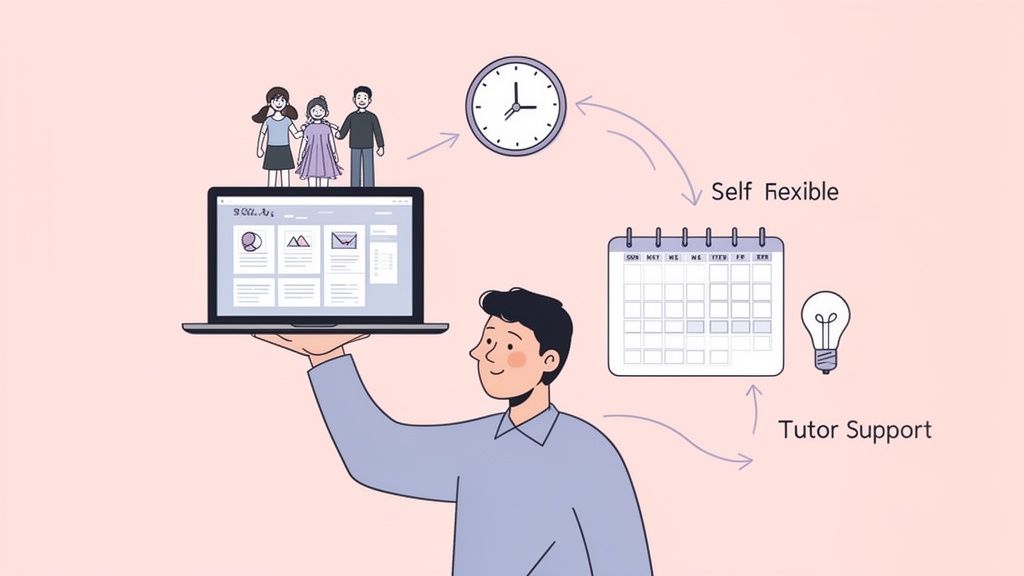
Imagine fitting your degree around your family, your job, and your life—not the other way around. That’s the real promise of an online degree in early childhood, and it’s a world away from the old model of rigid lecture times and daily commutes to campus. But what does "flexible learning" actually feel like day-to-day?
Think of your online course as a digital library that never closes. Instead of rushing to a lecture hall at a set time, you log in to watch pre-recorded lectures, download readings, and engage with interactive materials whenever it works for you. This self-paced approach puts you squarely in the driver's seat of your own schedule, letting you learn when you’re at your best.
This isn’t a niche idea anymore; it's reshaping how Kiwis access higher education. New Zealand's online learning sector is booming, with forecasts showing it will pull in US$400.58 million in revenue by 2025. This growth is creating a fantastic environment for high-quality, digitally delivered early childhood qualifications that fit the lives of busy people.
Your Digital Campus and Support Network
Your main port of call will be the Learning Management System (LMS). This online portal is your central hub for everything—it's where you find your weekly modules, upload assignments, and connect with your tutors and classmates.
And don’t for a second think online means alone. Far from it. You’re part of a vibrant community of fellow students and dedicated tutors who are all just a message or a click away.
Here’s how you’ll stay connected:
- Online Discussion Forums: These are your virtual classrooms. It's where you'll unpack course topics with your peers, share real-world insights from your practicum, and even team up on group tasks.
- Direct Tutor Access: Got a burning question or stuck on a tricky concept? You can easily reach out to your tutors through email, direct messaging, or by booking a one-on-one video call.
- Student Support Services: Beyond the academics, education providers have dedicated support teams to help with tech troubles, study planning, or any other hurdles you might face.
To get a real sense of what makes these programmes so effective, it's worth exploring the essential online learning best practices that top providers now use to create truly engaging courses.
What a Typical Study Week Looks Like
While everyone’s schedule is different, a normal week in an online programme is a mix of independent study and collaborative engagement. You are the architect of your own learning week, building a routine that actually works for you.
A week in your life might look something like this:
- Engaging with Course Materials: Blocking out a few hours to watch video lectures and get through the readings for that week’s module.
- Participating in Forums: Jumping into a discussion about a child development theory or sharing a story from your placement.
- Working on Assignments: Chipping away at your next assessment, putting the concepts you’ve just learned into practice.
- Connecting with Tutors: Popping into an optional live webinar or shooting your tutor a quick email to get feedback on an idea.
The real beauty of this model is its adaptability. A busy week at work might mean you do most of your studying on the weekend. A quiet week could see you getting ahead on your readings. You set the pace, ensuring your education complements your life rather than competes with it.
Self-Paced Does Not Mean Self-Taught
It’s a common myth that studying online means you’re left completely to your own devices. While you have the freedom to manage your own time, your learning is carefully structured and fully supported. Modules are released in a logical order, and assignment deadlines give you a clear framework to keep you moving forward.
This structure provides the perfect balance of freedom and guidance. For anyone wanting to see what this looks like in action, exploring a range of online courses in New Zealand can give you a clearer picture of how different subjects are taught this way. Ultimately, it’s all about making higher education accessible and achievable, knocking down the traditional barriers so you can chase your passion for early childhood education without putting your life on hold.
Exploring Your Career and Salary Potential in ECE
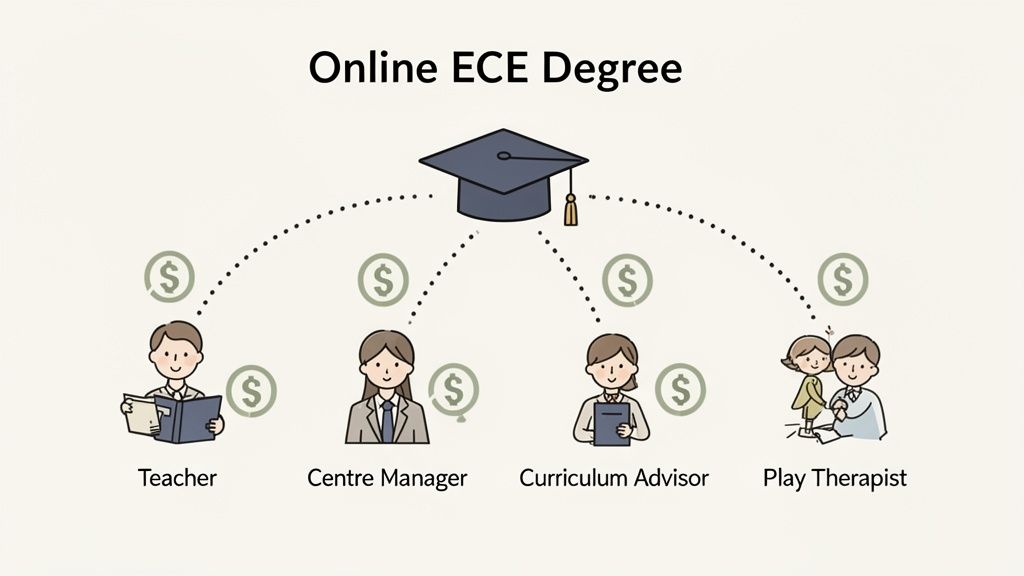
Finishing an online degree in early childhood is so much more than just getting a piece of paper. Think of it as a key that unlocks a whole range of incredibly rewarding career paths. While becoming a kaiako (teacher) is a fantastic and essential role, your qualification opens doors to leadership, specialist, and advisory positions right across the Early Childhood Education (ECE) sector.
This isn't just about finding any job—it's about building a stable, long-term career in a field that's crying out for passionate people. The need for skilled ECE professionals in New Zealand is growing every year. In fact, 2024 saw a significant jump in children attending licensed services, with numbers climbing to 194,597. This surge happened even as the number of centres and teaching staff slightly dipped, which really highlights the strong, ongoing demand for qualified educators to fill that gap.
Core Roles and Salary Snapshots
Your degree sets you up for a variety of roles, each with its own rhythm and earning potential. Most graduates start by working directly with tamariki, getting that priceless hands-on experience before climbing the ladder into more senior positions.
Here are some of the most common pathways you could follow:
- Early Childhood Teacher (Kaiako): You're the heart and soul of the centre. You’ll be designing and delivering amazing educational programmes based on Te Whāriki, nurturing children's growth, building great relationships with whānau, and creating a safe, vibrant place for kids to learn and explore.
- Head Teacher: Once you've got some experience under your belt, you can step up to a leadership role. Head Teachers mentor other educators, guide the curriculum, and make sure the centre is meeting all its standards—a great mix of teaching and management.
- Centre Manager: This role takes you deeper into the business side of things. You'll be in charge of staffing, budgets, enrolments, and policy, making sure the entire centre runs like a well-oiled machine.
ECE Salary Expectations in New Zealand
What you earn in ECE can depend on your qualifications, how much experience you have, and the type of centre you work in. The good news is that recent pay parity agreements have started bringing ECE teacher salaries more in line with what kindergarten and primary school teachers earn.
Here's a general idea of what you could expect:
Keep in mind, these are just a guide. Roles in specialised fields or those with more responsibility can definitely command higher salaries.
Expanding Your Horizons Beyond the Centre
Your online degree also prepares you for exciting roles that go way beyond the traditional classroom. The critical thinking, research, and leadership skills you'll develop are valuable in specialist areas that help shape the very future of early childhood education in New Zealand.
An ECE degree doesn’t just teach you how to educate children; it teaches you how to be an advocate for them. This opens up pathways where you can influence policy, develop resources, and support other educators to achieve best practices.
Think about these diverse career options:
- Curriculum Advisor: Work for an organisation developing educational resources and delivering professional development for teachers.
- Play Therapist: Use specialised therapeutic play techniques to help children navigate emotional or behavioural challenges.
- Policy Advisor: Help shape ECE policy at a regional or national level by working with government agencies or other sector organisations.
An online ECE degree is a huge step forward, offering fantastic professional development opportunities for educators looking to build a career. Whether your passion is for teaching, leading, or advocating for change, your qualification is the perfect foundation for a truly meaningful journey.
Finding and Enrolling in Your Ideal Online Course
Taking the leap from researching to enrolling is the most exciting step in your journey toward an online degree in early childhood. With so many providers and courses out there, knowing what to look for can help you choose with confidence. The right programme won't just fit your schedule; it will also provide the rock-solid support system you need to succeed.
Think of choosing a provider like picking the right guide for a long hike. You want someone who knows the trail inside and out, has the best support gear, and can help you navigate any tricky spots along the way. In the world of online study, this means dedicated student support, seamless practicum coordination, and genuine flexibility.
Key Criteria for Choosing a Provider
When you start comparing options, it’s easy to get bogged down in course descriptions. To cut through the noise, focus on the practical stuff that will directly impact your day-to-day learning experience. A great online course is much more than just a collection of digital modules; it's a fully supported educational ecosystem.
Your checklist for a quality provider should include:
- Responsive Student Support: How easily can you get hold of tutors? Do they offer one-on-one sessions if you need them? Strong support means having a real person to turn to when you're stuck on a concept or need guidance on an assignment.
- Proactive Practicum Coordination: Ask providers how they manage professional practice placements. A good institution will have an established network of ECE centres and a dedicated team to help you secure a placement that’s actually convenient for you.
- True Flexibility: Does the course structure genuinely fit around a busy life? Look for self-paced modules and flexible assessment deadlines that allow you to balance study with work and family commitments without the constant stress.
Remember, you are not just enrolling in a course; you are investing in a partnership. The best providers see themselves as your partner in achieving your career goals and will have the structures in place to prove it.
Using Comparison Tools to Simplify Your Choice
Navigating this final stage doesn't have to be overwhelming. This is where course comparison platforms can be a real game-changer. These tools are designed to lay out all your options in one place, making it simple to weigh up the features that matter most to you.
Platforms like Get Course are built to help learners like you filter and compare courses from various providers. You can easily see the differences in cost, duration, and specific course content, saving you hours of painful, manual research. It’s all about making an informed decision without the headache.
A Step-by-Step Guide to Enrolling
Once you’ve zeroed in on the perfect online programme, the enrolment process is usually quite straightforward. It’s designed to be simple and supportive, guiding you from one stage to the next with clarity.
Here’s what you can generally expect:
- Submit an Enquiry: It all starts by expressing your interest in a course. A course advisor will then get in touch to answer your questions and confirm you’re eligible.
- Provide Necessary Documents: You'll typically need to supply identification and proof of any prior qualifications.
- Complete the Enrolment Form: Fill out the official application, lock in your payment plan, and get ready to dive into your first module.
Choosing the right course is the final, crucial step towards your new career. By focusing on support, practicality, and using the right tools, you can move forward with certainty, ready to begin an exciting and rewarding educational adventure.
Frequently Asked Questions About Online ECE Degrees
Thinking about committing to an online degree in early childhood often brings up a few final questions. It's completely normal to want all the details before you dive in. This section tackles the most common queries we hear, giving you clear, straightforward answers to help you feel confident about your next move.
Getting these last uncertainties sorted out means you can start your journey with peace of mind, knowing exactly what to expect.
Are Online ECE Qualifications Respected in New Zealand?
Absolutely. Degrees and diplomas earned online from accredited New Zealand providers carry the exact same weight as qualifications earned on campus. As long as the programme meets all the necessary standards, employers and the Teaching Council of Aotearoa New Zealand fully recognise them.
The real key is the hands-on experience. The most critical part of any ECE qualification is the successful completion of supervised practicum hours. If your online programme includes this essential, real-world component, your qualification will be well-respected right across the sector.
What Are the Typical Entry Requirements?
While the specifics can vary a little between institutions, there are some general standards you can expect to see. For a bachelor’s degree, you’ll usually need to meet the standard university entrance criteria.
Some diploma-level courses, however, can offer more flexible entry pathways. This is often a fantastic option if you don't have a traditional academic background but have plenty of life experience. For any qualification, a background check for working with children is a mandatory step for every single student.
It helps to think of these entry standards not as hurdles, but as the first step in guaranteeing a high standard of care and professionalism in early childhood education. They’re there to protect tamariki and uphold the integrity of the profession.
How Long Does It Take to Complete an Online Degree Part-Time?
Flexibility is easily one of the biggest perks of studying online. A full-time Bachelor of Teaching (ECE) is typically a three-year commitment, but most part-time students spread their studies over four to six years.
This adaptable timeframe is designed with working adults in mind. It gives you the power to set a study pace that actually fits around your job, family, and everything else life throws your way. It’s all about making your goal achievable without feeling completely overwhelmed.
Ready to turn your passion for education into a fulfilling career? At Get Course New Zealand, we make it easy to find and compare flexible, accredited online courses that fit your life. Explore your options and start your journey today by visiting us at https://getcourse.co.nz.
Find Your Course
Compare courses across every field we write about, and enquire in under a minute.