Your Guide to Thriving in Online Education NZ
Explore online education NZ with our complete guide. Discover flexible courses, understand funding options, and get tips for success in your learning journey.
If you’re a Kiwi juggling work, family, and life, the idea of studying again can feel pretty full-on. Let’s be real, the old-school model of set lecture times and trekking to a campus just doesn’t fly for most of us.
This is where online education comes in. It’s a flexible way to get new skills without having to hit pause on your career or whānau commitments. Think of this guide as your roadmap to figuring out all your options and finding a course that genuinely fits into your life, whether you're in Auckland or Invercargill.
The Reality of Online Education in New Zealand
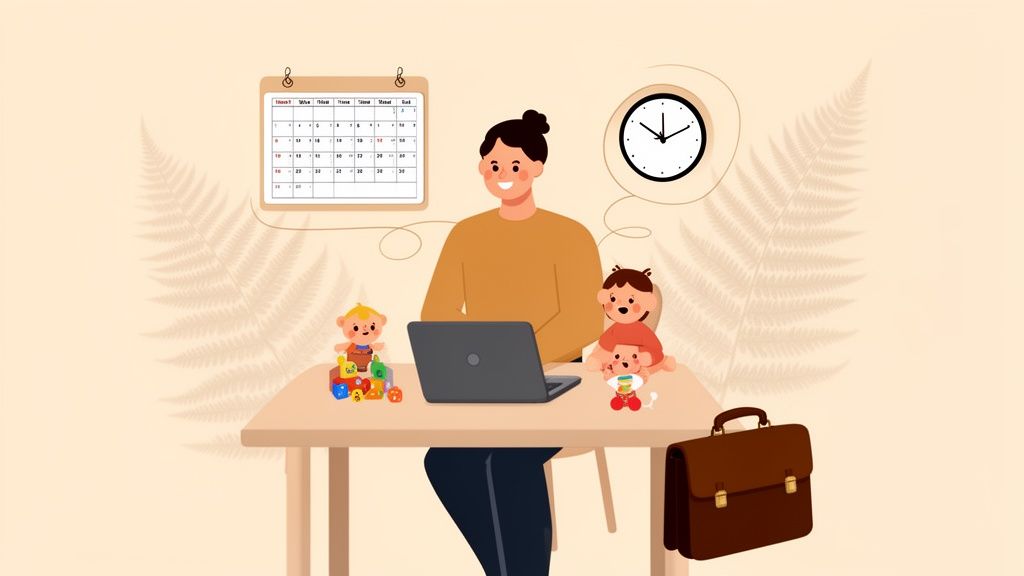
So, what does online study actually look like? Forget what you might imagine about rigid schedules and boring lectures. Modern online learning is built to be flexible and accessible.
It’s less like a traditional classroom and more like a 'digital apprenticeship' that moulds itself around your life, not the other way around. You can watch a tutorial on your lunch break, listen to a lecture while commuting, or knuckle down on an assignment after the kids are asleep. It’s all about fitting your learning into the pockets of time you already have.
A Long-Standing Choice for Working Adults
This style of self-directed learning isn't some new fad. Distance and online education have been a massive part of New Zealand's learning landscape for decades, especially for working professionals.
Way back in the 1980s, about 15-16% of all university students were learning by distance. That number has stayed incredibly steady over the years, even with all the tech changes we've seen. The vast majority of these learners are mature, working adults who need to balance study with their jobs and families. If you're curious, you can discover more insights into the history of distance learning in NZ.
This long-running popularity tells us one simple thing: online learning works. It’s a proven, practical way for busy Kiwis to gain new skills, go for that promotion, or switch careers entirely without putting everything else on hold.
The Power of Skills-Focused Learning
Today's online courses are heavily focused on practical, vocational outcomes. The goal isn’t just to learn theory from a textbook; it's about getting hands-on, job-ready skills that you can start using at work straight away.
The real power of online education is that it puts you in control. You get to learn on your own terms, gain skills that employers are actually looking for, and build a career that truly works for you.
As we go through this guide, we'll break down everything you need to know. We’ll cover how online study works day-to-day, how to choose the right course for your goals, and what online education NZ can really offer you.
How Online Study in NZ Actually Works
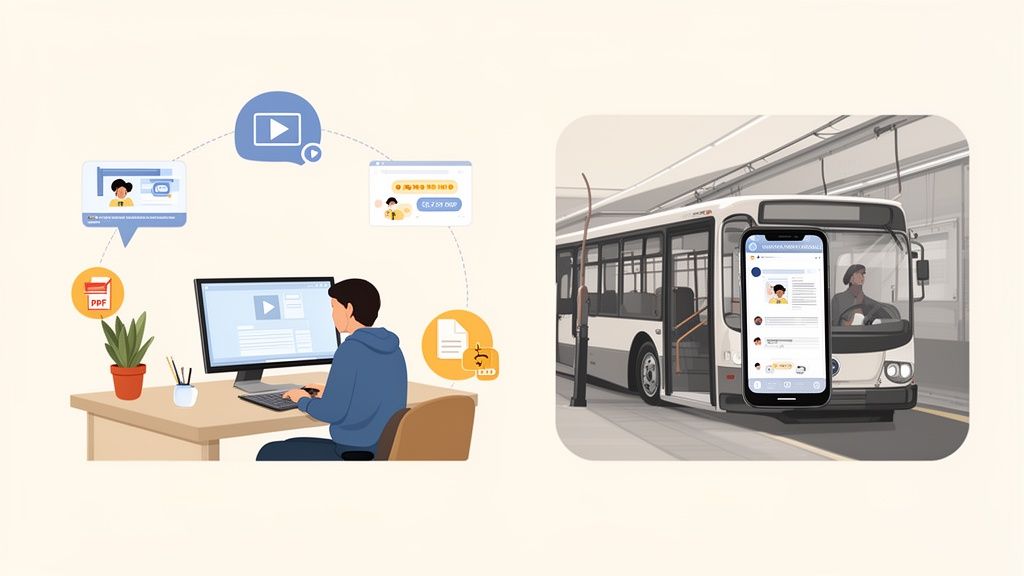
Jumping into online study for the first time can feel a bit like stepping into the unknown. How does it all come together without a physical classroom? The reality of online education NZ is that it’s built to fit into your life, not the other way around. It’s far more adaptable than any traditional campus schedule.
Think of it like being handed a digital key to your very own classroom. You log in to a central hub, usually called a Learning Management System (LMS), whenever and wherever suits you. This online portal is where you'll find everything you need: video tutorials, reading materials, quizzes, and assignment drop-boxes, all accessible 24/7.
This setup puts you firmly in the driver's seat. You could watch a lecture on your morning commute, take part in a forum discussion on your lunch break, or work through a module after the kids are asleep. It’s all about using those pockets of time to make real progress on your own terms.
Different Paths for Different Goals
It's really important to know that "online learning" isn't a one-size-fits-all term. In New Zealand, online education generally splits into two main categories, each designed for a different outcome.
One path is the structured online degree offered by traditional universities. These courses often mirror the on-campus experience with set timetables, live virtual tutorials, and formal academic qualifications registered on the New Zealand Qualifications Framework (NZQF). They are fantastic for deep academic pursuits but don't always offer the flexibility that working adults need.
The other path—and this is where we focus—is all about vocational, skills-first learning. These courses are designed to get you practical, job-ready skills without the fluff. They are typically self-paced, which means you call the shots on deadlines and study at a speed that works for your life.
The key difference is the outcome. One focuses on academic theory and degrees, while the other prioritises industry-relevant skills and certificates that you can apply at work almost immediately.
Platforms like Get Course are all about this second pathway, connecting you with courses that are built for career impact, not just academic credits.
The True Meaning of Flexible Learning
Flexibility isn't just a marketing buzzword; it's the very foundation of modern online vocational training. Recent data from Kiwi learners shows just how much adult students have redefined the "school day." The vast majority of online study now happens from midday onwards and stretches late into the evening.
In fact, thousands of learning sessions were logged between midnight and 6 a.m., proving that for many Kiwis, study is only possible when the rest of the world is quiet. Learners constantly pause for school runs, work shifts, and family dinners, then jump right back in where they left off. This is what it means for online education NZ to truly adapt to your life.
To make sense of the options, it helps to see them side-by-side.
Comparing Online Learning Models in New Zealand
This table breaks down the main differences between the self-paced vocational model and the more traditional university approach to online learning.
Knowing these distinctions is the first step to finding a course that genuinely fits your career ambitions and your personal life.
Connecting Your Study to In-Demand Career Paths
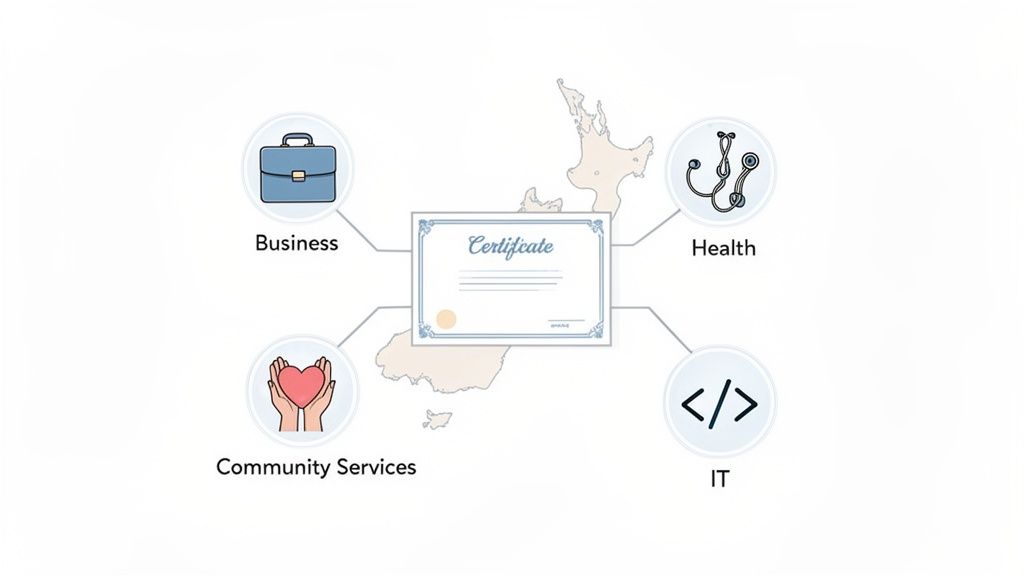
Let’s be honest. Choosing to study online isn’t just about collecting knowledge for the sake of it—it’s a strategic move to build a better future. The end game is almost always a real-world career outcome, whether that’s finally getting that promotion, switching industries altogether, or just gaining the confidence to get back into the workforce.
For most Kiwis looking into online education NZ, the big question is always, "How does this piece of paper actually get me a better job?"
The trick is to align what you study with New Zealand's high-growth industries. By picking a field where employers are actively hunting for skilled people, you’re turning your qualification into a direct investment in your career. Let's break down some of the most popular areas for online study and the jobs they actually lead to.
Business and Management
Business skills are the Swiss Army knife of any career—they’re incredibly versatile and always in demand, no matter the industry. It doesn't matter if you work in a big corporate office, a small local shop, or a non-profit; understanding the basics of management, finance, and marketing can unlock doors to leadership roles.
Online courses in this area are built to give you practical skills you can start using at work tomorrow. For example, getting qualified in project management is one of the quickest ways to boost your value to an employer.
- You could study: A Certificate in Project Management.
- This directly prepares you for roles like: Project Coordinator, Team Leader, or Project Support Officer.
- The outcome: You learn to juggle budgets, nail deadlines, and lead teams—exactly the skills bosses look for when deciding who gets more responsibility and a pay rise.
Health and Community Services
The health and community services sectors are the backbone of New Zealand society, and the need for skilled, compassionate people is only growing. Online study creates a clear and accessible pathway into these hugely rewarding fields, letting you gain essential skills without having to press pause on your current life.
Getting qualified in a field like counselling or aged care isn't just about feeling good; it's about stepping into a career with genuine long-term stability and making a real difference in your local community.
The link between study and career here is crystal clear.
- You could study: A Diploma of Counselling.
- This opens doors to becoming a: Community Support Worker, Mental Health Support Worker, or Youth Worker.
- The outcome: You gain the communication and support skills needed to help people through life's toughest moments, filling a critical need in communities all over NZ.
Likewise, something like a Certificate in Aged Care and Disability Support gives you the hands-on skills to provide vital care, leading you straight into jobs as a Healthcare Assistant or a Support Worker in residential facilities.
Information Technology (IT)
In a world that runs on technology, IT skills are no longer just for the tech nerds—they’re essential. The demand for professionals in everything from cybersecurity to web development is absolutely booming across New Zealand. Online IT courses offer a flexible way to get up to speed with the latest tech and earn the industry-recognised credentials that employers are desperate for.
This field is perfect if you enjoy solving problems and want a career that’s pretty much guaranteed to grow. The connection between learning and earning couldn't be more direct.
- You could study: A Certificate in Cyber Security.
- This prepares you for roles like: IT Security Analyst, Network Support Technician, or Security Administrator.
- The outcome: You walk away with job-ready skills to protect businesses from digital threats—a specialisation that is highly valued and very well-paid.
These focused qualifications are a much faster route into the tech industry than a traditional three-year degree. They are built around the practical, hands-on skills you'll use from day one on the job, making you an incredibly attractive candidate for employers needing to fill skills gaps fast. The world of online education NZ makes these career paths more accessible than ever before.
Navigating Course Fees and Funding Options
Investing in yourself is one of the best moves you can make for your career, but let's be real—the cost is always a big question. Thinking about fees and funding is a crucial first step, and getting it right means you can focus on your studies without the financial stress.
It’s worth getting clear on the different types of funding available here in New Zealand. You've probably heard of government schemes like student loans or the Fees Free initiative. These are fantastic options, but they are specifically for courses from NZQA-accredited providers like universities and polytechnics.
Vocational, skills-based online courses—the kind you’ll find through Get Course—are in a different camp. Because the providers we partner with offer courses that are not registered on the NZQA framework, government funding doesn't apply. But that’s not a roadblock. In fact, it opens up a world of practical, flexible alternatives designed for busy adults who are already juggling work and life.
Flexible Payment Plans
For most of us, the biggest hurdle isn't the total cost of a course, but the thought of paying it all in one go. This is where flexible payment plans are a game-changer. Instead of one big lump sum, you can break the fee down into small, manageable weekly or fortnightly payments.
Think of it like a subscription for your career. You pay a small, regular amount that fits neatly into your budget, all while you’re gaining skills that can boost your income. It completely removes that upfront financial pressure, making it possible to start upskilling right now, not just "someday."
Employer Funding and Professional Development
Don't overlook the resource sitting right in front of you: your current employer. Many Kiwi businesses set aside budgets for professional development because they know that skilled-up employees are a massive asset. When you learn more, you bring more value to the team.
Here's how to have that conversation:
- Build a business case. Don't just ask for money. Show them exactly how the skills you learn will directly benefit the company. Will you be able to improve a process, take on new projects, or solve a recurring problem?
- Frame it as a return on investment. This isn’t just a win for you; it's a win for them. They invest in your training, and in return, they get a more capable, motivated employee ready to contribute at a higher level.
- Come prepared. Have all the course details handy—the curriculum, the cost, and how long it takes. It shows you’re serious and have thought it through.
Investing in a vocational course is often the most direct and cost-effective path to a promotion or a pay rise. By looking into flexible payments and employer funding, you can get started without putting your life on hold.
Ultimately, figuring out the finances is about finding the pathway that works for you. Whether that’s a payment plan that fits your weekly budget or getting your boss to back your growth, practical solutions are out there. And if you're keen to explore some budget-friendly entry points, check out our guide to the best free online courses in NZ.
Choosing the Right Online Course and Provider
With so many options for online education NZ, figuring out where to start can feel like a mammoth task. But the key is to turn a vague idea into a clear, manageable plan. It’s less about finding some mythical "perfect" course and more about finding the right course for you—your career goals, your learning style, and your real-world schedule.
Before you even glance at a single course description, take a moment for an honest self-assessment. This is the foundation for every other choice you'll make, and it ensures you don't waste time looking at programmes that just aren't a good fit. Think of it as drawing up your personal study blueprint.
Start with Your Personal Blueprint
To get started, ask yourself a few direct questions. Actually writing down the answers can bring a surprising amount of clarity and help you focus your search.
- What's my end goal here? Am I aiming for a promotion in my current job, chasing a complete career change, or getting back into the workforce after a break? The more specific you can be, the better.
- How do I actually learn best? Do I absorb information by watching videos, reading through materials, or do I need to get my hands dirty with practical activities? Knowing this helps you find a course delivered in a way that just clicks.
- How much time can I realistically commit? Be brutally honest with yourself. Is it five hours a week after the kids are in bed, or can you dedicate a full day over the weekend?
Answering these questions first means you can immediately filter out courses that don’t line up with your goals or lifestyle, making your search a whole lot more efficient.
How to Evaluate an Online Provider
Once your personal blueprint is sketched out, you can start weighing up potential providers. It’s so important to look beyond the slick marketing and dig into the details that will actually matter to your success as a student.
Finding the right provider isn't just about the course content; it's about the entire support system they offer. A good provider acts as your partner, giving you the tools and encouragement you need to cross the finish line.
When you're comparing your options, keep these critical areas in mind:
- Industry Recognition: While it might not be NZQA-accredited, does the provider have a strong reputation for producing job-ready graduates? Look for genuine testimonials and evidence of industry connections.
- Tutor and Student Support: What does the support structure look like? You want easy access to tutors for course-specific questions and a dedicated student support team for any admin or tech headaches.
- Course Relevance: Is the curriculum up-to-date and designed with real-world job skills in mind? The content should directly relate to the career outcomes you're gunning for.
This focus on practical, career-oriented education is driving some serious growth. Market statistics show online learning is a fast-growing part of New Zealand’s education scene. Revenue for direct-to-consumer online learning platforms is projected to hit around US$38.12 million by 2025, a clear sign that more Kiwis are willing to invest directly in flexible, skills-based courses. You can read more about New Zealand's online learning market trends to see the full picture.
Your Partner in the Process
Trying to navigate all these details on your own can be a challenge. That’s where a discovery platform like Get Course comes in. Think of it less like a search engine for courses and more like a support service designed to simplify your journey right from the start.
The process is built entirely around you. A dedicated course advisor takes the time to properly understand your personal blueprint—your goals, your schedule, your budget. They then use that information to match you with a provider and programme that’s a genuine fit. This personalised approach takes the guesswork out of the equation, giving you confidence that you're making a properly informed choice for your future. To get a better sense of what's out there, you can explore the various online courses in New Zealand structured for flexible learning.
Practical Tips for Success as an Online Learner
Kicking off your journey with online education NZ is a massive step, but let's be real—turning that excitement into a qualification takes more than just good intentions. As an adult, you're not just a student; you're juggling work, family, and a hundred other things. To really thrive, you need to get clever about how you study.
It's not about magically finding huge chunks of free time that simply don't exist. It’s about building a routine that works for your life and making the most of the moments you can grab. Here are a few battle-tested tips that have helped busy Kiwi learners like you get across the finish line.
Create Your Dedicated Study Zone
You don't need a fancy home office. Your "study zone" could be the end of the dining table after dinner, a specific armchair, or even the kitchen bench while the kids do their homework. The point is to create a clear signal for your brain—and everyone else in the house—that when you're here, you're in study mode.
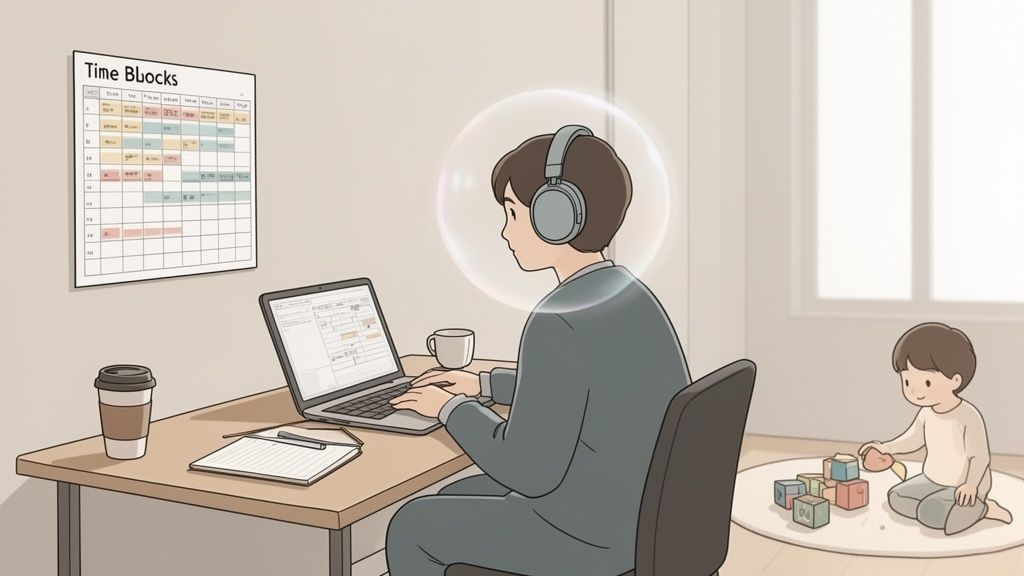
Think of it as your "focus bubble." A simple trick is to keep all your study gear in one portable box or bag. That way, you can set up and pack down in seconds. And honestly, a good pair of noise-cancelling headphones is a game-changer for many. They can instantly create a quiet space for concentration, even in the middle of a chaotic household.
The best study zones aren’t about physical space; they’re about mental space. It’s a dedicated spot that helps you consistently switch into learning mode, signalling to yourself that it's time to focus on your goals.
This simple act builds a powerful psychological trigger that boosts your productivity every time you sit down.
Master Your Time with Simple Techniques
Time management for an online learner isn't about complicated spreadsheets. It's about being intentional. One of the most powerful methods is time-blocking. Instead of a vague to-do list, you schedule your study tasks directly into your calendar as if they were meetings.
This small shift makes your study time feel concrete and non-negotiable.
- Be realistic: Don’t block out a three-hour marathon session if you know you’ll be interrupted. Instead, schedule smaller, achievable chunks—maybe 45 minutes while dinner is cooking or an hour after the kids are asleep.
- Be specific: Instead of just writing "Study," schedule "Watch Module 3 video" or "Draft first paragraph of assignment." This takes the guesswork out and makes it easier to just dive in.
- Protect your time: Treat these blocks with the same respect you'd give a work meeting. This is an appointment with your future career, and it deserves to be a priority.
By scheduling your study, you stop passively hoping to find the time and start actively making it. It’s a simple habit, but it’s often the single biggest factor in successfully finishing your online qualification.
Your Questions About Online Education, Answered
Thinking about diving into the world of online study? It's natural to have a few questions floating around. To help you feel completely confident about taking that next step, we've put together some straightforward answers to the queries we hear most often from Kiwis like you.
Are These Online Qualifications Recognised By NZ Employers?
Absolutely. In fact, New Zealand employers are increasingly on the lookout for candidates who have specific, practical skills they can bring to the job from day one. Industry-focused qualifications are the perfect way to prove you have that current, job-ready knowledge.
While the vocational courses you'll find here aren't NZQA accredited, they are built with direct input from industry experts to meet real-world demands. Earning a certificate or diploma shows a serious commitment to your professional growth and signals to employers that you have the exact skills they're trying to hire.
Do I Need to Be a Tech Wizard to Study Online?
Not at all. If you can browse a website and send an email, you've already got all the tech skills you need to succeed. Modern online learning platforms are designed to be intuitive and easy to navigate.
Plus, providers offer full technical support and orientation sessions to get you comfortable with the system. They'll show you how to find your course materials and submit assignments without any stress. The technology is there to make learning easier, not to put up a roadblock.
What Is the Weekly Time Commitment for an Online Course?
This is the best part of self-paced learning: you are in total control. There are no rigid weekly hours you have to clock in for.
Your course provider will give you an estimate of the total learning time, but it’s completely up to you how you fit it in. Some students might block out 10-15 hours a week to power through it, while others might prefer a more relaxed pace of 4-5 hours a week, fitting it around work and family. The flexibility is designed to work with your life, not against it.
You are never learning alone. Online study is designed with a full support system to help you stay on track, get answers, and feel connected throughout your course.
You'll have access to expert tutors for any questions about your coursework, plus a dedicated student support team for any admin or tech help you might need. It ensures you have a whole team behind you, ready to help you hit your goals.
Ready to find a course that fits both your career goals and your life? The team at Get Course New Zealand is here to help you explore your options and match you with the right programme.
Find Your Course
Compare courses across every field we write about, and enquire in under a minute.