Alternative Pathways to University: Your Guide to Uni Entry Options
Explore alternative pathways to university with practical routes from diplomas to foundation courses to earn your degree.
If the straight-and-narrow path from high school to university doesn't feel like your story, you're in good company. Heaps of Kiwis find that the traditional route just doesn't fit, whether it's because they didn't get University Entrance (UE) or they're coming back to study after years away.
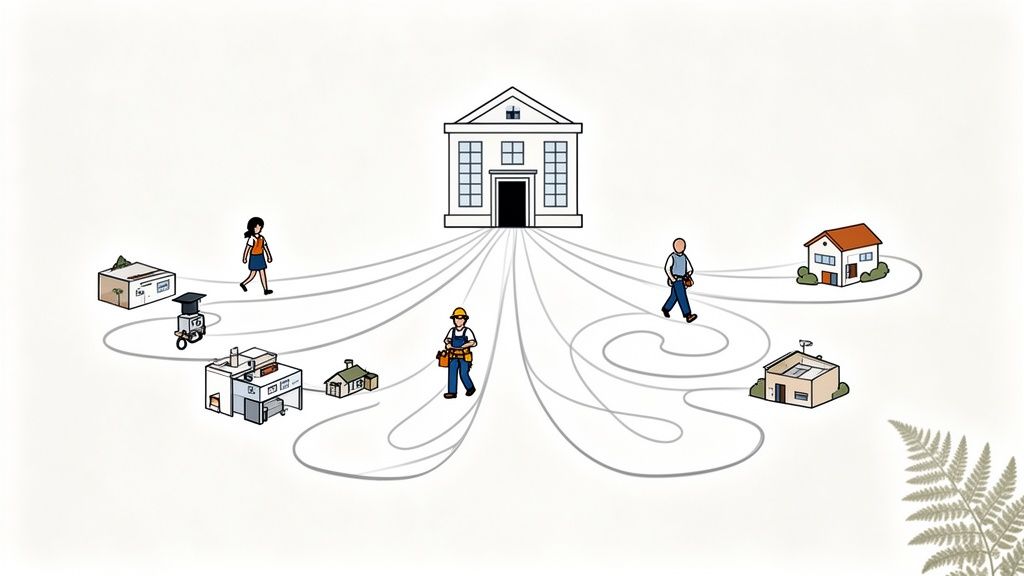
But here’s the good news: getting a degree isn't a single, one-way street. It’s more like a whole network of roads, scenic routes, and expressways all leading to the same place.
Your University Journey Has No Single Starting Point
Think of it like planning a road trip. Sure, you could take the main motorway straight there. But you could also take a different route, one with interesting stops along the way that give you a better view and maybe even teach you a few things before you arrive. That’s what alternative pathways to university are all about. They get you exactly where you want to go, often arming you with more practical, real-world skills in the process.
These aren't detours or back doors. They are structured, practical programmes like foundation courses or diplomas that act as a launchpad, helping you build the skills and confidence you need to succeed in higher education.
A Smarter Launchpad for Your Future
Choosing an alternative pathway is a strategic move. It’s a flexible approach to learning that respects your unique life experiences and goals. Whether you need to brush up on academic fundamentals, switch careers entirely, or gain specific skills, there’s a route designed just for you.
So, what are the real perks?
- Build Your Confidence: Bridging and foundation courses are purpose-built to ease you into academic life. They sharpen your study skills so you can hit the ground running when you start your degree.
- Gain Practical Skills: Many certificates and diplomas are all about hands-on, job-ready training. You gain valuable experience that can often be credited towards your university degree later on.
- Create Real Flexibility: These pathways often let you study at your own pace. For adult learners juggling work, family, and other commitments, this is a game-changer.
This guide is here to show you that your starting point doesn’t define your finish line. These alternative routes are becoming more and more common, helping thousands of Kiwis smash their academic and career goals every year.
Ultimately, these options put you back in the driver's seat of your education. They give you a chance to prove what you're capable of, explore different fields, and walk into university feeling prepared, motivated, and ready for what's next. By understanding all the different pathways available, you can pick the one that truly lines up with where you want to go.
Why Are So Many People Ditching the Direct-to-Uni Route?
The classic Kiwi dream of marching straight from high school into a university lecture hall is starting to look a bit old-fashioned. More and more, people are figuring out that the most direct path isn't always the smartest one. Instead, they're strategically choosing alternative pathways to university.
This isn't about finding a "back door" into a degree. It's a savvy response to a world where flexibility, real-world skills, and different life stages count for more than ever before.
A Smarter Way to Learn
The one-size-fits-all model of education just doesn't cut it anymore. Life is messy, and learners need options that fit their own unique situations—whether you’re a recent school leaver who just missed out on University Entrance, a parent getting back into the workforce, or a professional looking to switch gears mid-career.
Non-traditional routes get this. They offer the freedom to study part-time, online, or in focused blocks, swinging the doors of higher education open to a much wider group of people. This adaptability is exactly why these pathways are gaining so much traction across New Zealand.
The Numbers Don't Lie
You just have to look at the data to see how much things are changing. While traditional university enrolments have taken a bit of a dip, other types of tertiary education are absolutely booming. It’s a clear signal that Kiwis are thinking differently about higher learning.
For example, fresh data from the Tertiary Education Commission tells a fascinating story. In the year leading up to April 2023, provider-based tertiary learners dropped by 4% (11,100 students) and universities lost 5,860 students. But that's not the whole picture. Over the same period, foundation education programmes saw a massive 34% surge, bringing an extra 5,460 learners into the system. You can dig into the numbers yourself in the official TEC enrolment update.
What this really shows is that these alternative entry points are creating genuine opportunities for people who might otherwise have been locked out.
Opening Doors for Everyone
One of the best things about alternative pathways is how they level the playing field. They create a more inclusive and fair system for everyone, no matter their background or what their school report card looked like.
- For Māori and Pacific Learners: These pathways can offer culturally aware support and learning environments that are designed to help bridge gaps and drive success.
- For Adult Learners: They give you a practical way to get back into study without starting from square one, recognising the value of your life and work experience.
- For Career Changers: They provide targeted, skill-based training that makes it easier to slide into a new industry without committing to a full three-year degree right away.
By providing more than one way to get in, these routes make sure a person's potential isn't defined by their past.
Choosing an alternative pathway is a forward-thinking decision. It's about building a solid foundation of skills and confidence, ensuring that when you do enter a degree programme, you're not just ready—you're ahead of the curve.
Think of it like an athlete getting ready for the Olympics. They don't just show up on the day of the final. They spend time in specialised training camps and compete in qualifying rounds first. All that prep work builds their strength, sharpens their technique, and dials up their confidence, making them a much tougher competitor when it really counts.
Ultimately, this shift is all about a smarter, more modern take on education—one that celebrates different journeys and understands that the best path is always the one that fits your goals, your ambitions, and your life.
Breaking Down Your Pathway Options
So, now you've got the bigger picture on why so many Kiwis are looking beyond the traditional route to university, let's get into the nitty-gritty of what these options actually look like. Think of this as your personal roadmap. Each pathway is designed for different starting points, goals, and learning styles, so getting to know them is the first step to picking the one that's right for you.
We’ll break down the most common and effective alternative pathways to university here in New Zealand. This will help you see exactly how each one works, who it’s best suited for, and what doors it can open.
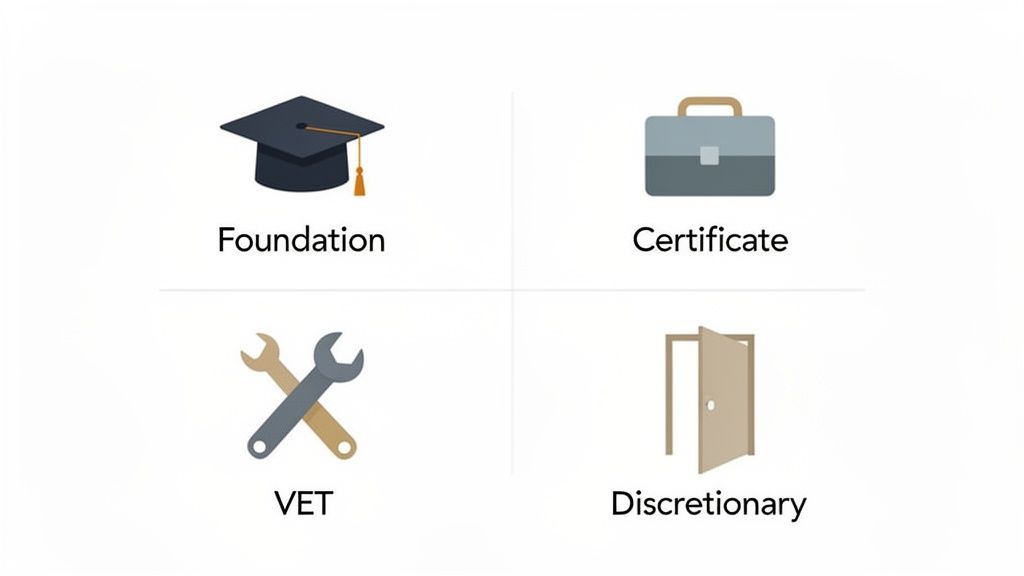
Foundation and Bridging Programmes: Your Academic Launchpad
Picture this: you're about to climb a huge mountain. Instead of just starting at the steepest, rockiest part, you head to a base camp first. It’s here that you acclimatise, double-check your gear, and get some crucial tips from seasoned guides. This is precisely what a foundation or bridging programme does for your academic journey.
These courses are purpose-built to get you ready for the demands of degree-level study. They zero in on building core academic skills—think essay writing, critical thinking, research methods, and time management.
They are a perfect fit for:
- School leavers who didn't quite get University Entrance (UE) but have the determination to succeed.
- Adult learners coming back to study after a long time away who need to dust off their academic skills.
- Anyone who wants a supportive, structured environment to build confidence before jumping into a full degree.
A typical foundation course runs for six months to a year. Once you successfully complete it, you're usually guaranteed a spot in specific degree programmes at a partner university.
Certificates and Diplomas: Your Specialist Toolkit
If foundation courses are the base camp, then certificates and diplomas are your specialised toolkit. These qualifications give you practical, industry-focused skills in a particular field, whether that's business, IT, health, or the creative arts. They are a direct line into a specific job or industry.
These qualifications are ideal for people who want to gain job-ready skills fast, while still keeping the door to university open for later. Many diplomas have "articulation agreements" with universities, which means your diploma can count as the first year of a related bachelor's degree.
This pathway is incredibly valuable because it offers a two-for-one benefit: you walk away with a standalone qualification that can get you into the workforce, and you build credits that can be put towards a degree. That kind of flexibility makes it a really popular choice.
Certificates and diplomas are not just stepping stones; they are powerful qualifications in their own right. They provide a perfect blend of theoretical knowledge and practical application, making you a more versatile and employable candidate.
Vocational Education and Training (VET): Hands-On Expertise
Vocational Education and Training (VET) is all about learning by doing. It covers a massive range of practical fields, from trades and construction to hospitality and animal care. If you're imagining an apprenticeship or a hands-on course at a polytechnic, that’s VET in action.
While often seen as separate from university, VET is increasingly recognised as a smart and strategic alternative pathway to university. For example, completing an advanced trade qualification can give you the foundation and entry requirements for a degree in a field like construction management or engineering technology.
The emphasis on practical skills is more valued now than ever before. In fact, there's a significant trend in New Zealand's education sector towards vocational and shorter tertiary programmes. OECD data shows that 26% of new tertiary students in New Zealand choose these shorter, practical programmes—a figure much higher than in many other developed nations. This is backed by national trends, which show foundation education enrolments have climbed by 34% while university enrolments have dipped. You can dig into the details in the OECD's Education at a Glance 2023 report to see how New Zealand's educational landscape is shifting.
Special or Discretionary Admission: A Case-by-Case Entry
Sometimes, life experience and raw potential count for more than what you got in high school. Special and Discretionary Admission pathways were created for exactly this reason. They are for people who don't meet the standard academic entry requirements but can demonstrate they have what it takes to thrive at university.
- Discretionary Entrance is usually for students under 20 who achieved outstanding results in NCEA Level 2 and have their school principal’s backing. It’s designed for high-achievers who, for a good reason, didn't complete a full year of Level 3.
- Special Admission is generally for students over 20. For this, universities will look at your work history, life skills, and any other training you’ve done. You might be asked to write an essay, submit a portfolio, or sit an entrance test to prove you're ready for uni-level study.
This is the most personalised pathway of them all, as it truly takes your unique journey into account.
Comparing Alternative Pathways to University
To help you see how these options stack up, this table provides a side-by-side comparison. It's designed to help you decide which route best fits your goals, timeline, and current qualifications.
Ultimately, choosing the right path depends entirely on where you want to go. Whether you need to build up your academic foundations, get practical skills, or use your life experience to your advantage, there are fantastic alternative pathways to university ready to help you get there. Exploring the different types of pathway courses available is a great way to get a clearer picture of what’s out there for you.
How Certificates And Diplomas Can Unlock University Credit
Many people think of certificates and diplomas as purely for getting a job, completely separate from the academic world of university. But these practical qualifications are often a powerful secret weapon for getting into uni and even skipping entire chunks of a degree. They are a core part of many successful alternative pathways to university.
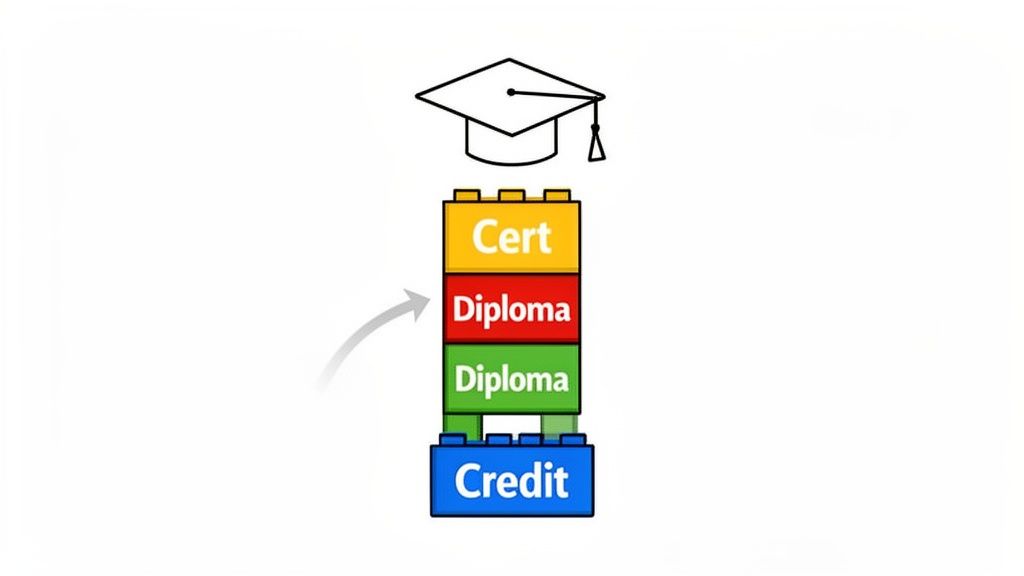
Think of it like building with LEGO. A full degree is a big, complex model. Instead of starting with hundreds of tiny, individual bricks (like first-year uni papers), a diploma is like a pre-built, solid section. You can often slot that whole piece directly into your degree structure, saving you a heap of time, money, and hassle.
This approach gives you the best of both worlds. You get practical, work-ready skills from your certificate or diploma while building a foundation that universities actually recognise and value. It's how you turn hands-on training into academic credit.
The Power of Articulation Agreements
The real magic behind this often comes down to something called an articulation agreement. This is basically a formal partnership, a pre-approved deal, between a course provider and a university that guarantees your diploma credits will count towards a specific degree.
These agreements map out a clear route from one qualification to the next. They take all the guesswork out of credit transfers, so you know exactly what your diploma is worth before you even sign up.
For example, finishing a two-year Diploma in Business might have an articulation agreement with a university's Bachelor of Commerce programme. That could mean you walk straight into the second year of the degree, getting a full year of university study credited to you. It's a massive advantage that validates your practical learning and fast-tracks you to a full degree.
Understanding Credit Recognition
Even if there isn't a formal articulation agreement in place, most universities have a process for credit recognition. This is sometimes called Recognition of Prior Learning (RPL). It’s where the university looks at your completed certificate or diploma on a case-by-case basis to see how the subjects you studied line up with their own degree courses.
To get this moving, you’ll usually need to be proactive. You'll have to provide the university with your academic transcript and the course outlines from your diploma. Their admissions team will then evaluate what you've learned and decide how many credits they can give you for it.
Key Takeaway: You have to be your own advocate here. Don't just assume credits will be transferred automatically. Get in touch with the university's admissions team, ask about their credit recognition policies, and have all your documents ready to make a strong case for your prior learning.
While this system can be a lifeline, it doesn't always run as smoothly as it should. A major analysis by Universities NZ found that of the 14,106 students who left their first university without a degree, almost half (45%) went on to study somewhere else. Shockingly, only 6.5% of those students received recognition for their prior credits. This highlights a huge bottleneck that well-defined alternative pathways can help solve. You can dig into these educational trends in this detailed OECD report on New Zealand.
The Real-World Benefits
So, what does this all actually mean for you? Starting with a certificate or diploma offers some very real advantages.
- You Save Time and Money: Getting credit for your diploma means fewer university courses to complete and pay for. Simple as that.
- You Gain Practical Skills First: You’ll start your degree with a solid base of industry-relevant knowledge, which can make your uni studies feel more connected to the real world and easier to manage.
- You Have a Qualification Safety Net: If life throws you a curveball and you need to hit pause after your diploma, you still walk away with a valuable, work-ready qualification.
This strategy is one of the smartest alternative pathways to university. By exploring the huge range of nationally recognised courses, you can find a programme that not only gets you a job today but also builds a direct bridge to the university degree you're aiming for tomorrow.
Real Stories From Kiwis Who Succeeded on Their Own Terms
Theory is one thing, but seeing how these alternative pathways to university actually play out in the real world is where the magic happens. Your starting point doesn't define your finish line, and the stories of everyday Kiwis prove just that.
Let's take a look at a few people who carved out their own routes to success, showing there's more than one way to nail your academic and career goals.
From Disappointment to a Dream Degree
Meet Liam, a recent school leaver from Christchurch. He had his heart set on a Bachelor of Science but missed out on University Entrance by just a handful of credits. The initial sting of disappointment was huge, but he wasn't about to give up.
Instead of writing off a whole year, Liam jumped into a six-month foundation course focused on health sciences. This programme was built specifically to bridge the gap between high school and the demands of university study.
It wasn't just about cramming the same old subjects; it was about learning how to learn at a higher level. He got to grips with academic writing, critical thinking, and proper lab skills in a supportive, small-class environment. When he finished, not only did he have guaranteed entry into his science degree, but he also walked into his first lecture feeling way more prepared and confident than many of his peers.
The Career-Changer’s Leap Into Tech
At 35, Sarah from Auckland felt completely stuck. Her admin job paid the bills, but she was fascinated by the fast-moving world of IT. The thought of a full three-year degree felt impossible while juggling a mortgage and family life.
Her solution? A one-year, online Diploma in Information Technology. The flexibility of online study meant she could finally fit learning around her life, not the other way around. The diploma armed her with practical, job-ready skills in networking and cybersecurity.
But here's the clever part: her diploma had an articulation agreement with a local university. This meant she got a full year of credit, letting her step straight into the second year of a Bachelor of Applied Information Technology. She managed to pivot her career faster and more affordably than she ever dreamed.
These stories highlight a crucial point: an alternative pathway isn't a lesser option. It's often a smarter, more strategic choice that equips you with resilience, practical skills, and a clear sense of direction before you even set foot on campus.
From the Tools to Project Management
After a decade on the tools as a qualified builder, Tane was ready to step into a leadership role. He knew a degree in project management would open doors, but he didn't have the classic academic record needed for university.
What he did have was ten years of hands-on experience and a national trade qualification. Tane went for the Special Admission pathway, which is designed for mature students over 20.
He put together a portfolio showcasing his practical knowledge, on-site problem-solving skills, and the leadership he'd shown since his apprenticeship. The university saw his real-world experience as a powerful foundation for degree-level study. Tane’s journey is a perfect example of how vocational training can be a respected and powerful launchpad into higher education, turning practical expertise into academic success.
Your Action Plan to Find the Right Path
Right, feeling inspired? Information is one thing, but turning it into action is what really counts. Here’s a straightforward, step-by-step checklist to get you moving on finding the perfect alternative pathway to university for you, starting today.
Think of it as your personal game plan. By breaking the process down into manageable chunks, you can move forward with confidence and start taking control of your educational future.
Stage 1: The Self-Assessment
Before you even glance at a course catalogue, it's time to look inwards. What are your long-term career goals? What subjects genuinely get you excited? And what skills have you already picked up from work or just life in general?
Answering these questions honestly gives you a clear destination. It makes sure the path you choose isn't just about getting into uni, but about building the future you actually want for yourself.
Your past experiences aren't roadblocks; they're your secret weapon. The skills you've gained—whether in a job or from a personal project—can be incredibly valuable for special admission applications or helping you pick a relevant diploma.
Stage 2: Research and Connect
With your goals mapped out, it’s research time. First, pinpoint the university degree you're aiming for and dig into its specific entry requirements. No assumptions here!
Next, start looking for bridging courses or diplomas that line up with that degree. Now for the most important part: get on the phone or send an email directly to the university's admissions team.
Ask them direct questions like:
- Do you have any formal agreements (articulation pathways) with diplomas I’m looking at?
- What’s your process for credit recognition or Recognition of Prior Learning (RPL)?
- If I apply for special admission, what documents will I need to provide?
Getting answers straight from the source saves you a world of guesswork and helps you build a rock-solid plan. For more tips on getting ready for different learning styles, check out our comprehensive article on succeeding with online study in NZ.
Frequently Asked Questions About University Pathways
Trying to figure out the world of alternative pathways to university can feel a bit overwhelming, and it's normal to have questions. To help you get some clarity, here are some straightforward answers to the queries that pop up most often.
How Do Bridging and Foundation Courses Differ?
Think of it this way: a foundation course is like a full-on academic bootcamp. It usually runs for six to twelve months and is designed to give you a solid grounding in the broad subject knowledge and study skills you'll need for a specific degree, like health sciences or engineering.
A bridging course, on the other hand, is more of a targeted skills workshop. It’s much shorter and laser-focused on plugging a specific knowledge gap. For instance, it might get you up to speed in chemistry or maths so you can meet the entry requirements for a particular university paper.
Will My Diploma Be Accepted for University Credit?
This is a big one, and the short answer is: often, yes! But it’s not always a given. The smartest move is to look for diplomas that have official articulation agreements with universities. This is basically a pre-arranged deal that guarantees your credits will be recognised and count towards your degree.
If there isn't a formal agreement in place, you’ll need to apply for Recognition of Prior Learning (RPL). This involves sending your course transcripts to the university, where they’ll assess how your diploma lines up with their degree programme on a case-by-case basis. My advice? Always have a chat with the university’s admissions team first.
Is an Alternative Pathway Longer Than Direct Entry?
Not always. While adding a foundation year does tack on extra time at the start, that preparation can be the key to your success down the line. In fact, some pathways can actually be faster.
For example, if you complete a two-year diploma that gives you credit for the first year of a three-year bachelor's degree, you end up finishing both qualifications in the same three-year timeframe.
Choosing an alternative route is about finding the most effective path for you, not just the shortest one. The extra preparation often leads to stronger academic performance and a lower chance of dropping out later.
The need for these flexible routes is crystal clear. Recent data from NZQA highlights ongoing equity challenges, showing that Māori and Pacific students achieve University Entrance at roughly half the rate of their peers. You can dig into the 2023 NCEA and UE attainment data to see for yourself why these inclusive pathways are so vital for learners across New Zealand.
Ready to find a course that fits your life and career goals? Get Course helps you discover flexible, online study options to build your skills and create your own pathway to success. Explore hundreds of courses at https://getcourse.co.nz.
Find Your Course
Compare courses across every field we write about, and enquire in under a minute.