Find the Best Distance Learning Courses NZ Offers
Explore top distance learning courses NZ has for your career. This guide covers flexible online study, costs, and finding quality courses to get you job-ready.
Distance learning courses in NZ are a brilliant, flexible way to get practical skills that actually fit into your life. We've come a long way from old-school correspondence courses; today's online education is dynamic, engaging, and perfect for anyone looking to upskill, switch careers, or just dive into a passion from anywhere in New Zealand.
Why Kiwis Are Choosing Flexible Online Learning
The whole idea of what 'education' looks like is changing. For a lot of Kiwis, the traditional model of showing up to classes on a set schedule simply doesn't mesh with the reality of modern life. Juggling a job, family commitments, and trying to have a personal life leaves very little room for rigid timetables.
This is exactly where distance learning comes in, offering a genuinely practical alternative that puts you back in the driver's seat.
Think of it as education on your terms. Instead of twisting your life into a pretzel to fit a course, the course bends to fit your life. This flexibility is a huge part of why online study has exploded in popularity right across New Zealand.
Learning That Fits Your Schedule
The real magic of online courses lies in their adaptability. You get to decide when you study. Maybe it's early in the morning before anyone else is awake, on your lunch break, or late at night after the kids are finally asleep. This self-paced approach takes the pressure off, letting you learn at a speed that feels right for you.
And it’s a fast-growing trend. New Zealand's online education sector is on track to hit US$400.58 million in 2025. It’s clear that learning isn't just a 9-to-5 thing anymore. The data shows thousands of study sessions happen between midday and midnight, with a surprising number of dedicated Kiwis even logging on between midnight and 6 am.
Who Benefits from Online Study
Distance learning isn’t a one-size-fits-all solution; it's for everyone. It caters to a massive range of goals and life situations, making it the perfect choice for so many people.
You could be:
- A working professional aiming to get new skills for a promotion.
- A parent getting back into the workforce who needs to freshen up their CV.
- Someone living in a remote area without a campus just down the road.
- A career changer looking to move into a new industry without quitting your current job.
No matter your reason, the core benefit is the same: getting access to high-quality, job-focused training without the headaches and logistical juggling of on-campus study. You can explore the many benefits of pursuing education online to learn more.
Understanding Modern Distance Learning
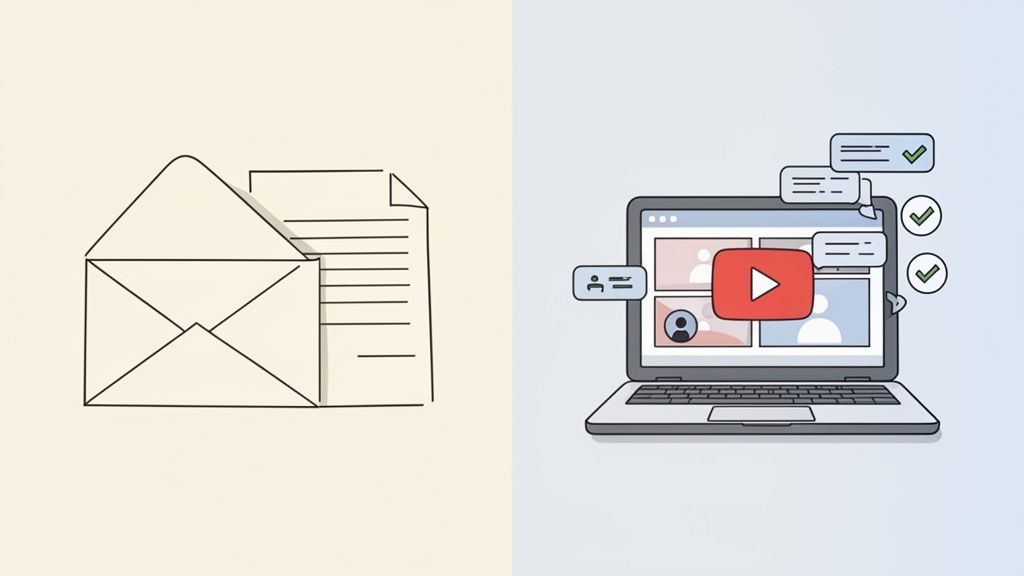
When you hear ‘distance learning’, it’s easy to picture the old days of correspondence school—paper assignments posted back and forth with long waits for feedback. Let’s be clear: today’s reality couldn't be more different.
Modern distance learning courses in NZ have gone through a massive evolution. Technology has completely reshaped the experience, making it far more connected, dynamic, and engaging.
Think of the leap from getting a printed community newsletter in your letterbox to joining a live, interactive video webinar. That’s the scale of change education has seen. Today's online learning platforms are designed for genuine interaction, not just one-way information delivery. They are built to help you truly grasp new concepts in a flexible environment that works for you.
This updated approach means you can learn practical, job-ready skills without putting your life on pause. It’s an ideal setup for anyone who needs education to fit around their existing responsibilities, not the other way around.
From Mail to Modules
At the heart of modern distance learning is the online learning platform, a central digital hub for all your course materials. Forget waiting for the postie; everything you need is available 24/7. This structure allows you to learn at your own pace, revisiting tricky subjects or speeding through topics you find easier.
The real power of online learning is that it respects your time and commitments. It empowers you to build a study schedule that works for you, whether that's during a lunch break, after hours, or on the weekend.
Most modern online courses will include a mix of these elements:
- Video Lectures: Pre-recorded lessons from industry experts that you can watch (and rewatch) anytime.
- Interactive Quizzes: Quick checks for understanding that give you immediate feedback.
- Downloadable Resources: Workbooks, templates, and guides you can keep for future reference.
- Online Forums: A space to connect with fellow students and tutors to ask questions and share ideas.
This digital toolkit creates a much richer and more supportive learning experience. It ensures you have everything required to succeed, all in one place.
A Focus on Practical Skills
A key feature of many distance learning courses NZ offers, particularly those from private training providers, is their sharp focus on practical, industry-aligned skills. These courses are specifically designed to bridge the gap between knowing something and doing something, getting you job-ready faster.
Instead of getting bogged down in academic theory, vocational online learning prioritises the hands-on abilities that employers are actively looking for. For instance, a course in business administration won't just teach you management theories; it will equip you with skills in specific software, communication protocols, and project coordination that you can use on day one of a new job.
This pragmatic approach is what makes online study such a powerful tool for career progression.
How to Compare Different Online Course Types
Stepping into the world of online study can feel a bit like walking into a massive library—so many options, it's hard to know where to start. The secret is realising that not all distance learning courses in NZ are built for the same purpose. The right choice for you really comes down to one simple question: what are you trying to achieve?
Are you after a new skill you can add to your CV right now for a quick career boost? Or are you looking for a more substantial qualification that proves you've got a whole set of professional skills? Each option has its own strengths, depending on where you want to go and how fast you want to get there.
Think of it this way: a quick weekend trip up the coast is perfect in a zippy little hatchback. But if you’re planning a cross-country adventure, you’ll want something built for the long haul. Both are great, but you wouldn’t use a hatchback to tow a caravan. It's the same with courses—matching the course to your goal is the first step to getting it right.
Short Courses for Quick Upskilling
Skills-based short courses are your go-to for making a fast impact. They're laser-focused, super practical, and designed to teach you a specific, valuable skill in a short amount of time. These are brilliant for plugging a gap in your knowledge or adding another string to your bow.
For example, a marketing coordinator might take a short course in Google Analytics. They're not aiming to become a data scientist, but having that extra layer of knowledge makes them far more effective in their current role.
Certificates for Professional Development
Professional development certificates offer a deeper dive. These are more structured programmes that cover a broader area of expertise and are often recognised by employers as a serious mark of capability and commitment. They're a powerful way to beef up your CV or get ready for a totally new job.
Here are a few popular paths people take:
- Certificate in Project Management: This opens up opportunities in coordination and leadership roles across just about every industry.
- Certificate in Business Administration: Gives you the core skills needed for office management and operational support roles.
- Certificate in Aged Care and Community Services: Arms you with the hands-on knowledge for a really rewarding career in the healthcare sector.
Courses like these offer a direct path to in-demand, vocational skills without the time and expense of a university degree. You can check out a wide variety of these flexible online courses to see what might fit your own career plans.
To help you decide, here’s a quick breakdown of how these different course types stack up.
Comparing Online Course Types in NZ
This table should give you a clearer picture of the different kinds of distance learning courses and which one might be the best fit for your goals.
Ultimately, the 'best' course is the one that gets you where you want to go. Whether it's a short sprint to learn a new skill or a longer journey toward a new career, there's a flexible option out there for you.
Industry-Recognised Certifications
Industry-recognised certifications can validate your skills against a specific industry benchmark. While many fantastic vocational courses provide immense value on their own, some qualifications from other providers might give employers an extra level of confidence.
These certifications can act as a trusted credential for employers, proving you have the precise skills they are looking for. They demonstrate not just knowledge, but the practical ability to apply it effectively in a professional setting.
Finding Quality and Credibility in Your Course
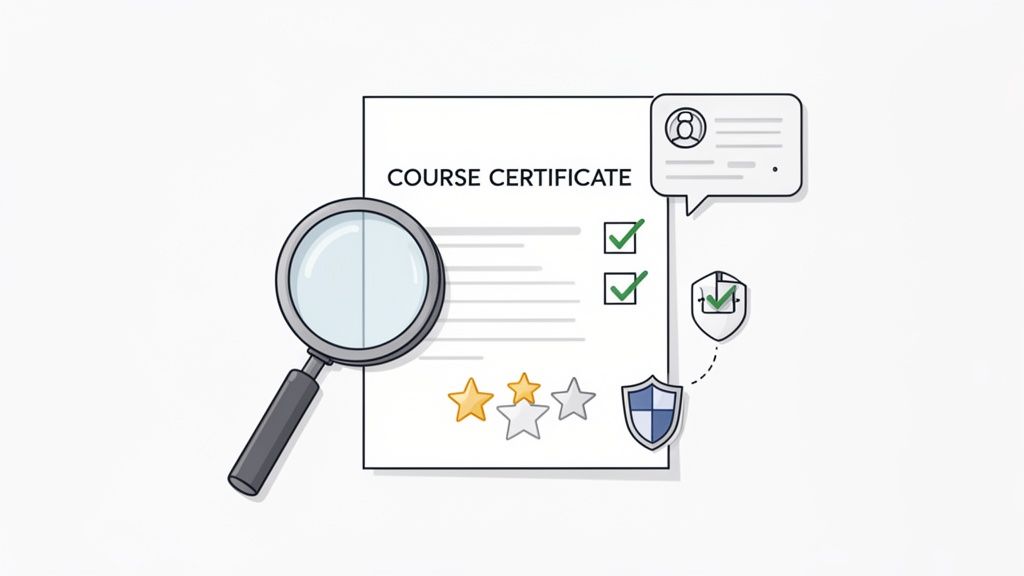
When you’re putting your hard-earned time and money into a course, you want to be certain it’s the real deal. It’s a common misconception that a course must be registered on the NZQA framework to be valuable. In reality, many practical and industry-respected distance learning courses NZ employers look for are not part of this framework.
So, how do you spot a good one? Their credibility comes from a direct, tangible link to what the industry actually needs. This means you need to look for different signals of quality—ones that prove a course will give you the real-world skills it promises.
The best online courses are transparent. They clearly show you what you'll learn, who created the material, and what past students think. This transparency is a powerful indicator of credibility and value.
Finding a high-quality course is about looking beyond a formal registration. It’s about checking if the course delivers skills that will genuinely move the needle for your career.
Your Quality Checklist
As you start comparing your options, use this checklist to pick out the credible providers—the ones truly focused on your success and career outcomes. Any reputable provider will have this information front and centre.
- Detailed Curriculum Outline: Look for a clear, module-by-module breakdown of what you'll be studying. Does it get specific about the skills and topics? Vague promises are a definite red flag.
- Expert Course Developers: Who actually wrote the course material? Quality providers are proud to showcase the industry professionals who designed their content because that real-world experience is what you’re paying for.
- Genuine Student Reviews: Don't just rely on the testimonials on their website. Check for unfiltered feedback on independent platforms like Trustpilot to get an honest insight into the learning experience, tutor support, and overall value.
- Clear Learning Outcomes: The provider should be able to tell you exactly what you will be able to do after you finish. These outcomes need to line up with the skills employers are actively hiring for.
Industry Recognition vs Formal Accreditation
It’s crucial to understand the difference between formal accreditation and genuine industry recognition. While some specific roles and qualifications require government registration, many vocational courses get their value from being known and respected by employers in that field. For a deeper look, check out our guide on the importance of accreditation and quality in online courses.
Think of it this way: a chef’s skill is proven by the amazing food they cook and their reputation in the hospitality industry, not just by their culinary school certificate. In the same way, many distance learning courses NZ provides are designed to build your practical skills, help you create a strong portfolio, and arm you with knowledge that directly impresses hiring managers. That’s the kind of credibility that leads to real job opportunities.
Managing Costs with Flexible Payment Options
Investing in your education is one of the best moves you can make for your career, but let's be honest—the upfront cost can sometimes feel like a massive hurdle. When you start exploring distance learning courses NZ has on offer, you'll see that the pricing is designed to reflect the real-world value and expert support you're getting.
The cost of vocational courses can vary quite a bit, and it usually comes down to a few key things. A deep-dive certificate programme with heaps of tutor support and detailed modules will naturally cost more than a shorter, more focused skills course. The depth of the material and how much one-on-one time you get with experts are what really shape the investment.
But a higher price tag shouldn't stop you. Most providers get that financial flexibility is crucial, so they’ve set up their payment systems to make education accessible to everyone.
Making Your Course Affordable
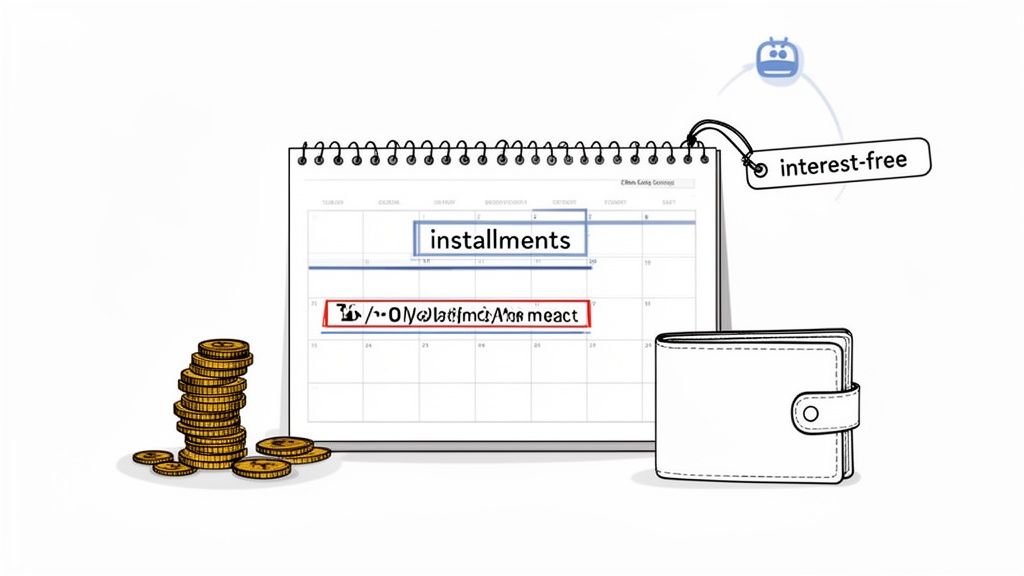
The most popular way to manage course fees is with interest-free payment plans. This is an absolute game-changer for many learners. It breaks down what looks like a big number into small, easy-to-handle weekly or fortnightly payments.
Think of it like a gym membership or a subscription service, but for your career. Instead of needing the full amount before you even start, you can spread the cost out while you study, paying for your qualification as you go.
This approach takes all the stress out of a big upfront payment. It often means you don't even need to think about traditional student loans. You can just budget effectively and get on with boosting your skills, completely confident in your decision.
These flexible options make it easier than ever to back yourself. By choosing a payment plan, you can start learning valuable, job-ready skills right away without putting your finances under any pressure. It’s a smart, practical way to build your future, one step at a time.
Top Subjects and In-Demand Skills in New Zealand
Choosing the right subject is a huge step toward opening up new career doors. With so many courses out there, it's smart to focus on fields with strong job prospects right here in New Zealand. The best distance learning courses NZ has to offer are the ones that connect directly to what industries actually need, giving you practical, job-ready skills.
Flexible learning isn't a new trend in New Zealand; it's been a core part of our education system for decades. It's interesting to see that while the technology has changed dramatically, the number of people choosing to study this way has held remarkably steady. Back in 1984, 16.3% of university students were studying by distance. Today? That figure still sits around the 15-16% mark, which shows a deep, long-standing need for learning options outside the traditional campus. You can read a bit more on the history of distance learning trends in New Zealand if you're curious.
Key Industries Driving Demand
Some sectors are really taking off, creating a huge need for people with the right skills. If you target your study in these areas, you’re setting yourself up for a much smoother entry into the job market.
- Business Administration: This is the backbone of any well-run organisation, and skills in this area offer fantastic career stability. Courses in business admin teach you the essentials of office management, clear communication, and how to keep projects on track.
- Healthcare and Community Services: With our ageing population, roles in aged care and community support are more vital than ever. These courses give you the practical and compassionate skills needed to make a genuine difference in people's lives.
- Information Technology: Let's face it, digital skills are no longer a "nice-to-have." Courses covering things like cybersecurity fundamentals give you the foundational knowledge to protect digital information—a skill every single business is looking for.
- Creative Industries: From digital marketing to graphic design, creative skills are what help businesses get noticed. Online courses in this space provide hands-on training with the same software and techniques the pros use every day.
Choosing a course in a high-growth area connects your learning directly to a job at the end of it. It’s about more than just getting a certificate; it’s about gaining skills that employers are actively looking for right now.
Examples of In-Demand Courses
Let's make this more concrete. Think about specific vocational courses that build practical skills for the modern workforce. A Certificate in Aged Care Support, for example, directly prepares you for a rewarding career helping vulnerable Kiwis.
Similarly, a course in Graphic Design will get you comfortable using tools like Adobe Photoshop and Illustrator to create eye-catching visuals for businesses. The distance learning courses NZ providers offer are built to deliver skills you can use from day one, giving you a clear edge as you chase your career goals. By lining up your study choices with these in-demand fields, you're making a truly strategic investment in your future.
Got Questions About Online Study? We’ve Got Answers
Taking the leap into a new course is a big decision, and it’s totally normal to have a few questions swirling around. When you’re looking at all the distance learning courses NZ has to offer, a handful of queries pop up time and time again. Getting clear, honest answers is the best way to feel confident about your next move.
So, let’s tackle the most common questions we hear about studying online in New Zealand.
Are These Courses Recognised by Employers in NZ?
Yes, they absolutely are. Employers all over New Zealand really value the practical, hands-on skills you get from vocational distance learning. When a course is focused on job-ready abilities in fields like business administration, digital marketing, or IT support, it’s a massive plus. It shows you have the specific knowledge to jump in and contribute from day one.
Putting these qualifications on your CV isn't just about listing skills; it proves you’re proactive and committed to your own professional growth. That’s a huge green flag for any hiring manager.
How Much Time Will I Need to Study Each Week?
This is where the beauty of self-paced learning really shines. Most courses will give you a guideline for the total learning hours, but you're in the driver's seat when it comes to scheduling them. Many students find that setting aside 5-10 hours per week is a good, manageable target.
But life happens, right? You can dial it up or down depending on what’s going on at work or home. The real key is just being consistent. Whether you study in the evenings, on weekends, or even during your lunch break, you can fit your education around your life, not the other way around.
What Kind of Support Can I Expect as a Student?
Studying by distance doesn't mean you're flying solo. Far from it. The best online course providers have built really solid support systems to make sure you succeed.
A common myth is that online study is isolating. The truth is, great courses are designed with a strong support network. You’ll have access to expert tutors for those tricky subject-specific questions and a dedicated student support team for everything else.
This whole network is there to keep you motivated and on track, right from the day you enrol until you finish your last assessment.
Do I Need Any Special Tech for My Course?
You’ll be happy to hear the tech requirements are usually pretty straightforward. All you really need is a reliable computer or laptop, a decent internet connection, and a basic comfort level with using a computer.
Most online learning platforms are designed to be user-friendly and work perfectly well in a standard web browser like Chrome or Safari. On the off chance a course needs any special software, that information will be laid out clearly before you sign up, so there are no last-minute surprises.
Ready to find an online course that fits your life and helps you reach your career goals? At Get Course New Zealand, we’ve made it simple to compare flexible, job-focused distance learning courses from across the country. Browse hundreds of options and start your learning journey today at https://getcourse.co.nz.
Find Your Course
Compare courses across every field we write about, and enquire in under a minute.