What Does a Support Worker Do A Guide to a Rewarding Career
What does a support worker do? Explore the real daily tasks, essential skills, and career paths in aged care, disability, and mental health support roles.
So, what does a support worker actually do? At its heart, the role is about providing compassionate, hands-on support to help vulnerable people live with dignity and independence. Think of a support worker as a dedicated guide, someone who walks alongside a person to help them navigate daily challenges and reach their goals.
The True Impact of a Support Worker
This isn't just a job; it's about empowerment. Support workers are the frontline professionals making a real, tangible difference in our communities. They step in to assist people in all sorts of settings and at different stages of life, with the ultimate goal of improving a person's quality of life by offering the right help at the right time.
The work they do fosters self-reliance and well-being, profoundly shaping the lives of those they assist. To get a better sense of this vital role, it’s worth exploring resources that unpack the true meaning of frontline workers.

A Role of Many Hats
A support worker’s day-to-day responsibilities can change dramatically depending on who they are supporting. Adaptability is a massive part of the job, as no two days—or two clients—are ever the same. The environment they work in directly shapes their focus and daily activities.
For instance, their work often falls into one of these key areas:
- Aged Care: Assisting older Kiwis with daily living, from personal care and getting around to providing vital companionship. You can learn more about the specific duties involved by exploring the role of aged care professionals.
- Disability Support: Empowering individuals with physical, intellectual, or sensory disabilities to get involved in community life and build independent living skills.
- Mental Health and Addiction Services: Offering steady, non-judgemental support to people on their recovery journey, helping them manage daily life and connect with helpful resources.
- Community Services: Working with families, young people, or other groups who need temporary or ongoing assistance to overcome specific challenges.
Support Worker Roles at a Glance
To give you a clearer picture, this table breaks down what a support worker might focus on in different specialisations. It’s a great way to see the sheer variety within the role.
As you can see, while the core value of providing support remains constant, the practical application is tailored to meet very different needs.
A support worker is a service every day, but their impact is most profoundly felt in moments of need, offering a gift of time, compassion, and skilled care to individuals and their families.
This gives you a taste of what the profession is all about and sets the stage for a deeper look into a career dedicated to helping others thrive.
A Day in the Life of a Support Worker
Theory can only take you so far when you’re trying to understand what a support worker really does. The true heart of this profession is found in the day-to-day moments—the practical, compassionate, and very human interactions that make all the difference.
Let's step into the shoes of three different support workers to get a real feel for how their roles play out on the ground.
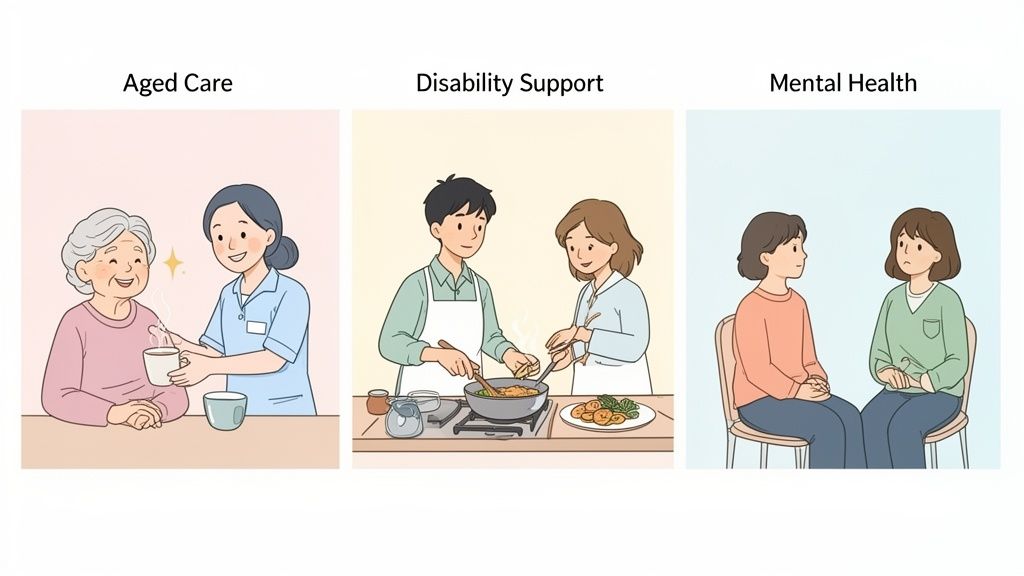
These scenarios paint a picture of the diverse blend of empathy, patience, and hands-on skill needed to genuinely help people. While each area has its own unique demands, the core mission is always the same: to empower and enable.
Scenario 1: Assisting in Aged Care
Meet Sarah, an aged care support worker. Her day starts at 8 AM at the home of Mr. Henderson, an 85-year-old who lives on his own but needs a hand with his morning routine. Her first task is helping him with personal care, making sure he can wash and dress safely and, just as importantly, with dignity.
After she helps him make a nutritious breakfast and gives him a gentle reminder about his morning medication, Sarah tidies up the kitchen. But her role goes so much deeper than these practical tasks. Mr. Henderson’s family lives in another city, and loneliness is a constant battle. Sarah takes the time to sit with him, listening to his stories about his younger days, flicking through old photo albums, and just sharing a quiet cup of tea.
This companionship is a vital part of her job. It pushes back against the social isolation that can seriously impact the wellbeing of older Kiwis. Before she leaves, Sarah makes sure Mr. Henderson is comfortably settled for his afternoon nap, confirms her next visit, and leaves him with a smile. Her work isn't just about physical assistance; it's about providing a crucial emotional connection.
Scenario 2: Empowering in Disability Support
Next up is Ben, a disability support worker. He spends his afternoon with Chloe, a 22-year-old with an intellectual disability who is learning to live more independently. Today’s goal is all about building her confidence out in the community.
Their first stop is the supermarket. Ben isn't there to do the shopping for her. Instead, he guides Chloe as she navigates the aisles, finds everything on her list, and manages her own budget at the checkout. It's this kind of hands-on experience that builds real-world life skills.
Afterward, they head back to Chloe's flat to tackle a simple meal together. Ben breaks the recipe down into easy, manageable steps, offering encouragement and celebrating the small wins along the way. Think of him as a coach, focused on fostering Chloe’s independence rather than creating reliance. He’s helping her connect with her community and build the self-assurance she needs to chase her own goals.
"My job felt like a service every day, but never more so than it did today... It felt like we'd provided a... gift of our time, talents, compassion, humour and care." - Helen Hutchinson, Healthcare Assistant.
This sentiment really gets to the core of support work. It’s about giving so much more than practical aid; it's about sharing the human elements that help people truly thrive.
Scenario 3: Guiding in Mental Health Support
Finally, let’s join Maria, a mental health support worker. She’s meeting with Sam, who is on a long journey to recover from severe anxiety that has made it hard for him to even leave his house. Her whole approach is calm, patient, and completely non-judgemental.
Today’s session involves a short walk to a local park—a huge step for Sam. Maria doesn’t push or pressure him. She simply walks alongside him, a steady and reassuring presence. She listens carefully as he shares his worries, helping him put the coping strategies he's been learning into practice.
Her role isn’t to be a therapist, but to offer the practical support that works hand-in-hand with his clinical treatment. Maria helps Sam break down overwhelming goals into small, achievable steps, reinforcing his progress and building his resilience bit by bit. Through consistent, reliable support, she’s helping him rebuild his confidence and reconnect with the world, all at his own pace.
The Essential Skills Every Great Support Worker Needs
What separates a good support worker from an exceptional one? It’s a powerful combination of personal qualities and practical know-how. To really get a feel for what a support worker does, you have to appreciate the skills they bring to every single interaction. These fall into two main areas: the human skills you bring with you, and the technical skills you can learn along the way.
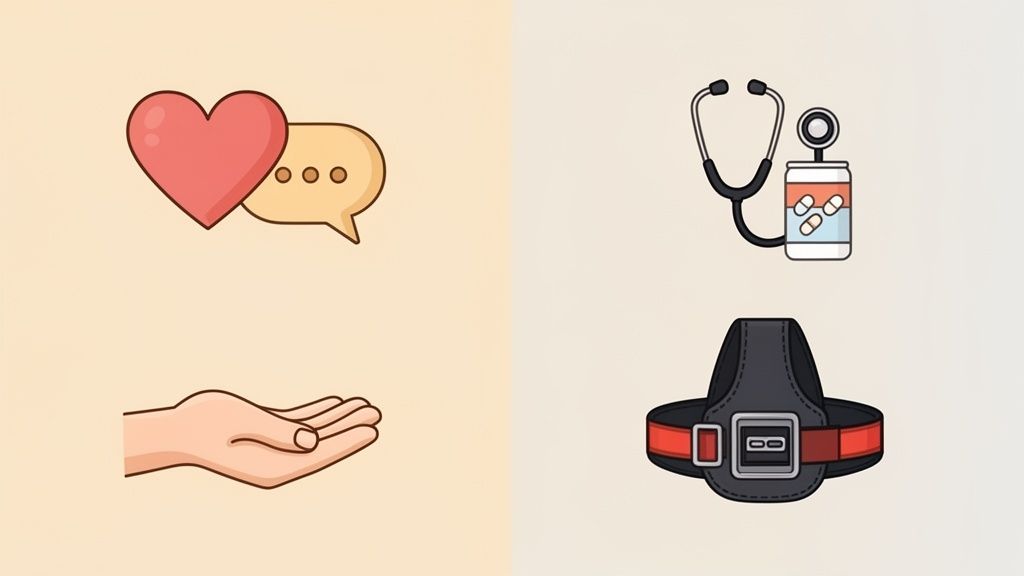
While technical abilities are crucial and can be picked up through training, it’s those core human skills that genuinely define success and fulfilment in this career. They’re the foundation on which all trust and effective support are built.
The Human Skills: Foundational Traits for Success
These are the personal qualities that can’t always be taught from a textbook but are absolutely vital for building strong, trusting relationships with clients and their whānau (family). Think of these as the engine of compassionate care.
- Empathy and Compassion: This is the heart of the job—the ability to genuinely understand and share the feelings of another person. It means listening without judgement and responding with kindness, especially when a client is feeling vulnerable or frustrated.
- Patience and Resilience: Support work can be emotionally demanding at times. Great support workers remain calm under pressure, handle challenging situations with a level head, and can bounce back from difficult days, ready to provide consistent care.
- Communication Skills: This is about so much more than just talking. It's about active listening, picking up on non-verbal cues, and explaining information clearly and simply. Strong communication prevents misunderstandings and helps clients feel truly heard and respected.
- Problem-Solving: No two days are ever the same, and unexpected issues pop up all the time. A great support worker can think on their feet, creatively finding safe and practical solutions to daily challenges while always putting the client’s wellbeing first.
A support worker’s role is a service every day, but its impact is most deeply felt in moments of need. It’s a gift of time, compassion, and skilled care to individuals and their families.
These foundational traits are the bedrock of effective support. They help create an environment where individuals feel safe, understood, and empowered to live their best lives.
The Technical Skills: Practical Know-How You Can Learn
Alongside these personal qualities, support workers need a solid set of practical, hands-on skills to provide safe and effective care. These abilities are typically developed through formal training and on-the-job experience, making sure you’re prepared for the physical and medical aspects of the role.
Key technical skills include:
- Safe Manual Handling: Knowing the correct techniques to help clients with mobility—like moving from a bed to a chair—is essential to prevent injury to both the client and yourself.
- Assisting with Medication: This involves accurately reminding or helping clients take their prescribed medications at the right times, always following strict protocols to ensure their safety.
- Basic Health Monitoring: You might be asked to observe and report changes in a client’s condition, such as noticing new symptoms or a shift in their behaviour.
- Personal Care Routines: This includes helping clients with daily activities like bathing, dressing, and eating in a way that respects their dignity and promotes as much independence as possible.
Your Pathway to Becoming a Support Worker
So, you’re thinking about becoming a support worker? It’s a deeply rewarding career, and if you’ve gotten this far, you already know the incredible difference you can make. The next logical step is figuring out how to actually get there. The fantastic news is that you don't typically need a university degree, which opens the door for so many compassionate people to join the field.
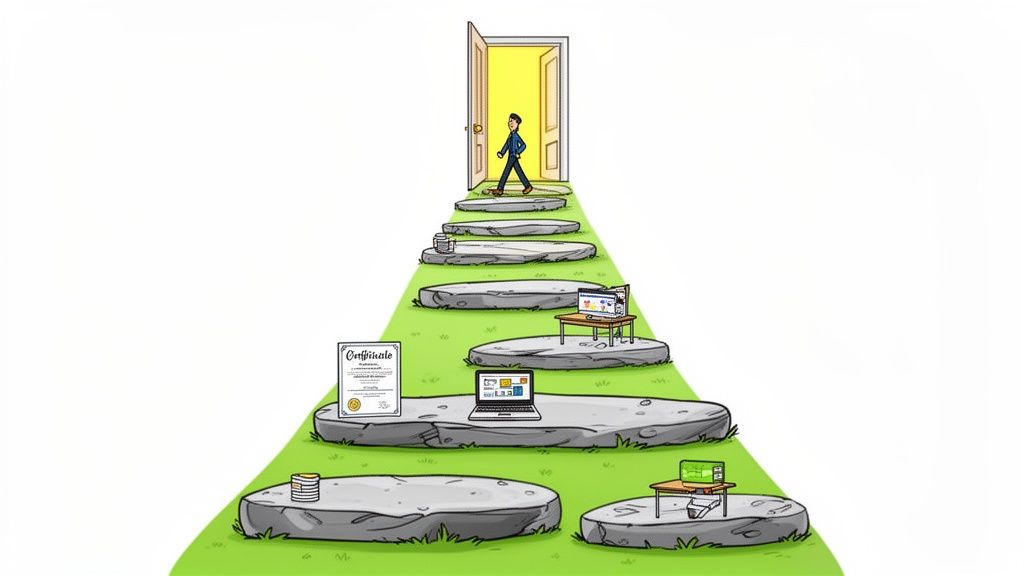
While a degree isn't essential, employers across New Zealand definitely look for formal qualifications. Holding an industry-recognised certificate is your way of showing you're serious and have the foundational knowledge to provide safe, high-quality care right from day one. It proves you've put in the work. For anyone weighing up their options, looking at similar in-demand healthcare careers that don't require a degree can offer some really helpful perspective.
Finding the Right Training for You
For most people starting out, entry-level certificates in health and wellbeing are the perfect launchpad. These courses are designed to give you the exact skills that employers are looking for. They cover the crucial topics that form the bedrock of great support work.
You can expect to learn about:
- Person-Centred Care: This is all about learning how to shape your support around the unique goals, needs, and preferences of each individual. No two people are the same.
- Safety Protocols: You'll get familiar with the correct procedures for things like manual handling, helping with medication, and keeping the environment safe for both you and your client.
- Effective Communication: This is more than just talking. It’s about building genuine trust and learning to communicate clearly with clients, their whānau, and other healthcare professionals.
- Ethical and Legal Responsibilities: You'll get a solid grasp of the professional standards and legal frameworks that guide everything you do as a support worker in New Zealand.
Kicking off a career in support work isn’t just a job change; it’s a commitment to empowering other people. The right training gives you the confidence and the skills to turn that desire to help into a real, positive impact on people's lives, every single day.
To help you navigate the options, here’s a quick look at the common qualifications and what they prepare you for.
Comparing Support Worker Training Pathways
These certificates build on one another, creating a clear ladder for you to climb as you gain experience and decide where you want to specialise.
Your Next Steps with Flexible Study
Trying to get qualified while juggling work, family, or other commitments can feel like a huge challenge. This is where flexible online study becomes a game-changer. It gives you the freedom to earn your qualifications on your own schedule, fitting your learning into your life, not the other way around.
Platforms like Get Course are specifically designed to connect you with a whole range of online study options from different providers. This makes it so much easier to find a course that clicks with your career goals, whether you're drawn to aged care, disability support, or another area.
You can start by exploring the variety of community services courses online to see which path feels right. By taking that first step, you’re investing in a future where you get to make a genuine difference.
Career Growth and Working Conditions in New Zealand
Choosing to become a support worker is so much more than just getting a job. It’s your first step onto a stable and genuinely rewarding career path in New Zealand’s ever-growing community services sector. This isn't just about emotional fulfilment; it's a role that comes with real opportunities to grow and move up.
The need for support workers is undeniable, and the numbers back it up. The 2023 Census showed New Zealand had 18,219 female welfare support workers alone, not to mention a significant number of men in the field. It’s a huge, essential workforce. You can dig into more data on the welfare support workforce in New Zealand to see the scale for yourself.
Salaries and Working Hours
In New Zealand, pay rates for support workers are often guided by collective agreements, which helps keep remuneration fair and structured. While the starting salary reflects that it's an entry-level role, your pay will typically increase as you gain more experience and complete further qualifications.
One of the big draws for many is the flexible working conditions. But it's important to be realistic—this isn't your standard 9-to-5 desk job. Because care is needed 24/7, you'll likely be doing shift work, which can include evenings, weekends, and public holidays. For many, this is perfect for fitting work around family, study, or other commitments.
Your Career Progression Path
One of the best things about starting as a support worker is the clear pathway for career growth. Your journey doesn't have to stop at providing frontline care; think of it as a launchpad for leadership and specialised roles. As you build experience and take on more training, you can step into senior positions.
A typical career path might look something like this:
- Senior Support Worker: Here, you'll handle more complex client cases and start mentoring newer staff.
- Team Leader or Shift Supervisor: This involves managing a team of support workers and coordinating the day-to-day running of a shift or service.
- Service Coordinator or Manager: In this role, you’re overseeing client care plans, managing budgets, and making sure the quality of service is top-notch across a whole facility or organisation.
Becoming a support worker opens doors to a long-term career where continuous learning directly translates into new opportunities. Your commitment to helping others can evolve into leadership roles that shape the future of care in our communities.
You can also choose to specialise in areas that are in high demand. Pursuing advanced qualifications can lead you to specialised roles in dementia care, palliative support, or mental health services. If working with older adults is your passion, exploring a career in aged care can open up even more avenues for specialisation and growth. It just goes to show that what a support worker does on day one is only the beginning of a truly fulfilling professional journey.
Got Questions About Support Work? We’ve Got Answers.
Thinking about a career that truly makes a difference is exciting, but it’s completely normal to have a heap of questions. What’s it really like day-to-day? What are the tough parts? Do I have what it takes?
Let's dive into some of the most common questions we hear from people in New Zealand who are considering becoming a support worker. Our goal is to give you clear, straight-up answers to help you figure out if this is the right path for you.
What Are the Biggest Challenges I'll Face?
Let's be real: while this job is incredibly fulfilling, it has its tough moments. One of the biggest hurdles is managing the emotional side of things. You’ll be right there with people during some of their most vulnerable times, and learning to build your own emotional resilience is key to avoiding burnout.
You might also find yourself navigating tricky family dynamics or dealing with challenging behaviours. This is exactly where professional training makes all the difference. A good course won't just teach you theory; it gives you practical strategies for de-escalation, clear communication, and how to set healthy professional boundaries. On top of that, juggling shift work requires top-notch time management to keep your own life in balance.
Is This a High-Demand Career in New Zealand?
Absolutely. The need for skilled support workers here in New Zealand isn’t just strong—it’s growing. Think about it: our population is ageing, we’re becoming more aware of mental health needs, and there’s a bigger push for community-based disability support. All of this adds up to high demand.
Once you’re qualified, you won’t be short of opportunities.
The numbers really tell the story. For instance, mental health and addiction support services employed 7,566 full-time staff as of March 2023, but were still struggling with a significant 11 percent vacancy rate. You can read more about these workforce estimates and see just how vital these roles are across the entire sector.
Support work offers a stable and future-proof career path. The skills you gain are not only transferable across the health and community sectors but are essential to the wellbeing of our communities, ensuring long-term job security.
This isn't a temporary trend. It makes support work a secure and reliable choice for anyone looking to build a career with real purpose and longevity.
Do I Really Need a Qualification to Start?
Yes, you do. While you don’t need a university degree, you can’t just walk into this role without any training. Employers need to know you have the foundational skills to care for vulnerable people safely and respectfully. A formal qualification is their assurance that you're ready.
The most common and respected starting point is a New Zealand Certificate in Health and Wellbeing. These courses are designed specifically to give you the practical skills and knowledge you need for an entry-level job. They’ll cover the essentials, like:
- How to plan and deliver person-centred support.
- Crucial safety protocols, like how to assist clients with moving.
- Professional and ethical conduct within the New Zealand healthcare system.
- Effective communication techniques for people with diverse needs.
Having a relevant certificate on your CV shows employers you’re serious about the profession and ready for the responsibilities that come with it. It’s the industry standard for a reason.
Ready to take the first step towards a career that truly matters? At Get Course New Zealand, we connect you with flexible, online courses that fit your life. Explore our range of health and community services qualifications and find the perfect pathway to start making a difference. Find your course with Get Course NZ.
Find Your Course
Compare courses across every field we write about, and enquire in under a minute.