%20(1).png)
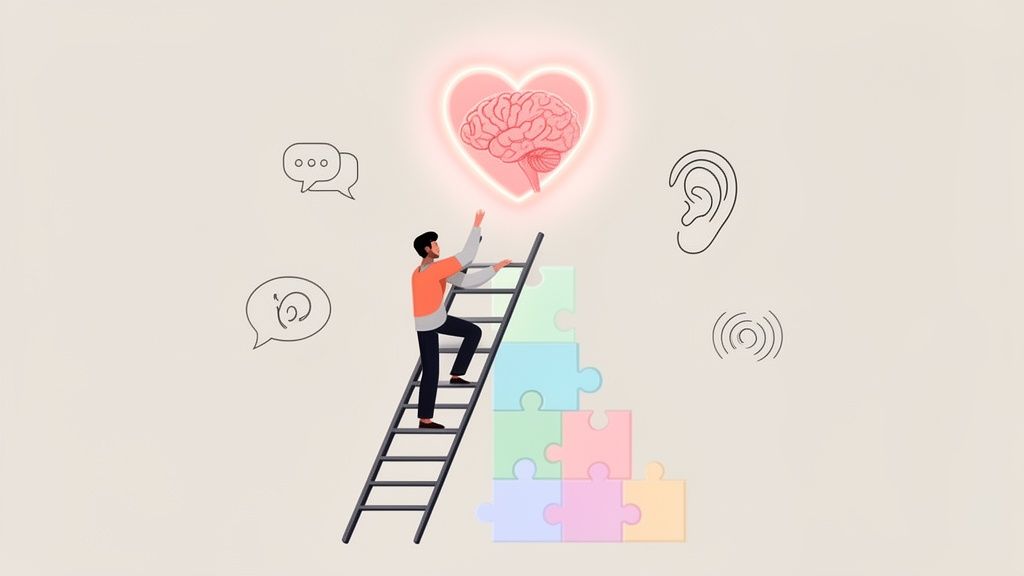
To really boost your emotional intelligence, it helps to focus on the five core skills that make it up: self-awareness, self-regulation, motivation, empathy, and social skills. When you start developing these abilities, you get better at understanding and managing your own emotions, and you also become much more attuned to the feelings of others. This is the bedrock of building stronger connections, both at work and in your personal life.
Ever wondered why some people seem to sail through workplace stress while others get swamped? Or how certain colleagues build rapport with seemingly no effort at all? The answer often comes down to emotional intelligence (EI). It's more than just a buzzword; it’s a fundamental set of human skills. To get a real handle on how to improve your emotional intelligence, it’s worth first exploring What Emotional Intelligence Really Means and the difference it can make.

Unlike your IQ, which tends to be pretty fixed, emotional intelligence is a skillset you can absolutely learn and strengthen over time. Don't think of it as a single trait. Instead, see it as a blend of interpersonal and intrapersonal skills that shape how we see ourselves, express what we feel, build relationships, and deal with whatever life throws at us.
At its heart, emotional intelligence rests on five interconnected pillars. Getting to know each one gives you a clear roadmap for where to focus your energy.
Self-Awareness: This is the absolute foundation. It's your ability to recognise your own emotions in the moment and understand your typical reactions. A self-aware person knows their strengths and weaknesses and can clearly see how their feelings are driving their behaviour.
Self-Regulation: Building directly on self-awareness, this is about managing your emotions so they don't manage you. It’s about pausing before you react, keeping impulsive feelings in check, and staying composed when the pressure is on.
Motivation: This is the fire within that drives you to achieve your goals with passion and persistence. People with high EI are often pushed by a deep desire for personal growth and fulfilment, not just external rewards like a pay rise or a fancy title.
Empathy: This is your ability to tune into and share the feelings of another person. It means genuinely trying to see things from their perspective and responding in a way that shows you understand their emotional state.
Social Skills: This pillar brings it all together. It's about how you manage relationships, build your network, communicate with clarity, and inspire the people around you. It’s the outward expression of all your internal emotional work.
Working on these skills isn't just a "nice-to-have"—it's a game-changer for success in any field. Time and again, research has highlighted its massive impact, especially in our professional lives.
In a landmark study featured in the Harvard Business Review, emotional intelligence was found to be twice as important as IQ and technical skills in determining who excelled at work. When looking at senior leadership roles, that gap becomes a chasm, with nearly 90% of the difference between average and star performers chalked up to emotional intelligence.
What this tells us is that how you handle yourself and your relationships is a far more powerful predictor of success than what you know. You can find out more about these eye-opening findings and what they mean for the New Zealand workplace.
The entire journey into emotional intelligence starts by looking inward. You can't begin to manage your emotions until you can first recognise them for what they are. This foundational skill is self-awareness—the ability to tune into your own feelings, thoughts, and actions and see how they're all connected.
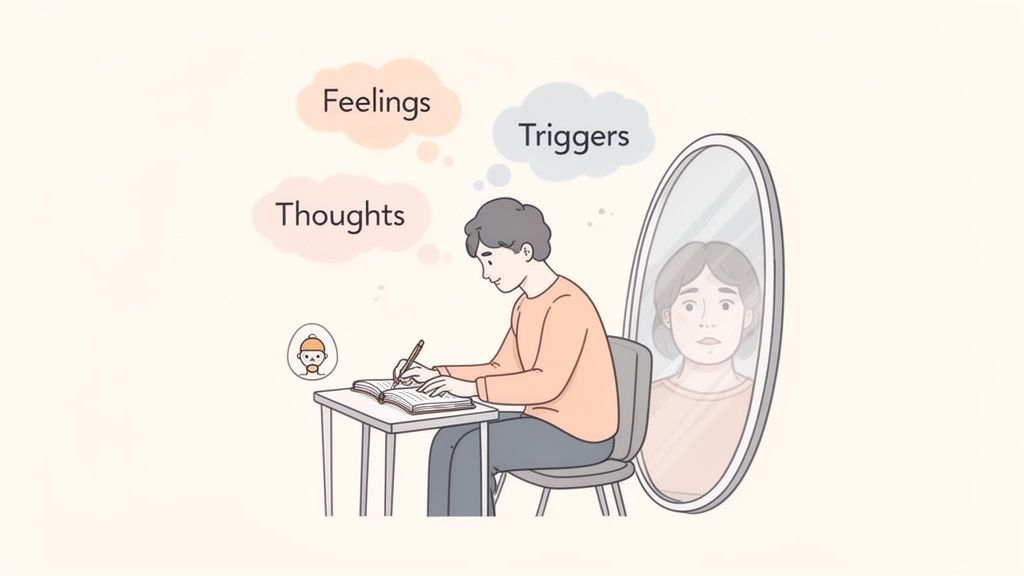
This isn't about harsh self-judgement. It's about getting curious and honest with yourself. Think of it as becoming a detective of your own inner world, searching for clues that explain why you react the way you do. The more you practise this, the stronger that "self-awareness muscle" gets.
But here’s a reality check. Research shows a huge gap between how self-aware we think we are and how self-aware we actually are. One study found that while 95% of people believe they are self-aware, only about 10-15% truly are. This just goes to show how easily our own minds can create blind spots, making a conscious effort so important.
To get beyond the theory, you need concrete, daily practices. Weaving simple techniques into your routine can reveal surprising patterns in your emotional responses. It all comes down to paying closer attention to what's happening inside you from one moment to the next.
Here are a few actionable methods to get you started:
Practise Mindful Observation: Just take two minutes a day to sit quietly. Notice any physical sensations, the thoughts drifting through your mind, and whatever emotions are present. The goal isn’t to change a thing, but simply to observe without judgement.
Label Your Emotions with Precision: Instead of just saying "I feel bad," try to get more specific. Are you feeling frustrated, disappointed, anxious, or maybe lonely? Expanding your emotional vocabulary helps you understand the unique flavour of each feeling.
Connect Feelings to Actions: At the end of the day, think back on one or two strong emotional reactions you had. Ask yourself: What triggered this? What thoughts ran through my head? And how did I act as a result?
This kind of reflection helps you see the direct line between a trigger and your response. For instance, you might realise the irritation you felt in a meeting wasn't about the project at all, but came from feeling like your ideas were being ignored. Understanding these hidden drivers is the key.
The real power of self-awareness comes when you stop simply reacting to your emotions and start understanding the messages they are trying to send you. Each feeling is a piece of data about your needs and values.
One of the most effective tools for building self-awareness is journaling. There’s something about writing things down that forces you to slow down and process your thoughts more deliberately. Over time, it creates a powerful record of your emotional patterns.
You don’t need to write pages every day. A simple, yet effective, method is the "What, So What, Now What" framework. When you notice a strong emotion, just jot down:
To help you stay consistent, here’s a simple checklist you can use each day. This checklist is a straightforward guide to help you build a daily habit of self-reflection and start noticing your emotional patterns more clearly.
Making these small observations a regular part of your day is what builds the foundation for lasting change.
This structured approach helps you decode your emotional triggers and see how our thinking patterns shape our feelings. To explore this connection further, you might find our guide on cognitive biases and how our minds can deceive us an interesting next step.
Once you can spot your emotions as they pop up, the next big step is actually managing them. This is where self-regulation comes into play—it's the skill of handling those impulsive feelings and knee-jerk reactions, letting you tackle life’s curveballs with a bit more grace. Think of it as creating a crucial buffer zone between a trigger and your response.
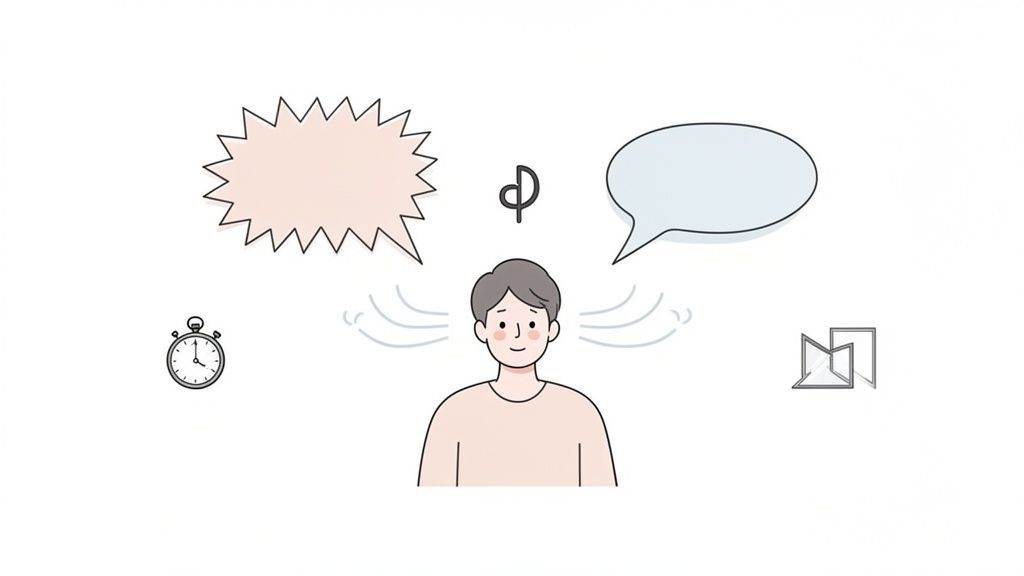
This ability to keep your cool under pressure is a massive part of emotional intelligence. When you can regulate your emotions, you stop them from hijacking your rational brain. The result? More thoughtful decisions and much more constructive chats with others.
Getting a handle on self-regulation isn’t about bottling up your feelings. It's about learning to respond to them in a healthier, more productive way. Here are a few real-world strategies to help you build that muscle.
The Strategic Pause: The next time you feel a strong emotion like anger or frustration boiling up, just stop. Take one slow, deep breath before you say or do a thing. This tiny action can be surprisingly effective at short-circuiting an impulsive reaction.
Cognitive Reframing: You need to challenge the first story you tell yourself about a situation. For instance, instead of immediately thinking, "My boss is ignoring my emails because they don't value my work," try a different angle. "They're probably slammed with deadlines; I'll just follow up in person tomorrow." This simple switch shifts your perspective from a personal attack to a practical problem.
Simple Calming Exercises: Deep breathing is your secret weapon, and you can use it anywhere, anytime. Inhale slowly through your nose for four counts, hold it for four, and then exhale slowly through your mouth for six. Repeating this just a few times can dial down your stress response in a big way. To get a better handle on pressure, check out our guide on how to manage stress at work.
These techniques are simple on the surface, but they take consistent practice to become second nature. To truly get a grip on self-regulation, it's worth exploring different strategies for emotional regulation.
A huge part of self-regulation comes down to accountability. Emotionally intelligent people don't point fingers or blame others for their reactions. They own their words and actions, especially when they mess up.
Admitting when you're wrong or acknowledging your reaction was over the top isn't a sign of weakness. It's a massive demonstration of strength and self-awareness that builds trust and shows others you're serious about communicating well.
Let's say you snap at a colleague during a stressful project. Self-regulation means finding them later and saying, “Hey, I apologise for my tone earlier. The pressure was getting to me, but that’s no excuse for being sharp with you.” This one small act can repair the relationship and reinforces your own emotional control for next time.
Emotional intelligence isn't just an internal affair; it’s about taking that self-awareness and using it to genuinely connect with the people around you. This is where empathy and social skills come into play, turning your inner insights into stronger, more meaningful relationships.
These are the skills that help you understand what someone is really saying and navigate tricky social situations with a bit more grace and confidence.

Real empathy isn’t about feeling sorry for someone. It’s about putting in the effort to see the world from their perspective, even for a moment. It means listening to the emotions behind their words, not just the words themselves.
Social skills are how you put that empathy into practice. They’re what allow you to build rapport, communicate clearly, navigate disagreements, and even inspire the people you work with.
One of the quickest ways to build empathy is through active listening. This is so much more than just staying quiet until it’s your turn to talk. It's about being completely present in the conversation.
When someone is speaking, give them your full attention. Let go of your own agenda and quiet that inner voice that's already planning your reply. Look beyond the words and pay attention to their non-verbal cues.
Once they've finished, try paraphrasing what you heard. Something simple like, "Okay, so if I'm understanding you correctly, you're feeling frustrated because it seems like your hard work isn't being noticed?" This one small step shows you were truly listening, validates their feelings, and often opens the door to a much deeper conversation.
Building empathy means consciously stepping out of your own shoes and into someone else's. You can actually practise this.
The next time you’re in a disagreement or just can't figure out why someone is acting a certain way, hit pause. Ask yourself a few questions:
This isn’t about agreeing with them. It's about understanding. That understanding is the bedrock of any constructive conversation.
Empathy isn't about imagining how you would feel in their situation. It’s about understanding how they feel. It means setting your own lens aside to see the world through theirs.
Great social skills are how you translate empathy into action. They're what help you manage disagreements without burning bridges, give feedback that people can actually hear, and build genuinely collaborative relationships.
Conflict resolution is a huge part of this. Instead of seeing a disagreement as a battle you need to win, try reframing it as a shared problem that needs solving.
When you hit a point of friction, focus on finding a solution that works for everyone. Acknowledge their point of view first, then state your own needs clearly and without placing blame. Using "I feel..." instead of "You always..." is a classic for a reason—it works.
These subtle language shifts are game-changers in any dialogue. If you're keen to go deeper, a great next step is learning how to improve your communication skills. When you approach your interactions with curiosity and respect, you'll find that potential conflicts often turn into opportunities for real connection and growth.
Knowing the theory is one thing, but the real magic happens when you start weaving emotional intelligence into your daily life. This is where your newfound skills in self-awareness, regulation, and empathy truly come alive—not just in high-stakes meetings at work, but in the quiet, everyday moments as well.
Applying these skills consistently is what shifts emotional intelligence from an idea you understand to a way you live. It’s all about making conscious choices in how you manage yourself and connect with others, especially when the pressure is on.
In any professional setting, emotional intelligence is a powerful asset for building stronger, more resilient teams. For a manager, it’s the difference between a team that simply follows orders and one that’s genuinely engaged and collaborative.
Imagine a leader with high EI sensing the tension rising in a meeting before it boils over. Instead of ploughing ahead, they might pause and say, "I'm picking up on some friction here. Let's take a moment to make sure everyone feels heard." That simple act of social awareness can completely change the dynamic, de-escalating conflict and fostering real psychological safety.
For team members, it’s about navigating relationships more constructively. Picture this: you receive some tough feedback on a project you poured your heart into. Your first instinct might be to get defensive.
With emotional intelligence, you learn to hit pause. You can use self-regulation to acknowledge the sting, take a breath, and respond with curiosity instead of anger. You might say, "Thanks for sharing that. Can you walk me through the specific parts you think could be stronger?" This turns a potential blow-up into a genuine learning opportunity.
The benefits of emotional intelligence don't just stop when you clock out. At home, these skills are the bedrock of deep, trusting connections with your partner, family, and friends.
Think about a classic scenario: a disagreement with your partner after a long, stressful day. Without EI, that stress can easily lead to sharp words and blame. But with it, you can recognise your own fatigue (that’s self-awareness), take a deep breath before reacting (self-regulation), and make an effort to see things from their perspective (empathy).
It might sound like saying, "Look, I'm feeling really drained right now, and I'm probably not communicating well. Can we talk about this in a little while when I'm calmer?" This simple approach validates both your feelings and theirs, protecting the relationship from unnecessary damage.
The constant pressure of modern life takes a toll. Many New Zealand workplaces are actually facing a significant emotional intelligence deficit, and it's directly impacting employee wellbeing. The 2020 NZ Workplace Barometer revealed a startling statistic: 42.4% of Kiwi workers reported high psychosocial risk, leading to serious issues like job strain and depression.
With one in five workers reporting they are often stressed, it's crystal clear that these emotional skills are more critical than ever. You can discover more about these crucial workplace wellbeing statistics and what they mean for our workplaces.
By sharpening your emotional intelligence, you learn to manage your own stress responses far more effectively. You get better at spotting your triggers and regulating your reactions, which directly lowers your stress levels and gives your overall wellbeing a massive boost. It’s a skill that not only strengthens your professional life but enriches every other part of it, too.
As you start digging into how to improve your emotional intelligence, a few questions are bound to pop up. That’s completely normal. This is a personal journey, and knowing what to expect can help you stay on track and feel good about your progress.
Let’s get into some of the most common questions people have when they decide to commit to this rewarding path.
This is usually the first thing people ask. Unlike learning to code or use a new piece of software, there’s no fixed timeline for emotional intelligence. It's more of an art than a science.
That said, with consistent, mindful practice, most people start to notice small but significant shifts in their self-awareness and how they react to things within just a few weeks. The key here is consistency, not intensity.
Genuine, lasting change in emotional intelligence is a lot like getting physically fit. You wouldn't expect to be in great shape after one trip to the gym, right? It's the same idea here. Lasting improvement comes from weaving small, daily practices into the fabric of your life.
The first changes you notice will probably be subtle:
Deep, lasting change can take several months or even a few years of dedicated effort. The real goal isn't a quick fix; it's lifelong growth. Think of it as an ongoing practice of self-discovery and getting better, one day at a time.
Jumping in can feel like a lot at once, so the trick is to focus on a few simple habits that give you the most bang for your buck. Don't try to boil the ocean. Just pick one or two practices that feel doable and build from there.
Here are a few great places to start:
The most powerful habit isn't some complex psychological exercise. It's the simple, consistent act of paying attention—to your inner world and to your interactions with others.
Staying composed when the stress piles on is a cornerstone of emotional intelligence. When you're under pressure, your brain's primal fight-or-flight response can hijack your thinking, making it tough to be rational. The secret is having a strategy ready to go before you need it.
One of the most effective and simplest techniques is box breathing.
It’s easy to remember: Inhale for four seconds, hold your breath for four seconds, exhale for four seconds, and hold again for four seconds. Repeat this cycle just three or four times. It works by slowing your heart rate and calming your nervous system right down, which gives your rational brain a chance to get back in the driver's seat.
This tiny practice helps you respond thoughtfully instead of just reacting on autopilot.
Ready to take the next step in your personal and professional development? At Get Course New Zealand, we connect you with flexible, online courses designed to build real-world skills. Explore our wide range of study options and find the perfect fit to help you achieve your goals. Discover your potential today at https://getcourse.co.nz.


