What Is Digital Marketing and How Does It Work?
Curious about what is digital marketing? This guide breaks down the core concepts, channels, and skills you need to start your career in online marketing.
At its simplest, digital marketing is any marketing you do using an electronic device or the internet. It’s how businesses use online channels like search engines, social media, and email to find and chat with their current and future customers. Think of it as the modern way to have a conversation with your audience, right where they’re hanging out online.
Understanding Digital Marketing in Simple Terms

Imagine your business is a fantastic food truck. Years ago, you would’ve relied on a printed sign and word-of-mouth to pull in the lunch crowd. Digital marketing is the entire toolbox you now have to bring people to your window.
It’s the online map that guides hungry customers right to your spot (that’s Search Engine Optimisation). It’s the colourful Instagram posts showing off your daily specials (social media marketing). It’s even the friendly text alerts you send to regulars about a new menu item (email and mobile marketing). At its heart, it’s all about connecting with people where they already spend their time.
Why It Matters More Than Ever
Unlike a billboard or a newspaper ad, digital marketing isn’t a one-way street. It’s a two-way conversation. You can see exactly who is clicking, what they like, and what they scroll right past. That direct feedback is incredibly powerful.
This isn’t just a passing trend; it’s a massive shift in how we all live and shop. In New Zealand, digital advertising has exploded, with total spending hitting NZ$2.42 billion in 2024. That’s a staggering 67.4% of the country's entire ad revenue. Why? Because that’s where the people are. Over 5.06 million Kiwis - that’s 96.2% of the population - are active internet users.
Digital marketing strips away the guesswork. It gives you clear, measurable results that show you exactly what's working and what isn't, so you can put your time and money where it counts.
The Basic Principles
Boiled down, digital marketing is about using online channels to hit specific business goals, whether that’s building brand buzz or driving sales. To get there, marketers focus on a few key things:
- Attracting the Right Audience: Using different strategies to bring people who are genuinely interested in what you offer to your website or social pages.
- Engaging with Them: Creating useful, interesting content that builds trust and gets people interacting with your brand.
- Converting Them into Customers: Gently guiding those interested people towards making a purchase or taking another action, like signing up for a newsletter.
To really get a handle on how success is measured, you need to understand concepts like What is Marketing Attribution. This whole process - attract, engage, convert - is the engine that drives growth for any modern business, and it's a foundational idea for anyone looking to build a career in this space.
Exploring the Core Channels of Digital Marketing

Digital marketing isn’t just one single thing. It’s actually a collection of specialised channels, all working together like different instruments in an orchestra. Each one plays a unique part, but when they’re in sync, the result is powerful.
Think of it this way: if your business is a destination, these channels are all the different roads that guide people to it. Some are fast toll roads, others are scenic routes, and some are the trusted local paths that everyone knows. Getting to grips with these core channels is the next step in understanding what digital marketing is all about.
Search Engine Optimisation (SEO): The Digital Mapmaker
Search Engine Optimisation, or SEO, is all about making your website more visible on search engines like Google. The goal is simple: when someone searches for a product or service you offer, you want your website to show up right at the top.
The best way to think of SEO is like being the most recommended, clearly signposted business on a city map. When someone asks for directions to the "best coffee," SEO is the work you do behind the scenes to make sure the map points straight to your cafe - not your competitor's down the street. It’s a long-term strategy built on earning trust and authority.
This involves a few key activities:
- On-Page SEO: This is all about optimising the content on your website itself. It includes using the right keywords, writing clear headings, and making sure your site is a breeze for both people and search engines to navigate.
- Off-Page SEO: This refers to actions you take outside of your website to boost your rankings. The big one here is building backlinks - getting other reputable websites to link to yours. Think of these as votes of confidence.
- Technical SEO: This is the nuts and bolts of your website's backend. Things like site speed, mobile-friendliness, and having a secure connection are all crucial for a good user experience and, as a result, higher rankings.
Pay-Per-Click (PPC) Advertising: The Digital Billboard
Pay-Per-Click, often just called PPC or Search Engine Marketing (SEM), is exactly what it sounds like - you pay a small fee every time someone clicks on one of your ads. You’ve definitely seen them; they’re the sponsored results at the very top of a Google search.
If SEO is about earning your spot on the map over time, PPC is like renting a massive, flashing billboard on the busiest digital motorway. You’re paying for prime placement to get seen right now. It's a fantastic way to drive targeted traffic quickly, especially for a specific campaign or new product launch.
You can run PPC ads on more than just Google:
- Google Ads: These are the classic ads that show up on Google search results, targeting people based on the exact keywords they’re searching for.
- Social Media Ads: Platforms like Facebook and Instagram let you show ads to users based on their demographics, interests, and what they do online.
- Display Ads: These are the visual, banner-style ads you see on other websites you visit.
Content Marketing: The Helpful Guide
Content marketing is a smarter way to attract customers. Instead of a hard sell, you focus on creating and sharing genuinely valuable and relevant content to build a loyal audience. It’s all about building trust and establishing your brand as an expert in your field.
Think of content marketing as being the friendly, knowledgeable local who gives out free, helpful advice. People start to trust you, rely on your expertise, and when they're ready to buy, you're the first person they think of.
This "content" can come in many forms:
- Blog Posts: Articles that answer your audience's burning questions or solve their problems.
- eBooks and Guides: Deep-dive resources that offer comprehensive information on a particular topic.
- Videos and Webinars: Engaging visual content that can explain complex ideas or show your product in action.
A solid content strategy often becomes the engine for your other marketing efforts. Great content gets found through SEO, can be promoted with PPC ads, and gives you something valuable to share on social media.
Email Marketing: The Direct Conversation
Email marketing is the art of sending targeted messages directly to a list of people who have explicitly agreed to hear from you. It's one of the most personal and effective channels for building real, lasting relationships with customers.
Imagine email marketing as a personal letter sent straight to your most loyal customers. It’s a one-to-one conversation that lets you share updates, offer exclusive deals, and provide information you know they’ll care about. It’s perfect for nurturing people from being merely interested into becoming repeat buyers.
Different types of email campaigns have different jobs:
- Newsletters: Regular updates to keep your brand top-of-mind and your audience engaged.
- Promotional Emails: Straightforward messages about special offers, new products, or upcoming sales.
- Welcome Series: An automated sequence of emails sent to new subscribers to introduce them to your brand and make a great first impression.
Social Media Marketing: The Community Hub
Social media marketing is using platforms like Facebook, Instagram, LinkedIn, and X (formerly Twitter) to give your brand a personality, drive traffic to your website, and chat with your audience. It’s where your brand comes to life.
This channel acts as your business’s community hub or town square. It’s where you can have real-time conversations, share behind-the-scenes stories, and listen to what your customers are really saying. It’s less about the hard sell and more about building a genuine community.
The digital marketing landscape in New Zealand for 2026 is being shaped by transformative trends that emphasize artificial intelligence, personalization, and hyperlocal targeting. AI-powered marketing systems are now central to how forward-thinking New Zealand businesses engage with potential customers, offering instant, personalized responses and automated lead qualification. Read more about social media trends that New Zealand businesses need to know.
To help pull this all together, here’s a quick summary of how each channel functions.
Key Digital Marketing Channels at a Glance
Each of these channels offers a unique way to connect with your audience. While they can certainly work on their own, their real power is unleashed when they’re woven together into a smart, cohesive strategy that creates a seamless experience for your customer.
How Social Media Builds Your Online Community
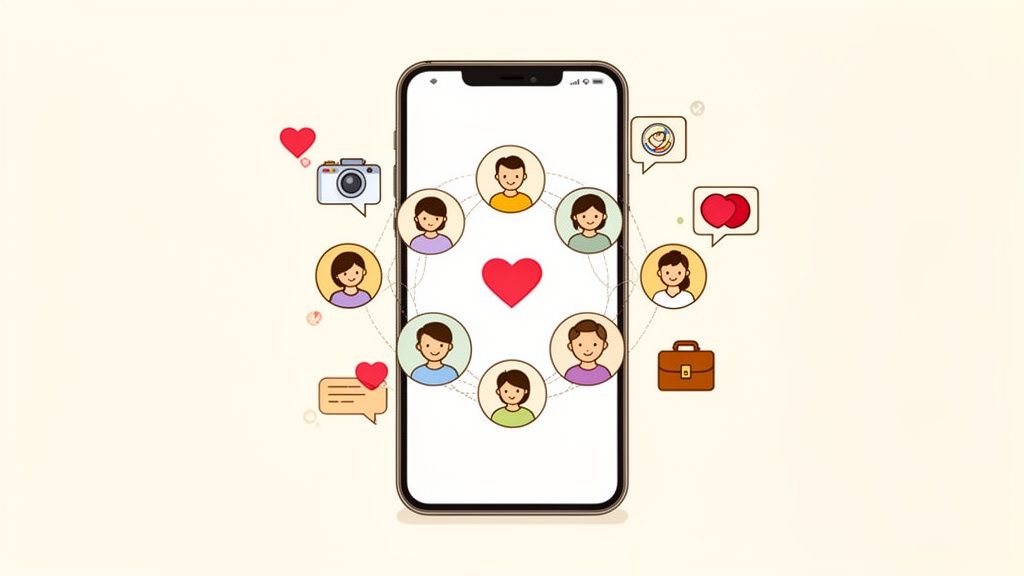
Social media marketing goes far beyond just posting updates and pretty pictures. At its heart, it’s about stepping into online conversations and actively building a community around your brand, your course, or your big idea. This is where a business gets to show its personality, share what it stands for, and connect with people on a human level.
Think of it like hosting a get-together in your local town square. You wouldn’t just stand on a box and shout advertisements at everyone. You’d mingle, listen, and share stories. That’s exactly what great social media does - it turns passive followers into a genuine community that feels connected to your mission.
Choosing The Right Platform For Your Audience
Not all social media platforms are the same, and trying to be everywhere at once is a classic recipe for burnout. The real secret is to figure out where your specific audience is already spending their time online and meet them there. A smart strategy always prioritises depth over breadth, focusing on building a strong, meaningful presence on just a few key platforms.
For example, a business that offers a visual course on graphic design would naturally feel at home on Instagram, a platform built around compelling images and creative expression. On the flip side, a course focused on business analytics would likely find a much more engaged audience on LinkedIn, the go-to network for professional development and industry chat.
To get it right, you first need to understand the unique culture and expectations of each platform.
- Instagram & TikTok: These are brilliant for visual storytelling, sharing behind-the-scenes content, and reaching younger audiences with short, snappy videos and high-quality images.
- Facebook: With its massive, diverse user base, Facebook is fantastic for creating community groups, running highly targeted ads, and sharing all sorts of content, from longer posts to event details.
- LinkedIn: This is the professional hub. It's the perfect place to share industry insights, network with peers, and establish yourself as a thought leader in a B2B (business-to-business) setting.
The social media scene right here in New Zealand really drives this home. Our favourite platforms are seeing huge growth, making them essential channels for connection. Just look at Instagram - its potential ad reach in NZ grew by a massive 250,000 users (+10.4 percent) in a single year. Meanwhile, Messenger and Snapchat have enormous audiences of 2.85 million and 1.46 million users respectively. It just shows how deeply these platforms are woven into our daily lives.
Organic Posts Versus Paid Advertising
On social media, you have two main ways to get your message out: organic and paid. Both are crucial, but they play very different roles in your strategy.
Organic social media is all the free content you share on your profile - your regular posts, your stories, and your replies to comments. The main goal here is to build relationships, provide genuine value, and nurture the community you already have. It’s the slow-and-steady work of earning trust over time.
Paid social media, on the other hand, is when you pay to boost your content to a much wider, more specific audience. These are the "Sponsored" posts that pop up in your feed.
Paid ads are like grabbing a megaphone to deliver a specific message to a carefully chosen crowd. You can target people based on their age, location, interests, and even their online behaviour, making it an incredibly powerful tool for hitting specific, short-term goals.
Here’s a simple breakdown of how they compare:
In the end, the best strategies use a mix of both. Your organic posts build the loyal community, while paid ads help that community grow and push you towards your key business goals. If you're keen to get the hang of this, there's a great range of social media courses that dive deep into these strategies.
Gaining the Right Skills and Tools

Knowing the different channels of digital marketing is one thing, but knowing how to actually use them is where the magic happens. To get results, you need a mix of the right skills and the right tools. Think of it like a builder’s toolkit - you need the knowledge of how to build a house, but you also need the hammers, saws, and measuring tapes to bring the blueprint to life.
In digital marketing, the tools are the software platforms that help you manage, automate, and measure your campaigns. The skills are the human abilities needed to wield those tools with creativity and strategy. The best professionals know how to blend both to hit their goals.
Essential Tools of the Trade
The digital marketing toolkit can feel overwhelming at first, but most platforms fall into a few key categories. Each one is built to streamline a specific part of your job, giving you the data and power to make smart decisions. Don't feel like you need to master them all at once; just focus on what each type of tool does.
Here are some of the fundamental tools you'll come across:
- Analytics Tools: These are your digital measuring tapes. Platforms like Google Analytics are non-negotiable for understanding who’s visiting your website, how they got there, and what they do once they arrive. This data is the bedrock of any good strategy.
- SEO Tools: To get seen on search engines, you need specialised gear. Platforms like Google Search Console or Ahrefs help you find the right keywords, track your rankings, and spot technical glitches holding your website back.
- Content and Email Platforms: These are your direct lines of communication. Tools like Mailchimp or Canva let you create and send newsletters, promotional emails, and eye-catching visuals straight to your audience, helping you build lasting relationships.
- Social Media Management Tools: Juggling multiple social media accounts is pure chaos without help. Platforms such as Buffer or Hootsuite let you schedule posts, monitor conversations, and analyse your performance across different channels from one central dashboard.
The Skills That Power Successful Campaigns
While tools handle the heavy lifting, your skills are what breathe life and creativity into your work. Modern digital marketing demands a blend of analytical thinking and creative problem-solving, which can be split into two buckets: hard skills and soft skills.
Hard skills are the specific, teachable abilities you need to perform technical tasks. They’re the practical things you can learn and prove you know how to do.
In digital marketing, hard skills are the "what you do." They are the tangible abilities to run an ad campaign, analyse a data report, or write SEO-friendly content. Soft skills are the "how you do it" - the creativity, communication, and adaptability that bring those tasks to life.
Key hard skills include:
- Data Analysis: The ability to look at an analytics report, spot trends, and turn numbers into a clear action plan.
- Content Creation: Writing blog posts that people actually want to read, shooting engaging videos, or designing graphics that stop the scroll.
- SEO & SEM: Understanding how search engines tick and how to run paid ad campaigns that deliver a return.
- Email Marketing: Knowing how to build an email list, segment it properly, and create campaigns that get opened and clicked.
On the other hand, soft skills are the interpersonal traits that define how you work with others and tackle problems. They’re often harder to measure but are just as crucial for a long-term career.
Important soft skills for a digital marketer include:
- Creativity: Coming up with fresh campaign ideas that capture attention and stand out from the noise.
- Adaptability: The digital world moves fast. Being able to pivot your strategy when a new trend emerges or an algorithm changes is essential.
- Curiosity: A real desire to understand your audience, learn new tools, and constantly ask, "What if we tried this?"
- Communication: Clearly explaining your strategy to teammates or clients and, just as importantly, writing copy that truly connects with customers.
Developing this mix of skills is what closes the gap between knowing what digital marketing is and being able to do it effectively. To get started, you can explore a range of learning pathways, and our guide to the best free online courses in NZ is a great place to see what's out there.
How to Start Your Digital Marketing Career
So, you understand the channels and the tools. That's the first massive step. The next one is figuring out where you fit into this exciting field. Kicking off a career in digital marketing isn't about having a perfect CV from day one. It's really about being proactive, getting your hands dirty with practical experience, and showing a real passion for connecting with people online.
The journey starts by exploring all the different roles out there. Not all digital marketers do the same thing, and the career paths can be incredibly varied. You might find yourself drawn to a super-specialised role, or you might prefer a job that lets you dip your toes into a bit of everything.
Finding Your Specialisation
The first move in building your career is to check out the paths you can take. While some people become great generalists, a lot of successful pros start by really mastering one specific area before branching out. Think about what part of digital marketing genuinely gets you excited.
Here are a few common career paths to get you started:
- SEO Specialist: If you love solving puzzles and getting into the technical weeds of how websites work, a career in SEO could be a perfect match. Your whole focus will be on helping businesses climb the search engine rankings.
- Content Marketer: Are you a natural storyteller or a brilliant writer? Content marketers create the blog posts, videos, and guides that build trust and pull in an audience.
- Social Media Manager: This role is ideal for creative people who just get online communities. You'll be crafting posts that spark conversations and drive real engagement.
- PPC/SEM Specialist: For those who are all about the data and love seeing immediate results, managing paid ad campaigns on Google or social media can be a seriously rewarding path.
- Digital Marketing Manager: This is a bigger-picture role that oversees the entire strategy. It involves planning campaigns, managing budgets, and leading a team of specialists to hit business goals.
For anyone looking to jump in, understanding your potential digital marketing career path is a crucial step in setting clear, achievable goals for your future.
Building Experience Without a Job
One of the biggest hurdles for newcomers is that classic catch-22: you need experience to get a job, but you need a job to get experience. The great news? In digital marketing, you can create your own experience. New Zealand employers value practical, demonstrated skills just as much as formal qualifications.
You don't need to wait for permission to start building your portfolio. The most successful digital marketers are often those who are curious and proactive enough to start their own projects and learn by doing.
Here’s how you can start building a portfolio today:
- Start a Personal Blog or Website: Pick a topic you're passionate about - whether it's hiking in the Fiordland, baking sourdough, or reviewing the latest tech. This project becomes your personal laboratory where you can practise SEO, content writing, and using Google Analytics.
- Volunteer for a Local Organisation: Offer to manage the social media for a local sports club, a charity you care about, or a community group. This gives you real-world experience in content creation and community management that you can stick right on your CV.
- Get Certified: Nailing foundational certifications from platforms like Google or HubSpot shows employers you're committed and you've got a solid grasp of the fundamentals.
- Launch a Small PPC Campaign: Even with a tiny budget (as little as $50), you can run a small Google or Facebook Ads campaign for your blog. This gives you direct, hands-on experience with creating ads, targeting audiences, and analysing the results.
These practical steps are invaluable. They show initiative and provide you with tangible proof of your abilities that you can talk about in an interview. As you learn, a structured online course can give you the foundational knowledge you need to tackle these projects with confidence. Our guide exploring how a digital marketing course in NZ can boost career growth offers more insight into making that first crucial step.
Common Questions About Digital Marketing
Even with a good grasp of the basics, it’s natural to have a few questions buzzing around. Digital marketing is a field that’s always on the move, and the practical side of things often brings up new queries once you start thinking about putting it all into practice. Let's tackle some of the most common ones that pop up for learners.
How Much Does Digital Marketing Cost for a Small Business?
This is always the big one: the budget. The honest answer is that digital marketing costs can swing wildly, from next to nothing to thousands of dollars a month. It really boils down to whether you're investing your time or your money.
For instance, you can get started for free. If you've got the time, you can build a social media following or start writing blog posts that are optimised for search engines. On the other end of the spectrum, you could hire a specialised agency to run a full-blown strategy with paid ads, which could easily cost several thousand dollars each month. A smart approach for a small business is to pick one or two channels you can handle well, then expand as your budget and confidence grow.
Which Digital Marketing Channel Should I Learn First?
With so many options, figuring out where to begin can feel a bit overwhelming. A piece of advice you’ll hear from many seasoned pros is to start with content marketing and Search Engine Optimisation (SEO). These two areas are the bedrock for almost everything else you’ll do online.
Why? Because learning content and SEO forces you to get inside your audience's head. You have to figure out what they’re searching for, what problems they’re trying to solve, and how you can create something genuinely valuable for them. This deep understanding of what people actually want is a skill that translates directly to every other channel, whether you're writing a snappy social media post or effective ad copy. It teaches you to think like a customer first.
The most effective digital marketing isn't about mastering every tool at once. It's about deeply understanding your audience's needs and then choosing the right channels to meet those needs with valuable, relevant content.
Do I Need a Degree to Work in Digital Marketing?
This is a huge relief for many: no, you don't necessarily need a formal degree. While a university education in marketing or communications is certainly useful, many employers in New Zealand are now more interested in what you can do than what your diploma says.
A strong portfolio that showcases your work is often far more convincing. This could include things like:
- A personal blog you've managed to rank for specific keywords.
- A social media account you've grown for a local club or community group.
- Industry-recognised certifications from platforms like Google or HubSpot.
Showing real-world results proves you can deliver, making you a very appealing candidate in such a results-driven field.
How Long Does It Take to See Results?
Patience is a big deal in digital marketing because the timeline for seeing results can be completely different depending on the channel. The key difference is usually whether you're building a long-term asset or paying for instant visibility.
Pay-Per-Click (PPC) advertising, for example, can bring traffic and potential leads almost immediately. The moment your ad campaign is live, people can start seeing it. This makes PPC great for short-term goals, like promoting a sale or a one-off event.
On the flip side, SEO and content marketing are marathons, not sprints. It can often take 3 to 6 months - or even longer - to see a real, measurable impact, like a noticeable jump in organic traffic. But the payoff is that these results are sustainable. Unlike a paid ad that vanishes the second you stop paying, a top-ranking blog post can keep attracting visitors for years, becoming a valuable and lasting asset for the business.
Ready to take the next step and build the practical skills employers are looking for? At Get Course New Zealand, we connect you with flexible, 100% online courses designed to fit your life. Explore our range of courses and start your learning journey today at https://getcourse.co.nz.
Find Your Course
Compare courses across every field we write about, and enquire in under a minute.