What is human resources management? Essential insights for modern orgs
Discover what is human resources management and how it drives strategy, people, and performance. Learn core HR functions, careers, and modern challenges.
Human Resources Management (HRM) is the art and science of managing a company's people to help the business hit its goals. It goes way beyond just handling payroll and filling out paperwork; it’s really about building an environment where people can do their best work.
Understanding Human Resources Management
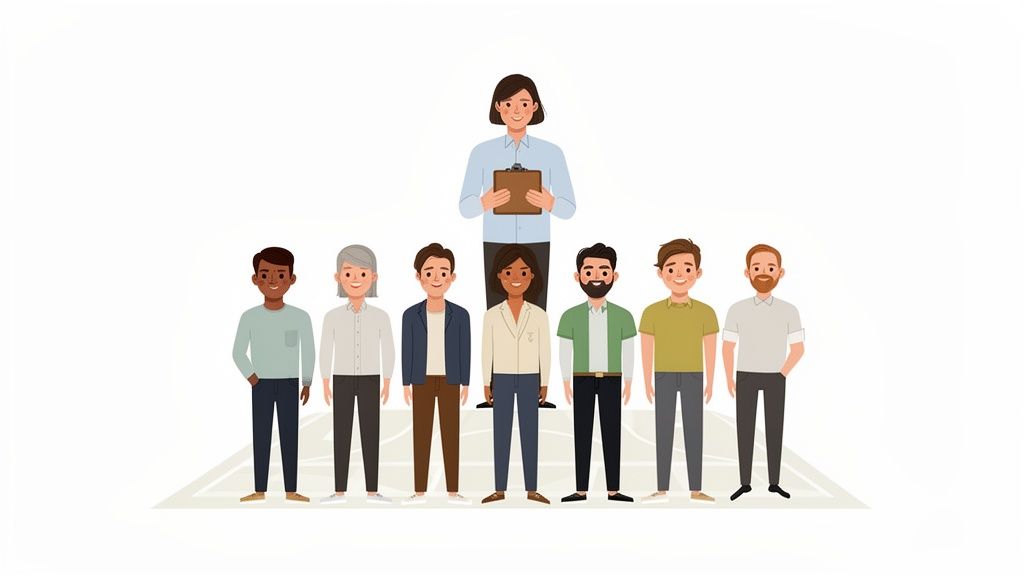
Think of a business like a professional sports team. The employees are the players out on the field, all working together to score goals and win the game. In this picture, Human Resources Management is the coaching staff, working tirelessly behind the scenes.
This "coaching staff" is responsible for scouting and recruiting top talent, making sure the players have the right skills through ongoing training, and nurturing a positive team culture. They also manage contracts, handle disputes, and ensure everyone understands the rules of the game. Just like a great coach, HR’s job is to put the right people in the right positions and give them the support they need to succeed.
That strategic function is what defines modern HR. It’s all about maximising employee performance to drive the company toward its most important goals.
The Purpose of Modern HRM
At its heart, HRM is built on a simple truth: a company's most valuable asset is its people. You can have a brilliant product or a groundbreaking service, but without the right people to design, market, sell, and support it, that brilliance will never translate into success.
HRM’s purpose is to make sure this asset is managed effectively. This involves creating policies and systems that attract, develop, and hold onto a skilled and motivated workforce. By getting this right, HR contributes directly to the organisation’s stability, growth, and bottom line.
This is why understanding what human resources management is becomes so vital for anyone in a leadership position. For those looking to sharpen these skills, exploring a range of management courses can provide a powerful foundation.
Human Resources isn't a thing we do. It's the thing that runs our business. – Steve Wynn, Wynn Resorts
This quote perfectly captures the shift in thinking—from seeing HR as a simple administrative department to recognising it as a central driver of business strategy.
The Core Pillars of Human Resources Management
The work of a modern HR professional is incredibly varied. Below is a quick overview of the main responsibilities that define the field, giving you a scannable summary of what it’s all about.
While we'll dive deeper into each of these areas later, this table gives you a clear snapshot of the foundational pillars that hold up any successful HR department.
The Seven Key Functions of a Modern HR Department
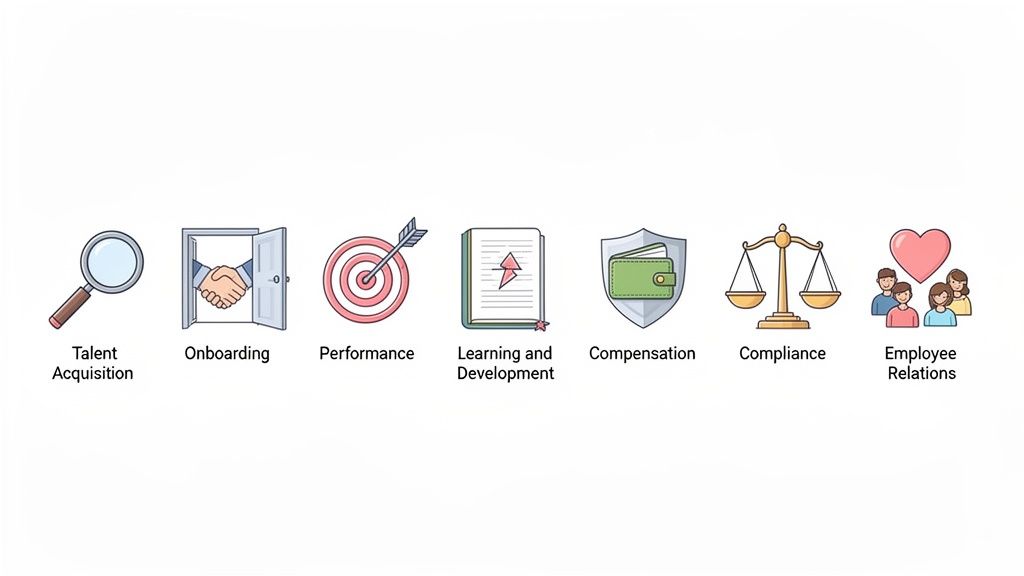
To really get a feel for what human resources management involves, we need to lift the bonnet and look at the moving parts. A modern HR department isn’t just a single admin unit; it’s a collection of specialised functions that work together to manage the entire journey an employee takes with a company.
Think of these functions like the different systems in a high-performing engine. When they’re all running smoothly, the whole organisation moves forward with power and purpose. Let’s break down the seven core functions that drive a successful business.
1 Talent Acquisition and Recruitment
This is where it all begins. Talent acquisition is the strategic game of finding, attracting, and hiring the right people for the right roles. It's so much more than just throwing up a job ad; it’s about building an employer brand that makes talented people genuinely want to work for you.
Getting this right means the company has the skills it needs to hit its goals. A bad hire, on the other hand, can cost a business dearly in lost productivity and wasted resources.
Recruitment activities include things like:
- Writing clear job descriptions that actually reflect the role and appeal to qualified candidates.
- Sourcing candidates through channels like online job boards, social media, and professional networks.
- Conducting interviews and assessments to check for skills, experience, and a good cultural fit.
- Managing the offer process and negotiating employment terms with the person you want to bring on board.
2 Employee Onboarding and Integration
Once a new employee says "yes," the next critical function kicks in. Onboarding is all about integrating a new hire into the organisation, giving them the tools, knowledge, and support they need to become a productive member of the team.
A fantastic onboarding experience sets the stage for long-term success and keeps people around. The data doesn't lie: employees who have a positive start are far more likely to stick with a company.
A strong onboarding process improves new hire retention by 82% and productivity by over 70%. This initial phase is not just about paperwork; it's a strategic opportunity to build loyalty and engagement from day one.
A well-structured programme helps new starters feel welcomed, confident, and connected to the company’s mission right from the get-go.
3 Performance Management
Performance management is the ongoing rhythm of setting goals, giving feedback, and evaluating how employees are doing. The goal is to make sure everyone is meeting expectations and contributing effectively to the company's bigger picture.
This is no longer about a single, dreaded annual review. Modern approaches are all about continuous dialogue and development. To really help people grow, HR departments implement best practices for performance management that foster a culture of growth and accountability.
4 Learning and Development
The world of work never stands still, and neither do the skills needed to succeed in it. The learning and development (L&D) function is in charge of upskilling and reskilling the workforce, making sure people have the capabilities to tackle future challenges.
L&D initiatives can look like many different things:
- Formal training programmes and workshops.
- Mentorship and coaching opportunities.
- Access to online learning platforms and resources.
- Funding for external courses or certifications.
When a company invests in its people, it doesn't just improve its own capabilities. It also shows employees they're valued, which is a massive boost for morale and retention.
5 Compensation and Benefits
This function gets down to one of the most fundamental parts of any job: the reward. It involves designing and managing pay structures and benefits packages that are fair, equitable, and competitive in the market.
This goes way beyond just a salary. It includes everything from bonuses and incentives to health insurance, retirement plans, and paid time off. A smart compensation strategy is absolutely essential for attracting and keeping top talent.
6 Compliance and Safety
Navigating the tangled web of employment law is a crucial HR function. This area ensures the organisation is playing by the rules and complying with all legal requirements, from hiring practices and minimum wage laws to health and safety regulations.
In New Zealand, this means sticking to legislation like the Employment Relations Act 2000 and the Health and Safety at Work Act 2015. Getting this wrong can lead to hefty legal penalties and serious damage to a company's reputation. This function protects both the business and its people. For those wanting to build expertise here, completing relevant study can provide the detailed knowledge needed to handle these responsibilities with confidence.
7 Employee Relations
Last but not least, employee relations is all about fostering a positive and productive workplace culture. This involves managing communication between staff and management, resolving conflicts, and dealing with grievances fairly.
A strong employee relations strategy helps build trust, improve morale, and create an environment where people feel respected and heard. It’s the glue that holds the workplace together, ensuring the team is resilient and engaged.
How HR Evolved From Administrator to Strategic Partner
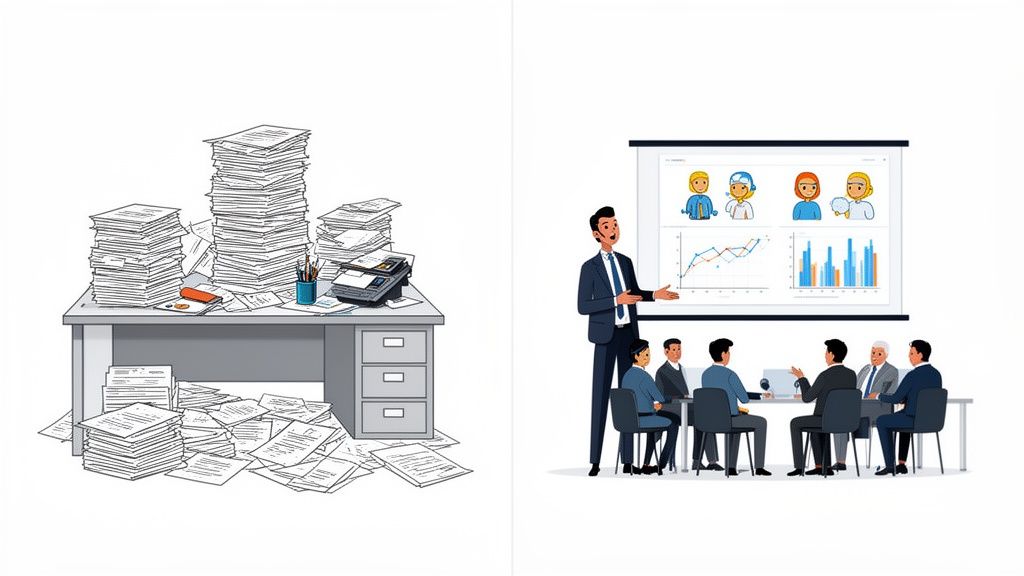
The role of Human Resources has changed almost beyond recognition over the years. Not too long ago, HR was seen as a back-office function, a department buried under mountains of paperwork handling payroll, leave forms, and administrative box-ticking.
This traditional view painted HR as a cost centre—a necessary but uninspired part of the business machinery. Their job was to keep the engine oiled with basic employee services, not to help steer the ship.
Thankfully, that perception is now wildly outdated. Modern Human Resources Management has earned its seat at the executive table, moving from a reactive administrator to a forward-thinking strategic partner.
From Paperwork to People Strategy
So, what caused this massive shift? Businesses finally began to realise their success wasn’t just about products or market share; it was fundamentally about their people. The most successful organisations were the ones that could attract, motivate, and keep top talent.
This realisation elevated the importance of managing the "human" element of the business. Suddenly, HR professionals were no longer just guardians of policy but architects of the entire employee experience.
This evolution meant their focus had to expand to include:
- Shaping Company Culture: Proactively building an environment where people feel valued and connected to the company's mission.
- Driving Employee Engagement: Developing initiatives that boost morale, improve communication, and create a real sense of belonging.
- Developing Future Leaders: Identifying and nurturing talent within the organisation to ensure a strong leadership pipeline for years to come.
This new role demands a deep understanding of business operations and the ability to use people-related insights to influence major decisions.
The Rise of Data-Driven HR
A key driver behind this transformation has been the arrival of data and technology in HR. Gut feelings and anecdotal evidence have been replaced by powerful people analytics.
Modern HR teams now use data to understand turnover trends, measure the impact of training programmes, and predict future workforce needs. The shift to strategic HR is often powered by technology; a modern Human Resource Information System (HRIS) acts as a central command centre, gathering and organising all this vital information. This allows HR to present data-backed arguments that directly link people strategies to business outcomes like revenue and profit.
Today's HR leaders don't just manage people; they measure impact. By connecting HR initiatives to key business metrics, they demonstrate their value as indispensable strategic contributors, not just administrative support.
This analytical approach gives HR leaders the credibility to advise on everything from mergers and acquisitions to new market entry, ensuring the people-side of any strategy is always front and centre.
A Necessity for Navigating Change
In today’s fast-moving business world, this strategic partnership isn’t a luxury—it’s essential for survival. Here in New Zealand, this reality is clearer than ever. A staggering 85% of New Zealand organisations are planning major operational changes in 2025, thrusting human resources management into the very heart of this transformation.
A recent report also found that 88% of these organisations are investing in leadership programmes to address critical skill gaps, especially since only 23% feel confident in their leaders' current abilities. This data highlights just how crucial a strategic HR function is.
When a business needs to adapt, HR is on the front lines, managing the human impact of change. Whether it’s guiding a digital transformation, restructuring teams, or upskilling the workforce, strategic HR ensures the organisation and its people can navigate the turbulence and emerge stronger. The evolution is complete: HR is now an essential partner in driving business growth and resilience.
Navigating Today's Top Workplace Challenges
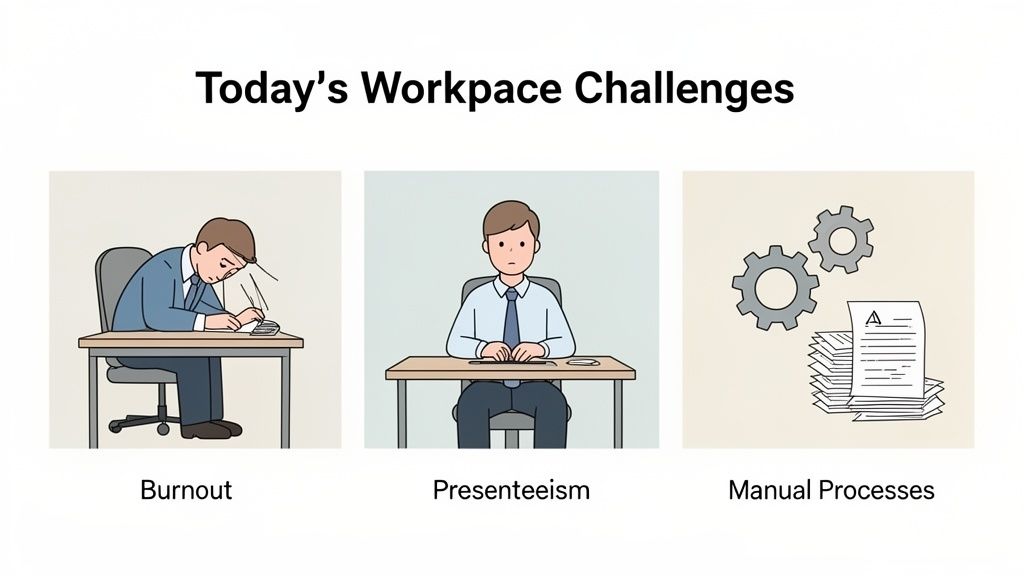
The modern workplace can be a real pressure cooker. HR professionals are right there on the front lines, tasked with solving some of the most complex and delicate people-related issues a business can face. To really get what human resources management is all about today, you have to see it in action, tackling these persistent and damaging challenges head-on.
Problems like burnout, disengagement, and the drag of clunky, inefficient processes don't just stay with one employee; they ripple out, affecting the health and performance of the entire organisation. How well HR can diagnose and treat these issues is a true measure of its strategic value.
The Pervasive Threat of Employee Burnout
Employee burnout isn’t just about feeling a bit tired. It’s a state of chronic physical and emotional exhaustion that can crush an individual's wellbeing and tank their job performance. This has become a particularly sharp pain point for businesses right across New Zealand, creating a massive hurdle for leaders and HR teams alike.
For many Kiwi workers, burnout has become a persistent crisis. According to one detailed report, burnout rates shot up to 49% in the first quarter, driven largely by economic worries and a clear drop in overall wellbeing. The number stayed stubbornly high at 48% mid-year, with 52% of employees reporting their pay just wasn't enough to cover their needs. You can dive deeper into these insights by exploring the full workforce trends report.
Burnout isn't just an individual problem; it's an organisational one. It signals a deep misalignment between the demands of a job and the resources available to the employee. Proactive HR strategies are the first line of defence.
The role of HR here is to stop being reactive and start building a culture that prevents burnout in the first place. That means pushing for things like:
- Realistic Workloads: Making sure job expectations are actually manageable and people aren't constantly snowed under.
- Mental Health Support: Providing easy access to resources like employee assistance programmes (EAPs) and fostering open, honest conversations about mental wellbeing.
- Flexible Work Arrangements: Offering options that help people find a better balance between their work and personal lives.
By championing these kinds of initiatives, HR helps create a work environment that's healthier and more sustainable for everyone involved.
Confronting Presenteeism and Disengagement
Closely linked to burnout is the rise of presenteeism. This is when employees show up to work physically, but they’ve completely checked out mentally and emotionally. They're just going through the motions, and their productivity, creativity, and commitment have taken a nosedive.
This "quiet quitting" is often a direct result of feeling undervalued, disconnected, or just plain overwhelmed. An employee who is at their desk but not really there can be just as damaging to a team's progress as someone who's away sick.
HR can fight back against presenteeism by nurturing a culture of genuine engagement. This means creating clear pathways for career growth, making sure people feel their contributions are seen and valued, and building strong lines of communication between managers and their teams.
Overcoming Operational Strain from Outdated Systems
Finally, many of the challenges we've talked about are made so much worse by internal friction. When HR departments are drowning in manual processes, endless paperwork, and clunky old systems, they have less time to focus on what really matters—strategic work like improving employee wellbeing and engagement.
This operational strain doesn't just frustrate the HR team; it creates a poor experience for everyone. Think about a new hire waiting weeks for their system access, or a manager struggling with a confusing performance review tool. These small frustrations pile up, creating a sense of disorganisation that kills morale.
This is why a huge part of modern human resources management is about championing better technology. By advocating for modern HR software and automating routine admin tasks, HR frees up precious time and energy to focus on the people. This shift is absolutely critical for building a more efficient, resilient, and adaptive organisation.
What Kind of HR Jobs and Career Paths Are There?
If you're curious about a career in human resources, you'll find it offers a surprisingly clear and rewarding ladder to climb. It’s a field with a huge range of specialisations and a direct impact on how well a company performs, making it a great path for anyone who enjoys working with people and shaping business strategy.
The journey usually starts with foundational roles that give you a broad taste of everything HR does. From there, you can branch out into more specialised areas or move up into senior leadership. Let's map out what that career journey typically looks like, from your first day to the executive suite.
Getting Started: Foundational and Entry-Level Roles
The starting line for most HR careers is the HR Coordinator or HR Administrator role. Think of this position as the central nervous system of the HR department—it handles all the essential day-to-day tasks that keep everything running smoothly.
You'd be responsible for things like:
- Managing HR documents and keeping employee records up to date.
- Helping with recruitment by scheduling interviews and posting jobs.
- Coordinating the onboarding for new hires to make them feel welcome.
- Answering employee questions about company policies, leave, and benefits.
These jobs are perfect for building a solid understanding of HR fundamentals. You’ll need to be super organised, have a sharp eye for detail, and be a natural communicator.
Moving Up: Mid-Level and Specialised Roles
Once you’ve got some solid experience under your belt, the next step is often a mid-level position that demands more specialised knowledge. This is where you can really start to carve out your niche in the broad world of HR.
Moving from a coordinator to a specialist is a big deal. It’s the point where you shift from supporting HR functions to owning them, letting you build deep expertise in an area you're genuinely passionate about.
Two of the most common mid-level paths are the HR Generalist and the Talent Acquisition Specialist. An HR Generalist is a jack-of-all-trades, handling a wide mix of duties across all HR functions, which makes them invaluable in small to medium-sized businesses. A Talent Acquisition Specialist, on the other hand, is laser-focused on one thing: recruitment. They live and breathe sourcing, interviewing, and hiring new talent.
Taking the Lead: Senior and Strategic Roles
With years of experience and a proven track record, HR professionals can move into senior leadership, where the focus shifts from daily tasks to long-term strategy. These roles require a deep understanding of the business itself and the ability to connect people strategy directly to the company's goals.
A Human Resources Manager oversees the entire HR department, guiding the team and developing company-wide policies. An even more strategic version of this is the HR Business Partner (HRBP), who works directly with a specific part of the business—like the sales or tech team—to provide tailored HR support and strategic advice to their leaders.
Right at the top of the ladder is the Chief Human Resources Officer (CHRO). As part of the executive leadership team, the CHRO is responsible for setting the people strategy for the entire organisation, ensuring it lines up with the company’s mission and fuels its growth.
To give you a clearer picture, this table outlines the different HR roles, their primary focus, and the key skills needed at each stage.
HR Career Progression at a Glance
As you can see, an HR career allows you to grow from an operational expert into a strategic leader, making it a dynamic and fulfilling path for those passionate about people and business.
How To Start Your Career In Human Resources
Thinking about a career in human resources? It’s a rewarding path for anyone who gets a kick out of seeing people and businesses thrive together. If you're ready to jump in, you should know that a traditional university degree isn’t the only way to get your foot in the door.
There are many ways to build a successful career in HR. Often, it's the combination of practical experience and targeted learning that gives you the specific, in-demand skills Kiwi employers are really looking for. The trick is to focus on the right competencies and show you're serious about growing professionally.
Nailing the Core HR Skills
Success in HR comes down to a specific set of skills that help you balance what employees need with what the organisation wants to achieve. While knowing the ins and outs of employment law is a must, it's the "soft skills" that really make an HR professional stand out from the crowd.
These are the core competencies you'll need to develop:
- Sharp Communication: You need to be able to explain complex ideas clearly, but just as importantly, you have to be a great listener when employees bring their concerns to you.
- Empathy and Emotional Intelligence: This is all about understanding the human side of the workforce while still maintaining professional boundaries. It's a tricky but essential balance.
- Critical Thinking: The ability to look at a situation, spot potential risks, and come up with fair and logical solutions to workplace problems is non-negotiable.
- Digital Fluency: Modern HR isn't just paperwork. You'll need to be comfortable using HR software and data tools to make smart decisions and keep things running smoothly.
Building Your Foundation With Practical Learning
For busy people trying to break into HR or move up the ladder, flexible online courses are a game-changer. They let you gain essential knowledge without having to put your life on pause. Courses that cover business and management principles give you a solid grasp of how organisations tick—critical context for any HR role.
An HR career is accessible to anyone with the drive to learn and a genuine interest in creating better workplaces. Practical, skills-based learning can bridge the gap between your ambition and your next career move.
This approach means you're learning skills you can immediately use to tackle real-world challenges in today's workplaces. Whether you’re starting from scratch or want to put a formal qualification to your existing experience, there are learning pathways for you.
To get a better idea of the roles out there and see how your skills line up, check out more information on starting a career in human resources in our career guide.
At the end of the day, a dynamic career in HR is built on a blend of hands-on experience and a commitment to always be learning. It’s a field where practical skills and a deep understanding of people are what truly drive a business forward.
Got Questions About HRM?
To round things out, let's tackle a few common questions that pop up when people are trying to get their heads around Human Resources Management. These answers should clear up any lingering confusion and give you a practical feel for how HR really works day-to-day.
Do Small Businesses Really Need Human Resources?
You bet they do. A small Kiwi business might not have a dedicated HR department with a fancy title, but the core functions are absolutely essential. From day one, the owner or a manager is handling hiring, sorting out payroll, managing leave, and making sure everything is above board with New Zealand's employment laws, like the Employment Relations Act.
As that business grows, putting formal HR processes in place becomes non-negotiable. It’s the only way to ensure fairness, stay legally protected, and build a great place to work. Many small businesses start by outsourcing their HR or using smart software before they’re big enough to hire a full-time HR pro.
What's The Difference Between An HR Generalist and An HR Specialist?
Good question. Think of an HR Generalist as the "jack-of-all-trades" in the people department. They juggle a bit of everything—recruitment, employee issues, payroll questions, you name it. You’ll often find them in small to medium-sized companies where one person needs to wear many hats.
An HR Specialist, on the other hand, goes deep into one specific area. They’re the experts.
- Recruitment Specialists live and breathe hiring.
- Compensation and Benefits Specialists are the masters of salary structures and employee perks.
- Learning and Development Specialists focus entirely on training and upskilling the team.
You're more likely to find specialists in larger organisations with bigger, more structured HR teams that can afford to have an expert for each key function.
Is HR A Good Career For A "People Person"?
Yes, but there’s a big "but" attached. Being a "people person" is a great start—you definitely need strong interpersonal and communication skills for handling employee relations, mediating disagreements, and coaching managers.
But a great HR professional is so much more. You also have to be analytical, comfortable with data, and ready to make tough decisions that align with both business strategy and employment law. The job is a constant balancing act between advocating for employees and driving the organisation's goals forward.
Ultimately, this career demands a unique mix of high emotional intelligence and sharp business sense.
Can I Get Into HR Without A University Degree?
Absolutely. It’s definitely possible to build a successful HR career without a traditional university degree. Many of the best HR professionals I know started in administrative roles and learned the ropes through hands-on experience.
Completing industry-recognised online courses or diplomas in business or human resources is a brilliant way to get the foundational knowledge you need and show employers you’re serious. Combining that practical, on-the-job experience with targeted learning in areas like NZ employment law or modern recruitment techniques is a proven pathway into the field.
Ready to build the skills for a rewarding career? At Get Course New Zealand, we connect you with flexible, 100% online courses designed for busy Kiwis. Explore our offerings and find the right learning path for your goals at https://getcourse.co.nz.
Find Your Course
Compare courses across every field we write about, and enquire in under a minute.