A Guide to Project Management Certification NZ
Discover the best project management certification NZ has to offer. Compare PMP, PRINCE2, and NZQA qualifications to find the right course for your career.
Starting your project management journey in New Zealand can feel a bit like exploring a vast new country. The right project management certification NZ acts as your map to success, with options ranging from globally recognised credentials like PMP to locally focused qualifications.
Your Guide to Navigating PM Certifications in New Zealand
Embarking on a career in project management in New Zealand is a smart move. There's huge demand for skilled professionals, especially in booming sectors like technology, construction, and healthcare. Nailing down the right certification is more than just padding out your CV; it's a strategic step that can seriously shape your career path and how much you earn. But let's be honest, the sheer number of choices can be overwhelming.
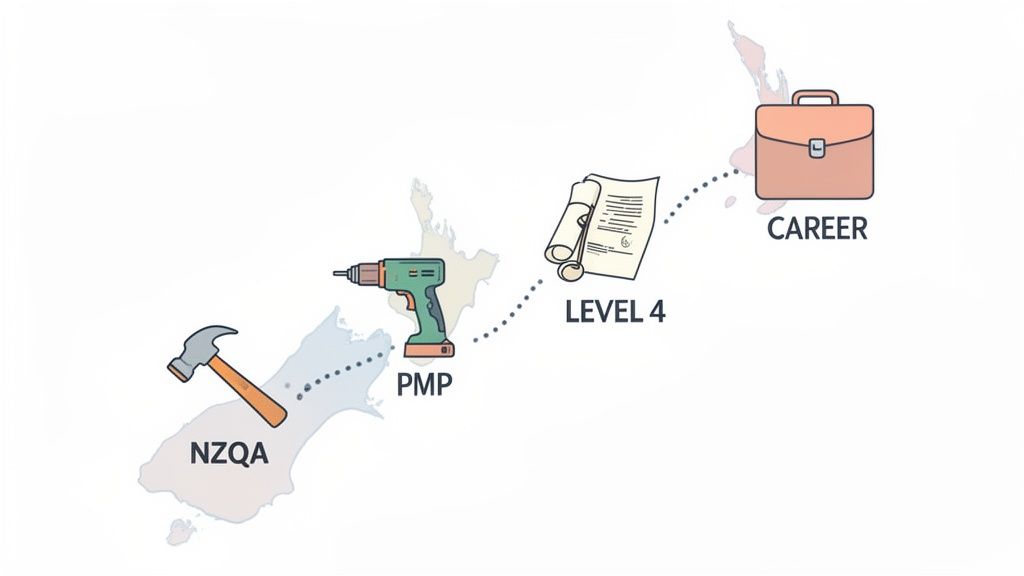
This guide is designed to be your trusted roadmap. We'll break down the key qualifications available so you can make a decision that feels right for you.
Choosing the Right Tool for the Job
Think of project management certifications like a builder's toolkit—you wouldn't use a sledgehammer to hang a picture frame. The best tool depends entirely on the job you need to do.
Global Power Tools: International certifications like the Project Management Professional (PMP) are the heavy-duty power tools in your kit. They're ideal for managing large-scale, complex projects and are recognised by employers all over the world.
Local Foundations: On the other hand, qualifications aligned with the New Zealand Qualifications Authority (NZQA) framework are like your versatile, reliable hammer. They're perfect for building a strong local career foundation, equipping you with practical skills tailored specifically for the Aotearoa market.
It's important to know that while many online platforms offer courses to get you ready for these certifications, they aren't NZQA-registered colleges themselves. What they do is provide clear pathways to these industry-recognised credentials.
Choosing a certification is about aligning the qualification with your personal career goals. It’s a commitment to professional growth that shows employers you have the validated skills to deliver projects successfully.
This distinction is crucial. For instance, if your ambition is to lead major infrastructure projects with international stakeholders, a globally respected credential like PMP is probably your best bet. But if you're just starting out and want to get a handle on the fundamentals of managing projects in a local Kiwi business, a foundational certificate provides a fantastic entry point. You can learn more about those first steps by exploring how to become a project manager in our detailed guide.
Ultimately, this guide will walk you through these options and more, helping you match the right credential to your experience level, preferred industry, and long-term career ambitions. By understanding the landscape, you can confidently choose the path that will deliver tangible, real-world results in New Zealand's dynamic job market.
Comparing the Top International PM Certifications
Once you start looking into international project management certifications, you'll quickly find yourself swimming in a sea of acronyms. Credentials like PMP, PRINCE2, and various Agile certifications are the global heavyweights, but each one brings a completely different philosophy to getting a project over the line. Figuring out their core approach is your first step to choosing the right one for your career here in New Zealand.
Let's use an analogy. If you were building a house, you’d need two things: a deep understanding of construction principles and a detailed blueprint to follow. This is the fundamental difference between the world’s most popular PM methodologies. One gives you the knowledge, the other gives you the method.
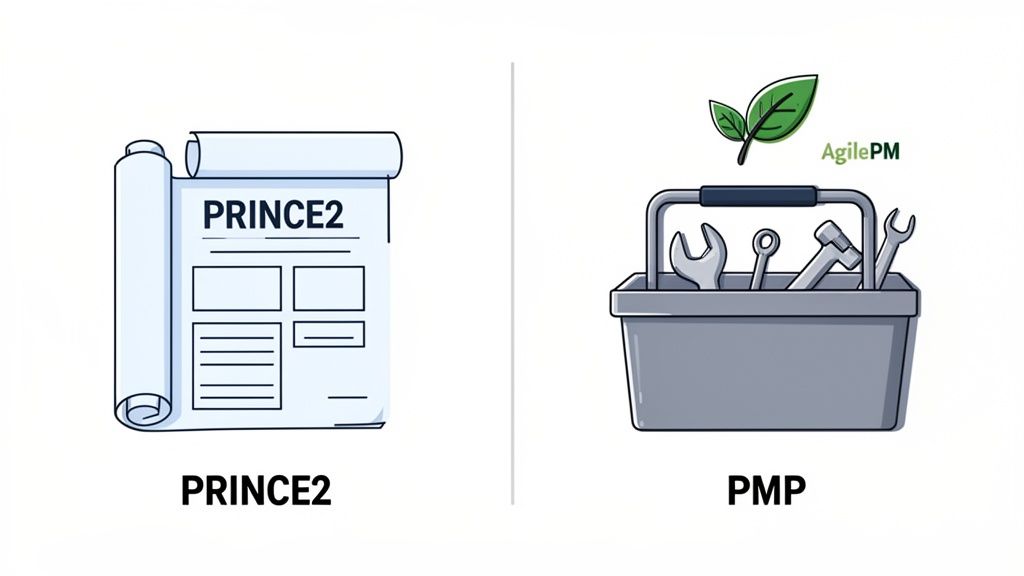
These aren’t just badges for your CV; they represent a specific way of thinking about and executing work. Let's break down what makes each one unique.
PMP: The Comprehensive Knowledge Base
The Project Management Professional (PMP) certification, from the Project Management Institute (PMI), is like learning the entire science of construction. It doesn’t hand you a single, rigid blueprint. Instead, it arms you with a massive toolkit of knowledge, processes, and techniques that you can apply to pretty much any project you can dream up.
The PMP framework, detailed in the PMBOK® Guide, covers the full project lifecycle—from initiation and planning right through to execution, monitoring, and closing. Its real strength is its versatility. A PMP-certified professional is trained to be an adaptable problem-solver, able to pull the right tool from their kit whether they're managing a software launch, a marketing campaign, or a major infrastructure build.
It’s an ideal credential for experienced project managers who want a globally recognised qualification that proves a deep, well-rounded understanding of project management principles. While it's hugely valued in North America, it also carries significant weight in New Zealand, especially within large multinational corporations and the tech sector.
PRINCE2: The Structured Blueprint
On the flip side, PRINCE2 (PRojects IN Controlled Environments) is the detailed blueprint. It provides a structured, process-driven methodology that ensures every step is consistent and controlled from start to finish. Originally developed for UK government projects, its DNA is all about governance, clear roles, and managing the project in logical, bite-sized stages.
PRINCE2 really shines in environments that demand predictability, tight risk management, and a strong business case. It makes sure that every stage of the project is meticulously planned, justified, and controlled.
This process-based approach makes it incredibly scalable and easy to tailor to projects of any size. It’s less about a general body of knowledge and more about a specific, repeatable method for delivery. That’s why it’s so popular in government, engineering, and construction sectors across New Zealand, the UK, and Europe.
Local data backs this up. A recent KPMG Project Management Survey found that while 80% of NZ organisations use multiple PM approaches, PRINCE2 was the most common single methodology, used by 21%. This shows a strong local appetite for structured, standardised training.
AgilePM: The Adaptive Framework
While PMP and PRINCE2 represent more traditional approaches, AgilePM (Agile Project Management) is built for the fast-paced, dynamic environments we often find ourselves in today—where requirements are almost guaranteed to change. Think of it as building with modular components instead of a fixed blueprint. The focus is on iterative development, close collaboration, and delivering real value to the customer as quickly as possible.
AgilePM is a natural fit for software development, product innovation, and creative industries where flexibility is everything. It empowers teams to respond to feedback and adapt on the fly, ensuring the final product is something people actually want and need.
At a Glance Comparison of Top PM Certifications in NZ
To make sense of it all, here’s a quick-reference table comparing the key attributes of the most popular project management certifications available in New Zealand.
Ultimately, choosing the right international project management certification NZ comes down to your industry, your experience level, and the kinds of projects you want to lead. Think about whether your career path calls for a versatile toolkit, a structured blueprint, or an adaptive framework.
Understanding NZQA Qualifications and Local Credentials
While big international certifications like PMP and PRINCE2 have their place, let's talk about building a solid foundation right here in New Zealand. Local, nationally-recognised qualifications are a fantastic, practical starting point for anyone wanting to build a project management career in Aotearoa.
Why? Because they’re designed for our market, which means Kiwi employers know and respect them.
This whole system is watched over by the New Zealand Qualifications Authority (NZQA). Think of them as the government's quality control stamp. When a qualification is on the NZQA framework, you can be confident the skills it represents are credible, recognised across the country, and actually useful in a real job.
The Role of NZQA in Project Management
So what does the NZQA framework actually do? It sets the national standard for quality education. If a course is aligned with the framework, it’s met strict criteria for what's taught, how it's delivered, and how you're assessed. This ensures a Level 4 certificate from one provider is just as solid as one from another.
For project management, this means you get a proper grounding in the principles that matter to local businesses. You’ll learn about project lifecycles, team dynamics, risk management, and communication—all within a New Zealand context.
It's useful to know how different education providers fit into this picture. While some platforms offer a huge range of industry-recognised courses, they are not NZQA-registered colleges themselves. Instead, they can give you access to flexible pathways that lead to these kinds of valuable, in-demand credentials.
A Closer Look at the NZ Certificate in Project Management Level 4
One of the most popular and accessible local qualifications is the New Zealand Certificate in Project Management (Level 4). This certificate is the perfect entry point if you're new to the field, or if you're already in a role where you’ve ended up managing projects without any formal training.
This qualification isn't about abstract theory; it's about building practical, day-one skills. It’s designed to equip you with the essential tools and confidence to step into a project support or coordinator role and contribute effectively from the get-go.
The course gets right into the fundamentals that form the backbone of any successful project. You’ll learn how to:
- Define project scope so everyone is crystal clear on what needs to be delivered.
- Develop a project plan that maps out timelines, resources, and key milestones.
- Manage stakeholders by communicating effectively with your team, clients, and suppliers.
- Monitor project progress and make smart adjustments to keep things on track and on budget.
This Level 4 certificate is an excellent way to formalise your skills with a qualification that Kiwi employers really value. It gives you a strong foundation to build on, whether that leads to further study or tackling one of the big international certifications later on. Many people find that starting local helps them get the experience and confidence needed for those bigger challenges down the line.
These foundational qualifications are part of a bigger shift towards more accessible education. If you're curious, you might want to read our guide on what micro-credentialing is and how it’s shaking up professional development.
Ultimately, choosing a local project management certification NZ can be a smart, strategic move to launch your career with skills that are directly relevant to the Aotearoa job market.
Mapping Your Study Pathway and Entry Requirements
So, you’ve got a certification in your sights. That’s the first step, but how do you actually get from here to there? The journey to becoming a certified project manager isn't a straight line; it's more like choosing a hiking trail. Some are gentle, scenic walks perfect for beginners, while others are steep, challenging climbs that require serious preparation.
Think of a heavyweight credential like the PMP. It has some pretty demanding prerequisites, asking for thousands of hours of real-world experience before you can even think about applying. On the flip side, many New Zealand qualifications are designed to be much more approachable, offering a welcoming path into the profession for newcomers.
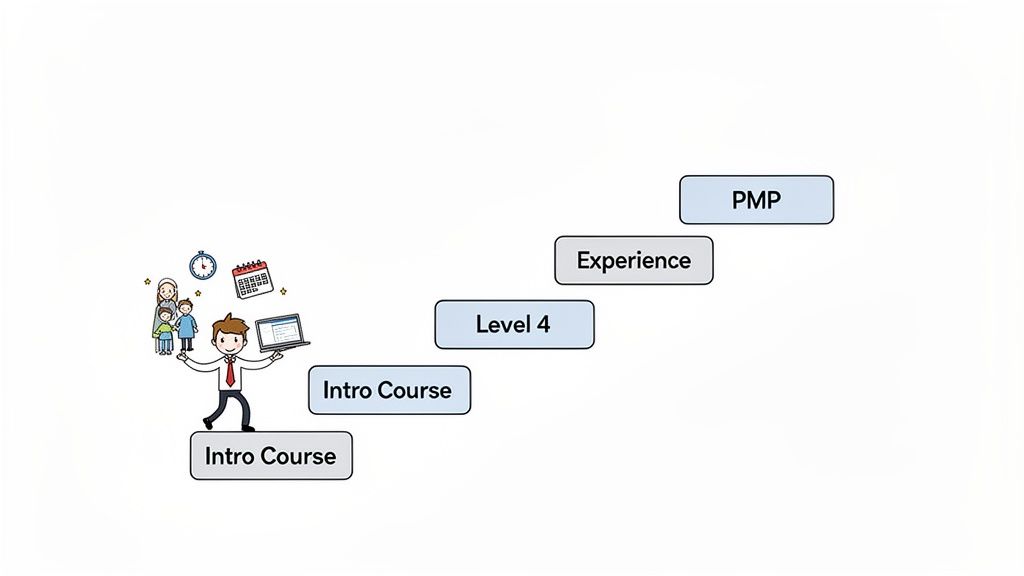
Getting your head around these different pathways is crucial. It helps you take a realistic look at where you stand today and map out a practical route to your career goals, ensuring the study plan you pick actually fits your life.
Navigating Entry-Level Requirements
If you're new to the project management world, the thought of needing years of experience just to start a course can feel pretty daunting. The good news is, the New Zealand system has fantastic foundational options that roll out the welcome mat.
The New Zealand Certificate in Project Management (Level 4) is a perfect example. To get started, you generally just need 40 NCEA Level 1 credits, including 10 in literacy and 10 in numeracy, or a similar NZQF Level 2 qualification. If you're 20 or over, there are often special admission options available too, making it a great launchpad for just about anyone looking to break into the field. You can get a better feel for these accessible requirements from providers like the Open Polytechnic.
This approach breaks down major barriers, letting you jump in and start building skills and confidence without needing a hefty CV first.
The Path to Advanced International Certifications
At the other end of the scale are the globally recognised certifications. These are the black belts of the project management world, and their entry requirements reflect their elite status. They demand a serious commitment of both time and on-the-job experience.
Let's take a closer look at the Project Management Professional (PMP) certification. Before you can even sit the exam, you'll need one of the following:
- A four-year degree: Plus a minimum of 36 months of project leadership experience.
- A secondary diploma: Plus a minimum of 60 months of project leadership experience.
- 35 hours of formal project management education: This is a non-negotiable prerequisite before you apply.
These strict criteria ensure that anyone with PMP after their name isn't just book-smart; they're a seasoned, proven professional. Other big names like PRINCE2 have their own hurdles, often requiring you to pass a Foundation level course before you can even attempt the Practitioner exam.
Your study pathway doesn't have to be a direct sprint to the most advanced certification. Many successful Kiwi project managers start with a foundational local qualification to gain practical skills and then use that experience to meet the entry criteria for a global credential later in their career.
This stair-step approach is a smart way to go. It lets you build momentum, use what you're learning in real-world situations, and steadily level up your qualifications as your career blossoms. It makes the journey towards a top-tier project management certification NZ feel much more achievable.
The Rise of Flexible Online Learning
Let's be real—most Kiwis are juggling work, family, and a million other things. Traditional, on-campus study just isn't practical for everyone. This is where flexible online courses have become a total game-changer, letting you chase that project management certification NZ on your own schedule.
Online learning is built for modern life. It offers self-paced study that you can fit in whenever it works for you—evenings, weekends, or during your lunch break. You don't have to press pause on your life to move your career forward. This flexibility gives you the power to upskill in a way that’s sustainable, effective, and gives you a clear path to get started with confidence.
What's the Pay-Off? Career Growth and Salary Expectations in NZ
Putting in the time and money for a project management certification is a big commitment, so what’s the real-world return on that investment? Let's be frank: getting a recognised qualification is one of the fastest ways to kick your career into a higher gear here in New Zealand. It opens doors to more senior roles and, just as importantly, a bigger paycheque.
For employers, a certification on your CV signals that you’ve got a verified, industry-standard skill set. It takes the guesswork out of hiring you, making you a much more valuable asset from day one. This kind of validation is your ticket to moving up, helping you step from a Project Coordinator role into a full-blown Project Manager position. With more experience and perhaps another advanced cert under your belt, leadership roles like Senior Project Manager or Programme Director suddenly become very real possibilities.
Turning a Certificate into a Bigger Salary
One of the most compelling reasons to get certified is the direct impact it has on your earnings. Holding a globally respected credential like the PMP or PRINCE2 gives you serious leverage during salary negotiations. It sets a higher baseline for what you can expect and puts you in a much stronger position when asking for a promotion or a pay rise.
The numbers don't lie, especially for world-renowned qualifications. For example, getting your PMP certification in New Zealand often means earning around NZ$20,000 more each year than someone without it. With average salaries for PMP holders sitting between NZ$68k to NZ$150k, it’s clear that Kiwi employers are willing to pay a premium for that expertise. You can learn more about the impact of PMP certification on salaries to see just how much it could boost your earning potential.
Estimated Salary Ranges for PM Roles in New Zealand
While your exact salary will always depend on your experience, the industry you're in, and where in New Zealand you're based, we can map out some pretty realistic expectations. The table below gives you a good idea of what you could be earning at different stages of your project management career, with and without a certification.
As you can see, there's a clear pattern here. Certified professionals consistently pull in higher salaries at every step of the career ladder. Your certification is a powerful tool, boosting your income from your very first PM role and continuing to deliver value as you climb higher. As you think about your career and salary goals in New Zealand, it also helps to understand the broader business environment, including things like the importance of fast websites for NZ businesses.
When you can connect your study to real job titles and salary figures, the long-term value of getting certified becomes crystal clear. It's much more than just another line on your CV—it's a strategic move to secure your financial future in New Zealand's competitive job market.
How to Choose the Right PM Course for Your Goals
So, you've got a clearer picture of the project management landscape in New Zealand. Now for the big decision. Picking the right project management certification NZ isn't about grabbing the most popular or advanced option off the shelf; it's about finding the piece that fits perfectly into your unique career puzzle. This means taking a moment for an honest look at where you are and where you want to go before you commit.
Let's turn all the information we've covered into a simple, practical framework. By asking yourself just a few key questions, you can cut through the noise and zero in on the certification that genuinely lines up with your professional goals and personal situation.
A Quick Self-Assessment Checklist
Before you even think about enrolling, run through this simple checklist. Think of your answers as a compass, pointing you towards the qualification that makes the most sense for you.
What's my current experience level? If you're just starting out, a foundational course like the NZ Certificate in Project Management (Level 4) is a brilliant entry point. But if you’ve been in the trenches for a few years, a more demanding credential like the PMP might be the logical next step to formalise that experience.
Which industry am I targeting? Are you aiming for a government role where PRINCE2 is king, or a fast-paced tech company where Agile skills are the name of the game? Make sure your certification speaks the language of your target sector.
What's my budget and timeline? Be realistic about the course fees and, just as importantly, the time you can actually dedicate to study. A self-paced online course offers a level of flexibility you simply won't get in a traditional classroom setting.
What’s my preferred learning style? Do you thrive with a structured, step-by-step methodology that tells you exactly what to do next? Or do you prefer a broader, more flexible toolkit of knowledge you can adapt to different situations? Your answer here will guide you toward either a process-driven or a knowledge-based certification.
The Advantage of Flexible Online Learning
For many working professionals across New Zealand, the thought of juggling a full-time job with study can feel pretty overwhelming. This is exactly where flexible online learning comes into its own. These platforms are built specifically to help busy people gain new skills without having to press pause on their careers or personal lives.
Answering these self-assessment questions honestly is your superpower. It gives you the clarity to make a confident, informed decision and ensures the path you choose is a strategic investment in your future, not just another course.
The freedom to study at your own pace means you can fit learning around your existing commitments, making that next career move an achievable goal rather than a source of stress.
If you're still weighing things up, our breakdown of the best project management courses in NZ can give you some more specific ideas. At the end of the day, the right course is the one that empowers you to take that final, decisive step forward.
Got Questions? We've Got Answers
Stepping into the world of project management certifications can feel a bit like navigating a new city – a few questions are bound to pop up. To help you find your way, we've tackled some of the most common queries from aspiring project managers here in New Zealand.
Are Online Certifications Recognised by NZ Employers?
You bet they are. Kiwi employers are increasingly savvy about online qualifications, especially those from globally respected bodies like PMI or AXELOS (the people behind PRINCE2). At the end of the day, what really matters is the credential itself and the skills it proves you have, not how you learned them.
Online study is now a completely normal, well-regarded way to upskill. It shows you've got self-discipline and are committed to your own development while juggling work and life – traits that are gold to any employer. The trick is simply to pick a reputable course that leads to a project management certification NZ businesses trust.
Do I Need a University Degree to Become a Project Manager?
Not at all. A university degree isn't a mandatory ticket into the project management field in New Zealand. While it can certainly help, plenty of highly successful project managers have built fantastic careers on a foundation of solid experience and industry-backed certifications.
For many roles, employers will prioritise proven skills and a relevant certification over a specific degree. A qualification like the NZ Certificate in Project Management (Level 4) or an entry-level cert like the CAPM can be your direct entry point, letting you get your foot in the door and start climbing the ladder.
This focus on what you can do makes project management a really accessible and rewarding career, no matter your educational background.
How Long Does It Take to Get Certified While Working?
This really depends on the qualification you’re chasing and how much time you can put in. The beauty of self-paced online learning is that you're in the driver's seat of your own timeline.
As a rough guide, though:
- Foundational Certificates: Getting something like the NZ Certificate in Project Management (Level 4) or prepping for the CAPM exam usually takes around 6 to 12 months of part-time study.
- Advanced Certifications: Prepping for the bigger exams like the PMP or PRINCE2 Practitioner can take a similar amount of time, but remember that doesn't include the on-the-job experience you need to have under your belt first.
Flexible online courses are built from the ground up for working professionals, designed to slot into your existing schedule. This makes earning a valuable project management certification NZ a totally manageable goal, even when life is busy.
Ready to make your move in the project management world? Get Course New Zealand simplifies the process of finding a flexible, self-paced online course that aligns with your goals and your life. Check out your options and start building your future today.
Find the perfect project management course for you at getcourse.co.nz
Find Your Course
Compare courses across every field we write about, and enquire in under a minute.