%20(1).png)
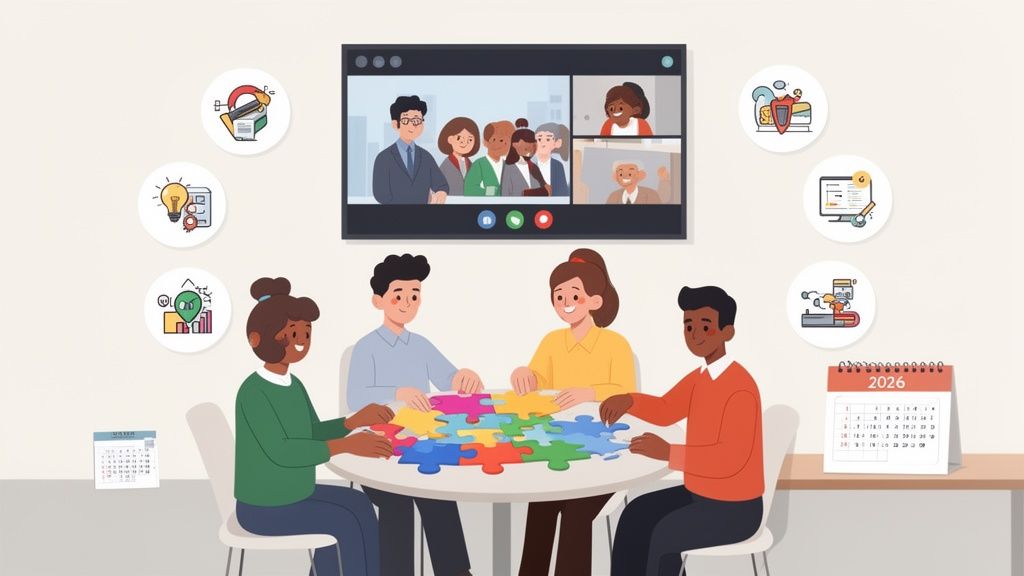
Building a high-performing team in New Zealand's dynamic work environment requires more than just shared office space or a reliable internet connection. It demands genuine connection, psychological safety, and a shared sense of purpose. Traditional team-building exercises often miss the mark, feeling forced, irrelevant, or better suited to a bygone era of office culture. This guide moves beyond the clichés, offering a comprehensive roundup of impactful team building activities for workplace environments designed to foster real collaboration.
Our focus is on strategic exercises that improve communication, boost morale, and align with tangible business objectives. We will explore practical, actionable ideas suitable for in-office, remote, and hybrid teams across New Zealand, detailing the 'why' and 'how' for each. These activities are not just about having fun; they are strategic investments in your team’s cohesion and effectiveness. They help to create a culture where everyone feels valued and empowered to contribute their best work, directly impacting productivity and innovation.
This listicle will provide clear, step-by-step instructions for 10 distinct activities, from virtual escape rooms to collaborative project-based learning. You'll find everything you need to implement them successfully, including facilitation notes, time estimates, and expected outcomes. Importantly, this guide centres on practical skill development and learning opportunities, not formal qualifications. Our goal is to offer accessible, real-world strategies to strengthen your team's capabilities and connection.
Virtual escape rooms transform the classic physical puzzle game into an online collaborative experience, making them one of the most dynamic team building activities for a workplace, especially for remote and hybrid teams. In this activity, teams are digitally “locked” in a themed room and must work together to find clues, solve a series of puzzles, and complete a mission before time runs out. The entire experience is facilitated through a web browser or a dedicated platform, guided by a live host who can provide hints when needed.
This activity is a powerful tool for developing critical thinking and collaborative skills under pressure. It requires clear communication, logical reasoning, and the ability to delegate tasks effectively as team members piece together information to crack the final code. Beyond traditional games, consider incorporating structured forms of engagement like virtual escape rooms, which are excellent examples of effective team building problem solving activities.
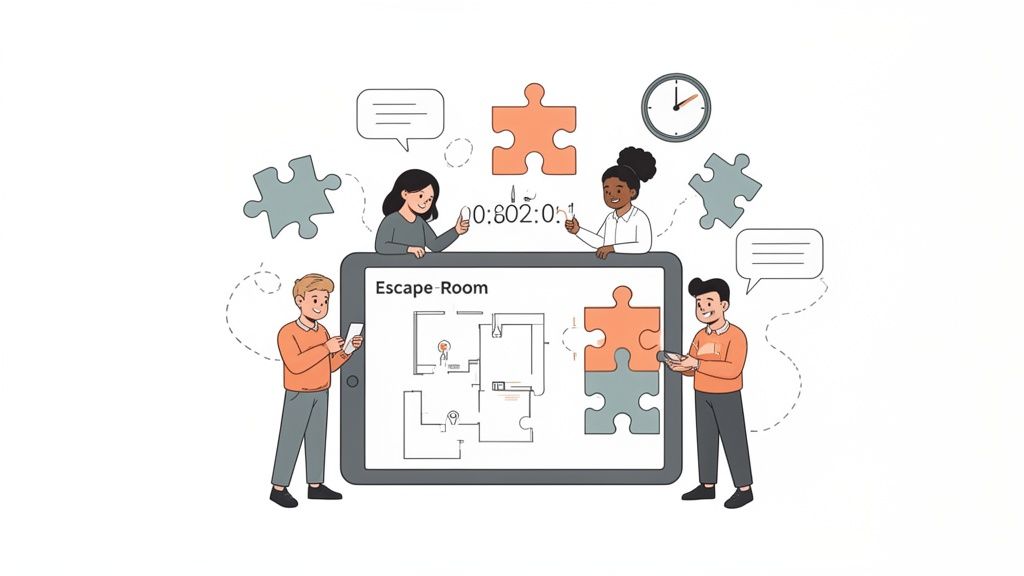
Virtual escape rooms excel at simulating a high-stakes project environment in a fun, low-risk setting. Success is impossible without every team member contributing, which highlights the importance of diverse perspectives and active listening. This shared challenge helps to strengthen bonds and improve team dynamics by revealing how colleagues approach problems differently. Companies like ThirdLove have successfully used these challenges to foster alignment and boost morale among distributed teams.
A Skill-Sharing Workshop Series taps into the wealth of knowledge already present within your team, creating structured sessions where colleagues teach each other valuable skills. This peer-to-peer learning model transforms employees from passive learners into active contributors, fostering a culture of continuous development. Sessions can cover a wide range of topics, from professional expertise like advanced spreadsheet formulas and presentation design to personal skills such as mindfulness or a new language, making it one of the most customisable team building activities for a workplace.
This approach not only recognises and values the unique talents of each team member but also directly addresses specific organisational needs. By leveraging internal experts, you build a self-sustaining learning environment that supports both individual growth and collective capability. These workshops are a practical way to supplement more formal training, and you can explore structured professional development courses in NZ to complement your internal programme.
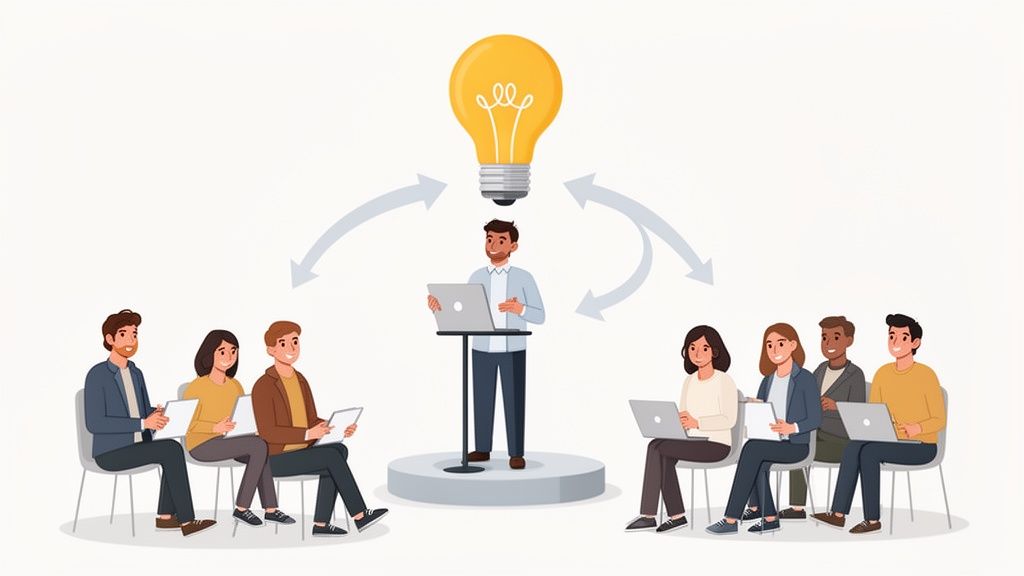
Skill-sharing workshops build confidence and position employees as subject matter experts, which boosts morale and engagement. The act of teaching reinforces the presenter's own knowledge while empowering others with practical, immediately applicable skills. This creates a powerful cycle of mutual respect and appreciation, strengthening interpersonal relationships. Companies like Google have famously encouraged this kind of knowledge exchange, recognising that the most relevant expertise often resides within the team itself.
Collaborative project-based learning moves beyond traditional exercises by uniting teams to tackle a meaningful, non-work-related project or a genuine business challenge. Instead of artificial scenarios, this activity builds cohesion by having colleagues apply new skills to create something of value. Examples range from developing a community resource or proposing a process improvement, to completing a short online course together as a cohort, which is one of the most effective team building activities for a workplace looking to integrate skill development with collaboration.
This approach grounds team building in tangible outcomes, encouraging colleagues to learn and grow together. It requires strategic planning, clear communication, and shared accountability, mirroring the demands of real-world business projects. Developing these abilities is crucial, and for those looking to formalise these skills, understanding how to become a project manager provides a structured path for career advancement.
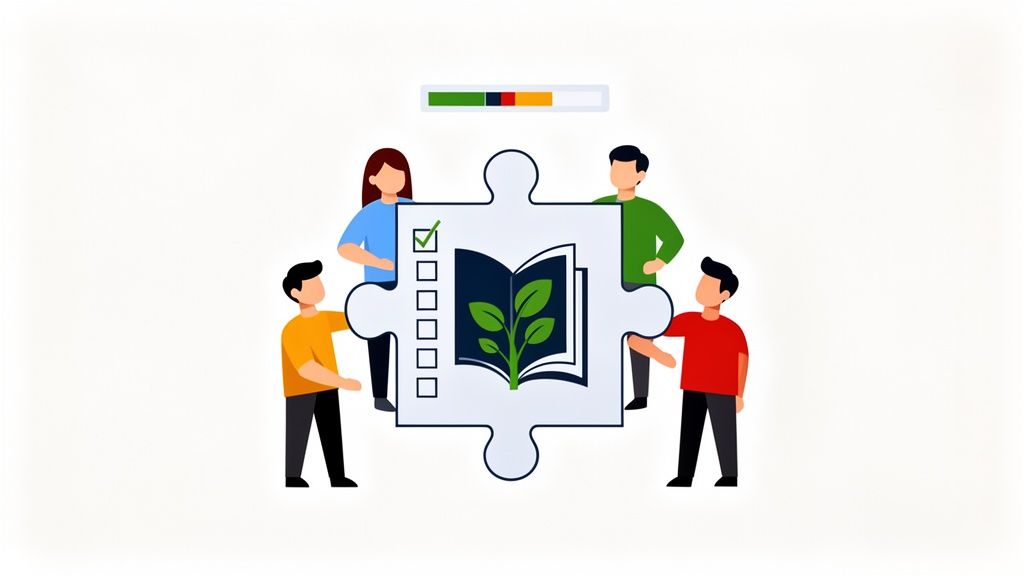
This method works because it connects team building directly to purpose and achievement. When a team successfully builds an internal tool or completes a course together, the sense of collective accomplishment strengthens their professional bonds and mutual respect. Deloitte’s innovation hackathons, which generate real business solutions, are a prime example of how project-based learning can drive both innovation and team cohesion. The process fosters a collaborative mindset that translates directly back to daily responsibilities.
Two Truths and a Lie (Professional Edition) is a classic icebreaker reimagined for the modern workplace, making it one of the most accessible team building activities for a workplace. In this activity, each team member shares three statements about their professional life or career: two that are true and one that is false. Colleagues then take turns guessing which statement is the lie, sparking conversation and revealing surprising facts about each other's experiences. The professional focus keeps the activity relevant and appropriate for a corporate setting.
This exercise is particularly effective for new teams or during onboarding, as it encourages vulnerability and storytelling in a structured, low-pressure way. It helps team members move beyond surface-level introductions to discover shared interests, unique skills, and hidden career achievements. The game is often used in tech company onboarding processes and features regularly on corporate retreat agendas across New Zealand to quickly build rapport.
This activity excels at breaking down hierarchical barriers and fostering human connection. By sharing personal-yet-professional anecdotes, team members see each other as well-rounded individuals rather than just their job titles. The game reveals personality, creativity, and humour, which are essential ingredients for building psychological safety and trust within a team. It's a simple yet powerful way to learn about the diverse paths colleagues have taken in their careers.
Organised volunteer days unite teams under a shared purpose beyond business goals, making them one of the most impactful team building activities for a workplace. In this activity, teams dedicate a day to supporting a community cause, such as environmental restoration, assisting local non-profits, or running educational workshops. It shifts the focus from internal targets to external contribution, fostering a sense of collective achievement and social responsibility.
This approach builds deep, authentic connections as colleagues work side-by-side in a new context, solving real-world problems. It reveals different skill sets and strengthens teamwork through a shared, meaningful experience. This type of hands-on, purpose-driven collaboration is a powerful way to enhance communication and mutual respect.
Volunteer days connect employees to a greater purpose, which significantly boosts morale and engagement. Seeing a tangible, positive impact from their collective effort reinforces company values and strengthens team pride. This shared experience creates lasting bonds based on shared values rather than just work tasks. Companies like Westpac New Zealand have successfully implemented similar programmes, supporting local community projects and enhancing team cohesion.
Peer coaching and mentoring programs are structured initiatives that pair team members for ongoing professional development, skill-building, and mutual career guidance. Unlike traditional top-down mentoring, this approach fosters reciprocal learning where both participants act as both teacher and student, building a collaborative partnership. This is one of the most impactful long-term team building activities for a workplace dedicated to a culture of continuous learning and improvement.
This activity is a powerful engine for building trust, enhancing communication, and developing leadership capabilities throughout an organisation. It encourages colleagues to share knowledge openly, tackle challenges together, and hold each other accountable for growth. By formalising these relationships, businesses can break down silos and strengthen cross-departmental bonds. The skills developed are directly transferable, and those interested in deepening their expertise can explore formal training through professional mentoring programs to bring advanced techniques back to their teams.
Peer coaching excels at creating a supportive and safe environment for professional vulnerability and growth. It decentralises development, empowering employees to take ownership of their learning journey while building deep, meaningful connections with their colleagues. Success in these partnerships strengthens the entire team's fabric by fostering empathy and a shared commitment to collective success. Companies like Atlassian and LinkedIn have championed internal coaching cultures to accelerate skill acquisition and boost employee engagement.
Lunch and Learn sessions are informal gatherings where team members eat together while one person presents on a specific topic. By implementing a rotating host model, these sessions become a powerful platform for knowledge sharing and skill development, transforming a simple lunch break into one of the most effective team building activities for a workplace. This format encourages different team members to step up, share their expertise, and contribute to a continuous learning culture.
This activity is exceptionally effective for building confidence and improving public speaking skills across the team. It allows individuals to share passions or deep knowledge on subjects both within and outside their direct job descriptions, fostering a deeper appreciation for colleagues' diverse talents. This practice of consistent, low-stakes presentations helps normalise knowledge sharing, making it a cornerstone of team collaboration and professional development.
Lunch and Learn sessions break down departmental silos by creating a forum where information is freely exchanged. When team members teach each other, it reinforces their own understanding and positions them as subject matter experts, boosting morale and individual confidence. The rotating host model guarantees a variety of topics and prevents presentation fatigue, keeping the content fresh and engaging. Companies like Slack and many New Zealand tech agencies use these sessions to maintain a vibrant learning culture and keep teams connected, especially in hybrid work environments.
Forming cross-functional task forces or innovation committees is a strategic approach that embeds team building directly into meaningful organisational work. These temporary teams bring together employees from different departments to solve specific business challenges, explore new opportunities, or drive strategic initiatives. By design, this activity breaks down departmental silos and fosters a holistic understanding of the business.
This method moves beyond contrived scenarios, making it one of the most impactful team building activities for a workplace focused on tangible outcomes. Participants collaborate to achieve a shared, high-value goal, developing new professional relationships and a deeper appreciation for inter-departmental dependencies. For example, a company like Get Course could create a committee to improve the online course discovery experience, combining insights from marketing, customer support, and tech teams to generate practical, innovative solutions.
Cross-functional task forces create an environment where collaboration is not just encouraged but essential for success. This structure naturally enhances communication and empathy as team members learn about the challenges and perspectives of other departments. The real-world impact of their work provides a powerful sense of shared accomplishment and purpose, strengthening bonds far more effectively than a one-off event. Spotify’s "squad" model is a well-known example, proving that organising teams around missions rather than functions can drive innovation and agility.
A Team Capability Mapping and Skills Inventory Workshop is a structured session where team members collaboratively document their individual skills, expertise, and development interests. This strategic activity transforms individual talents into a visible, collective asset, building mutual respect and creating a practical resource for project assignments, mentoring, and identifying skill gaps. It is one of the most insightful team building activities for a workplace that values data-driven growth and transparency.
This workshop moves beyond typical icebreakers to foster a deeper appreciation for the diverse capabilities within a team. By creating a shared inventory of technical skills, soft skills, industry knowledge, and even hidden talents, the group gains a clearer understanding of its collective strengths. This process not only improves project delegation but also highlights opportunities for peer-to-peer learning and professional development, making it a powerful tool for building a more cohesive and resourceful unit.
This workshop excels at building psychological safety and trust by making every team member’s contribution visible and valued. It shifts the focus from job titles to a more holistic view of individual capabilities, revealing hidden experts and fostering a culture of continuous learning. Organisations like Unilever and various New Zealand District Health Boards use capability mapping to inform talent management and ensure the right skills are available where needed. This transparency empowers team members and equips managers with the insights needed for smarter resource allocation.
Structured retrospectives are recurring team meetings that use proven frameworks to reflect on performance, processes, and collaboration. Far from being a simple complaint session, this activity provides a psychologically safe space for teams to discuss what’s working, what isn’t, and what improvements to trial. By formalising feedback into a productive ritual, these sessions build deep trust, refine workflows, and empower teams to take ownership of their own continuous improvement.
These rituals are powerful team building activities for the workplace because they embed a culture of open communication and shared responsibility. Frameworks like "Start-Stop-Continue" or the "4Ls" (Liked, Learned, Lacked, Longed For) guide the conversation, ensuring it remains focused and constructive. The goal is to move beyond assigning blame and towards creating actionable steps that enhance collective performance, making it a cornerstone for high-performing teams.
Structured retrospectives directly link feedback to action, demonstrating that every team member's voice is valued and can lead to tangible change. This process builds a powerful feedback loop that fosters psychological safety and encourages proactive problem-solving. Companies like Atlassian and Spotify have famously embedded these rituals into their team culture, proving their effectiveness in improving everything from product development cycles to team morale.
The journey from a collection of talented individuals to a high-performing, cohesive team is built on a foundation of intentional and meaningful interaction. This article has explored a diverse range of team building activities for workplace environments, moving beyond temporary morale boosts to focus on exercises that deliver lasting value. We've seen how activities like Collaborative Project-Based Learning and Cross-Functional Task Forces can break down silos and drive innovation, while structured rituals like Peer Coaching and Continuous Improvement Retrospectives embed a culture of growth directly into your team's workflow.
The core message is clear: effective team building is not an annual off-site event but a continuous, strategic process. It’s about creating consistent opportunities for your team to connect, learn, and succeed together. Whether through the intellectual stimulation of a Skill-Sharing Workshop or the shared purpose of a Volunteer Service Day, the goal is to cultivate an environment of psychological safety, mutual respect, and shared accountability. These are the ingredients that transform a good team into a great one.
Merely implementing an activity is just the first step. The real transformation occurs when the principles behind these exercises become part of your organisational DNA. To bridge this gap, consider the following actionable steps:
Ultimately, investing in high-quality team building activities for workplace success is an investment in your organisation's greatest asset: its people. When employees feel connected to their colleagues and aligned with a shared mission, the benefits are tangible and far-reaching. Engagement levels rise, employee turnover decreases, and the team's collective ability to solve complex problems and adapt to change is significantly enhanced.
Remember that leadership is pivotal in this process. By championing these initiatives and actively participating, you signal that building a strong, collaborative culture is a priority. This creates a powerful ripple effect, encouraging everyone to contribute to a more supportive and productive work environment. The activities in this guide are not just tasks to be completed; they are tools to build the resilient, innovative, and engaged team your organisation needs to thrive.
Ready to take your leadership skills to the next level and master the art of team development? Explore the range of flexible, industry-relevant online courses at Get Course New Zealand. Equip yourself with practical skills in management, communication, and project leadership to build and lead exceptional teams with confidence.


