What is Human Resource Management? (what is human resource management)
Learn what is human resource management and how it drives business success. Core HR functions, strategies, and career paths explained.
Human Resource Management (HRM) is the strategic art of managing a company's people so they can power the business towards its goals. It's so much more than just admin; it’s about nurturing talent, shaping a vibrant company culture, and making sure the entire team is pulling in the same direction. When done right, HRM turns human potential into a serious competitive advantage.
Unpacking Human Resource Management

Think of a business as a high-performance race car. The engine, the tech, the design—they’re all critical. But without a skilled driver and a coordinated pit crew, that car is just a fancy piece of metal. Human Resource Management is the function that finds, trains, and motivates that driver and crew, making sure everyone works in sync to win the race.
At its core, it's about maximising employee performance to hit the organisation's biggest strategic targets.
This is a world away from the old-school view of HR as the department that just handles payroll and pushes paper. Of course, those administrative tasks still need to get done, but modern HRM is a strategic partner at the executive table. It's focused on the big picture: creating a workplace where people don't just work, but thrive.
From Administration to Strategic Asset
The journey of HRM from a purely administrative role to a strategic one marks a huge shift in how businesses see their people. Employees are no longer viewed as cogs in a machine; they're recognised as the company's most valuable asset. This change means HR professionals are now central to shaping the future of the organisation.
To give you a better idea of what modern HRM covers, let's look at its fundamental pillars. This table breaks down the core components and their primary goals, providing a quick snapshot of the discipline.
Core Components of Modern Human Resource Management
Each pillar works together to create a cohesive strategy. Effective HRM ensures that a company has the right people, with the right skills, in the right roles, at the right time. This involves a coordinated effort across several key functions:
- Talent Acquisition: It’s not just about filling empty seats. It’s about actively hunting for individuals who have the skills needed today and the potential to grow with the company tomorrow.
- Employee Development: This means investing in people through ongoing training, mentorship programmes, and clear career paths that show them they have a future with the organisation.
- Performance Management: Good performance management isn't about the dreaded annual review. It's about creating systems for regular feedback and clear goals that keep everyone aligned.
- Culture and Engagement: This is the heart of it all—proactively building a workplace where people feel respected, motivated, and genuinely connected to the company's mission.
At its heart, HRM is about unlocking human potential. It builds the bridge between an organisation’s ambitions and the people who will make them a reality. When managed well, it transforms the workforce from a line item on an expense sheet into the primary driver of innovation and growth. This strategic alignment is what separates successful companies from the rest.
The Seven Key Functions of an HR Department
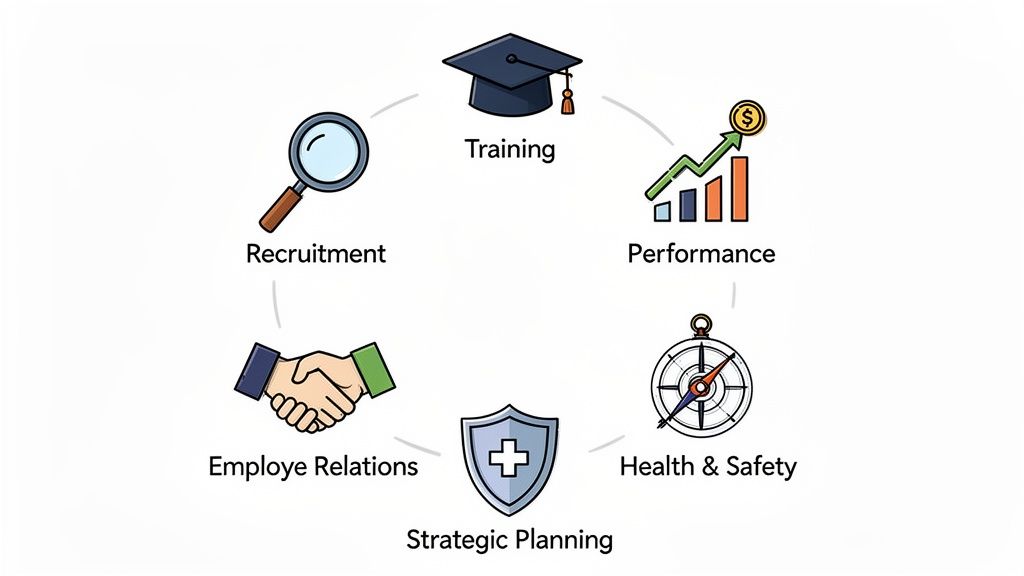
So, what does an HR department actually do all day? To really get what human resource management is all about, we need to lift the bonnet and look at the engine. While the day-to-day can look different from one company to the next, it all boils down to seven core functions.
These functions are where theory meets reality, turning big-picture people strategies into practical, everyday actions. Think of them as interconnected gears in a machine, all working together to manage the entire employee journey—from the moment they apply for a job to their very last day.
Recruitment and Selection
This is the part of HR that most people see first. It’s all about finding and hiring the right people for the job. But it’s so much more than just throwing a job ad online. This function involves meticulously crafting job descriptions, actively sourcing great candidates, running effective interviews, and putting together competitive offers.
The real goal here is to attract talent that doesn't just have the right skills on paper, but also fits right into the company's culture. Getting this right is huge. A fantastic hire can energise an entire team, but the wrong one can drag down morale and productivity.
Training and Development
Getting someone in the door is just the beginning. The real work starts now. This function is dedicated to helping employees grow and reach their full potential through ongoing learning opportunities. It kicks off with onboarding and continues throughout their entire career.
This might look like:
- On-the-job training to nail the specifics of their role.
- Mentorship programmes that pair them with experienced leaders.
- Workshops and seminars to build skills like leadership or project management.
When you invest in your people's development, you're sending a clear message: we value you. That’s a powerful way to keep your top talent from looking elsewhere.
A crucial function for any HR department involves developing a robust talent management strategy to attract, retain, and develop employees effectively. This strategic view ensures that every HR activity serves the bigger picture of building a capable and motivated workforce for the future.
Performance Management
Performance management is all about guiding employees to do their best work. It's a continuous loop of setting clear goals, giving regular, constructive feedback, and formally reviewing their contributions. Gone are the days of the dreaded annual review; modern HR focuses on ongoing coaching and open dialogue.
This hands-on approach helps people understand where they’re shining and where they can improve. It keeps everyone aligned with the company's bigger goals and empowers them to take control of their own career growth.
Compensation and Benefits
This is where HR ensures people are rewarded fairly for their hard work. It involves designing salary structures, setting up bonus schemes, and managing benefits packages like health insurance or KiwiSaver contributions. It’s a seriously complex area, demanding a sharp understanding of market rates, legal obligations, and the company's budget.
A well-thought-out compensation plan is essential for attracting and keeping great people. And let's not forget the nitty-gritty admin, like payroll, which is absolutely critical. Getting pay right builds trust, and managers who handle it need specialised skills to ensure everything is accurate and compliant. For anyone looking to specialise, a NZ Diploma in Payroll Management can provide a fantastic career path.
Employee and Labour Relations
At its core, this function is about building strong, positive relationships between management and staff. HR professionals often act as mediators, helping to resolve workplace conflicts, handle grievances, and create a work environment where everyone feels respected.
In workplaces with unions, this role expands to include negotiating collective agreements and maintaining a good working relationship with union representatives. Solid employee relations are the bedrock of a healthy, thriving company culture.
Health and Safety
Every Kiwi business has a legal and moral duty to provide a safe workplace. This HR function is all about creating the policies and procedures needed to prevent accidents and injuries. It's about looking after your people.
This can range from doing ergonomic checks for office staff to implementing strict safety protocols on a construction site. HR plays a massive part in making sure the company follows all health and safety regulations and fosters a culture where safety is everyone's top priority.
Strategic Planning
This is where HR gets a seat at the main table. Strategic planning involves aligning all people-related activities with the company's long-term goals. It means digging into workforce data to predict future hiring needs, planning for who will step into key roles down the line, and helping to shape the very structure of the organisation.
By contributing to these high-level decisions, HR ensures the business has the right people with the right skills to turn its future vision into a reality.
How HR Is Evolving with People and Technology
The role of human resources is going through a massive shift. Not so long ago, HR was seen as an administrative gatekeeper, buried under payroll and paperwork. Today, that couldn't be further from the truth. Modern HR is a strategic partner, deeply involved in steering an organisation's direction and success.
This evolution is especially clear in Aotearoa New Zealand, where the focus has moved decisively from routine tasks to high-impact work. Today’s lean HR teams are expected to drive business growth by leading workforce planning, championing employee wellbeing, and boosting overall productivity. They're no longer just supporting the business; they're helping to lead it.
The Digital Transformation of HR
Technology is the main driver behind this change. The days of filing cabinets and manual spreadsheets are fading fast as digital tools take centre stage. This shift allows HR professionals to automate the repetitive stuff and pour their energy into strategic work that adds real, measurable value.
A recent sector report shows just how reliant HR has become on tech in New Zealand. It found that a huge 94% of organisations use more than one system to manage their people functions. With an average of just 1.2 HR professionals per 100 employees, this tech isn't a luxury—it's essential for efficiency.
But the digital journey isn't all smooth sailing. The same research uncovered a major roadblock.
A staggering 91% of HR professionals reported that their productivity is held back by manual work and clunky, outdated systems. This highlights a critical gap between the strategic potential of HR and the reality of their day-to-day tools.
Overcoming Barriers With Modern Solutions
To bridge this gap, organisations are turning to integrated and intelligent technology. The goal is simple: create a seamless flow of information that gets rid of manual data entry and provides clear insights for decision-making. By automating routine processes, HR teams can finally free up their time.
This allows them to focus on what truly matters:
- Strategic Workforce Planning: Using data to predict future talent needs and skills gaps before they become a problem.
- Employee Experience: Designing programmes that genuinely boost engagement, satisfaction, and wellbeing.
- Leadership Development: Identifying and nurturing the next generation of leaders from within the organisation.
Technology isn't just about doing things faster; it’s about doing the right things. For a clear example of how tech is changing the game, look into improving human resources with custom-trained AI chatbots. These tools can handle common employee questions automatically, freeing up HR to focus on the high-value, people-centric work that makes a real difference.
Managing Modern Workforce Wellbeing and Engagement

In today’s business world, employee wellbeing and engagement aren't just nice-to-haves anymore. They’re critical signs of a healthy, high-performing organisation. Human resource management now sits at the heart of fostering a supportive workplace where people feel valued, connected, and genuinely motivated to bring their A-game.
This isn’t just a trend; it's a direct response to the real pressures facing today's workforce. Things like burnout, dipping engagement levels, and financial stress have a tangible impact on everything from productivity to staff retention. Businesses that want to thrive simply can't afford to look the other way.
Understanding the Wellbeing Landscape in New Zealand
Recent data paints a pretty clear picture of the challenges and opportunities for HR professionals here in New Zealand. While engagement is holding relatively strong, significant chunks of the workforce are feeling the pinch of burnout and financial strain, which directly hits their focus and performance at work.
For instance, benchmark reports show that while 67% of New Zealand employees are considered engaged, that positive figure is offset by some serious concerns. Burnout rates climbed to a worrying 48% mid-year, and over half of employees (52%) said their income wasn't keeping up with their needs. You can dive deeper into these trends in the full Culture Amp benchmark report. This data really hammers home why proactive wellbeing strategies are so essential.
These aren't just abstract numbers. They show that wellbeing is a measurable factor that directly affects the bottom line. When employees are stressed or disengaged, absenteeism creeps up, the quality of work can slide, and your best people might start looking for the door.
HR’s Proactive Role in Building a Healthier Workforce
In response to these challenges, HR teams are rolling out concrete strategies to build healthier, more resilient, and more effective teams. The goal is to create an environment where support is easy to find and woven right into the company culture.
This has led to a huge uptake in specific support programmes. A recent HR sector update noted that 81% of businesses now offer Employee Assistance Programmes (EAPs), giving staff confidential access to counselling and support for personal or work-related issues.
By championing wellbeing, HR moves beyond its traditional administrative functions. It becomes a strategic force that builds a sustainable, high-performing workforce by putting people’s health—both mental and financial—at the centre of the business strategy.
This proactive approach means rethinking the entire employee experience, from flexible work arrangements to mental health days. Crucially, it also involves connecting the dots between financial stress and overall wellbeing. Understanding how payroll supports employee financial wellness is a key piece of this puzzle, helping ensure people feel secure and supported in all areas of their lives.
Navigating Today's Labour Market Challenges
The job market right now is a tricky puzzle. We're grappling with skills shortages, people leaving their jobs more frequently, and a constant hum of economic uncertainty. In this kind of environment, human resource management isn't just about admin anymore—it's the strategic toolkit organisations need to build a real competitive edge. It's about looking past the immediate pressure to hire and, instead, building a talent pipeline that's resilient and ready for the future.
HR professionals are having to get creative. They're moving away from the old habit of relying on external recruitment to plug every single gap. The focus is starting to shift inwards.
Building Talent from Within
Instead of just buying talent, the smartest organisations are now focused on building it. This is a big strategic shift. It means deliberately focusing on internal mobility, targeted upskilling, and helping current employees gain new credentials. It’s a proactive way to tackle skills shortages head-on while also giving people a compelling reason to stay.
Of course, this internal focus doesn't happen by itself. It needs serious support. Industry research shows that nearly 85% of organisations expected to make major changes to their operations and technology to make this new approach work. It’s a clear sign that investing in your current team is now seen as fundamental to long-term success.
Responding to Market Realities
The New Zealand labour market certainly reflects these challenges. The latest labour market statistics from Stats NZ showed a small dip in the total number of people employed, which really highlights the constant churn businesses are dealing with.
At the same time, industry surveys paint a complicated picture for HR teams. Even though nearly half of them reported that turnover had improved, a full 50% of HR professionals still felt their departments were under-resourced. This really throws a spotlight on the pressure HR is under to do more with less.
Strategic human resource management is the answer to this challenge. By focusing on developing internal talent and implementing smarter systems, HR becomes a proactive force that not only navigates today's labour market but actively shapes a stronger, more capable workforce for tomorrow.
How to Start a Career in Human Resources
So, you’re inspired by the strategic impact of human resource management? Good. Breaking into this dynamic field is more achievable than you might think. A career in HR isn't just about admin; it's a unique chance to shape company culture, champion employee growth, and drive business success from the inside out.
Your journey starts with understanding the common entry points and building the right foundational skills.
For many, the first step is through an administrative or coordinator role. These positions are the backbone of any HR department. They offer priceless, hands-on experience in the day-to-day functions we've explored, from helping with recruitment to onboarding new hires. This path lets you learn the ropes and see firsthand how HR strategy is put into action.
Alternatively, you could enter through a specialist role, especially if you have experience in a related area. Someone with a background in communications, for instance, might be a natural fit for an employee engagement position. If you've got strong analytical skills, you could slide right into an HR data analyst role.
Identifying Key Career Pathways
Once you have a foothold, an HR career can branch out in many exciting directions. It's not a single, straight line but a network of opportunities that lets you align your career with what you're truly passionate about. The right path for you will depend on whether you enjoy big-picture strategy, crunching data, or working directly with people.
Here are some common long-term career goals in the field:
- HR Generalist: The versatile all-rounder who handles a bit of everything, from employee relations to performance management.
- Recruitment Consultant: A specialist laser-focused on attracting and sourcing top talent to fill crucial roles in the organisation.
- Learning & Development Manager: A strategic role centred on creating training programmes that upskill the workforce and nurture future leaders.
- HR Business Partner: A senior strategic advisor who works hand-in-hand with business leaders to align people strategy with company objectives.
Each of these roles requires a different blend of skills, but they all build on a solid understanding of what human resource management is at its core.
A successful HR career is built on a foundation of both "hard" and "soft" skills. Technical knowledge of labour laws and HR systems is essential, but it's the ability to communicate, empathise, and solve complex people-problems that truly sets great HR professionals apart.
Skills That Are in High Demand
To thrive in a modern HR role, you need a diverse skillset. A relevant qualification can give you a strong theoretical base, but employers are increasingly looking for practical skills that show you can handle the real-world challenges of today's workplace. You can explore a variety of human resources career pathways to see what skills are currently most valued by employers here in New Zealand.
Key skills to focus on developing include:
- Communication: The ability to clearly and empathetically talk with everyone, from a nervous new graduate to a time-poor senior executive.
- Problem-Solving: The knack for de-escalating conflicts and finding practical, fair solutions to tricky employee issues.
- Digital Literacy: Confidence using HR software and data to inform your decisions and make processes smoother for everyone.
- Business Acumen: A solid grasp of the company's goals and how HR can directly contribute to hitting them.
Building these skills through entry-level roles, volunteering, or targeted online courses provides the practical foundation you need to launch a successful and rewarding career in this essential field.
Got Questions About HRM? Let's Answer Them.
To round out your understanding of human resource management, let's tackle some of the most common questions people have. Think of this as a quick-reference guide to clarify the real purpose and potential of a career in this dynamic field.
What Is the Main Goal of Human Resource Management?
At its core, the primary goal of HRM is to get the very best out of people to help a business hit its strategic targets. It’s all about creating a productive and positive work environment where your team can truly thrive.
This isn’t just about ticking boxes. It involves a whole range of activities, from finding and developing top talent to navigating tricky employee relations and ensuring everything is above board legally. Ultimately, it's about making sure the entire workforce is pulling in the same direction, aligned with the company's mission.
Is HR a Good Career Path?
Absolutely. If you're passionate about people, business strategy, and solving complex problems, HR can be an incredibly rewarding career. It offers a huge variety of roles, from generalist positions that touch on everything, to highly specialised areas like recruitment or learning and development.
The field is always changing, which keeps things interesting and makes it an intellectually stimulating choice. Plus, there are clear pathways for growth into senior leadership positions where you can have a massive impact on an organisation's success.
Modern Human Resource Management (HRM) is far more strategic than its predecessor. It views employees as valuable assets and focuses on broader concepts like talent management, company culture, employee engagement, and aligning people strategy with overall business goals.
What Is the Difference Between HRM and Personnel Management?
This is a really important distinction to understand. Personnel management is what most people think of as old-school HR. It’s a much more traditional, administrative function that focuses on the day-to-day tasks – think managing payroll, processing new hires, and enforcing company rules.
On the other hand, human resource management (HRM) takes a much broader, more strategic view. It operates on the principle that employees are a company's most important asset and is concerned with their long-term development, motivation, and engagement. You could say HRM is about proactively shaping the workplace to drive success, not just reacting to it.
Ready to build the skills for a rewarding new career? Get Course New Zealand helps you find flexible online courses to match your goals. Start exploring your options at https://getcourse.co.nz.
Find Your Course
Compare courses across every field we write about, and enquire in under a minute.