How to Become a Therapist in New Zealand A Complete Guide
Thinking about how to become a therapist in NZ? This guide covers the essential qualifications, registration steps, and career paths you need to know.
Thinking about how to become a therapist in New Zealand? It's a deeply rewarding path, but one that requires a solid mix of university education, hands-on clinical experience under supervision, and professional registration.
Let’s break down that journey into a clear roadmap, so you can take your first confident step toward a fulfilling career helping others.
Your Guide to a Rewarding Therapy Career
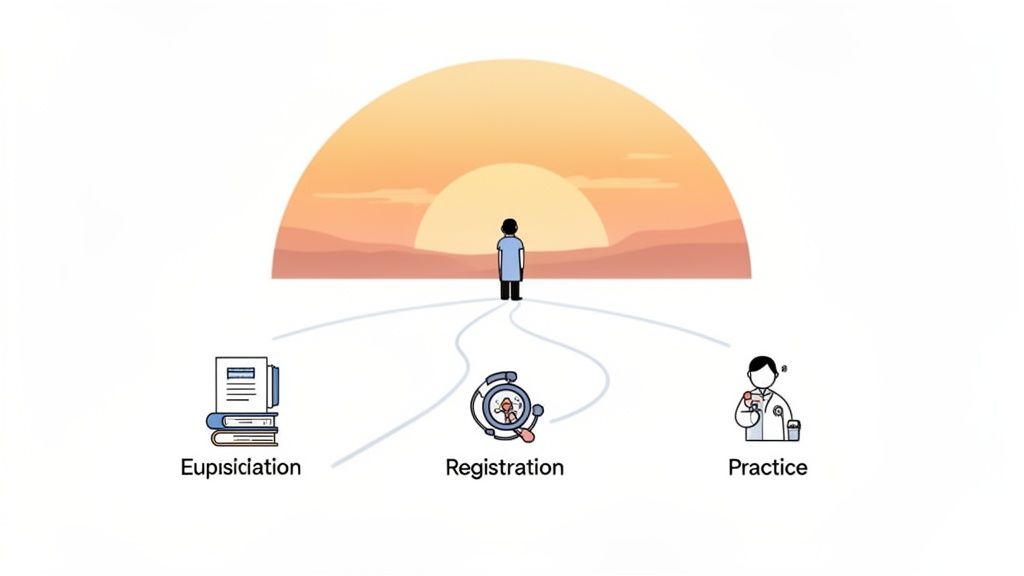
The demand for skilled mental health professionals in New Zealand is definitely on the rise. We’re seeing a real increase in unmet mental health needs, which highlights just how critical the role of a therapist is.
The 2022/23 New Zealand Health Survey found that 7.8% of adults reported needing professional help but not getting it. That's a big jump from just 4.9% back in 2016/17, showing a clear and growing gap that qualified therapists can help fill.
What Does it Really Take?
A career in therapy is so much more than a 9-to-5 job. It’s a genuine commitment to supporting people through some of their most vulnerable moments. Alongside the formal qualifications, you’ll need some specific personal qualities to thrive.
Think about whether these resonate with you:
- Deep Empathy: Can you truly connect with and understand what someone else is feeling?
- Sharp Listening Skills: It's about hearing not just the words, but the meaning and emotions behind them.
- Patience and Resilience: Real change takes time. You need to be able to navigate emotionally heavy situations without burning out.
The path isn't a straight line, either. It branches out into all sorts of specialisations. For example, a career in psychotherapy focuses on in-depth work with clients to untangle emotional and mental health challenges using different talk therapies. Other roles, like counselling, might concentrate more on specific life events or goals.
Before you dive headfirst into a multi-year degree, it’s a great idea to test the waters. Many aspiring therapists start with an introductory course to confirm their passion for the field and build some foundational knowledge. It’s a smart way to make sure this is the right direction for you.
Understanding these distinctions early on is crucial for choosing the right educational and career path. To get a better feel for the different avenues you can take, check out our complete guide to counselling career paths in New Zealand.
Building Your Educational Foundation

The journey to becoming a therapist in New Zealand is paved with a solid academic background. It's a structured path that almost always begins with a university degree, creating the essential knowledge base you'll need for postgraduate study and eventual registration.
Think of it as building the ground floor of a house. Without it, the rest of the structure simply can't stand. This journey typically starts with an undergraduate degree, which takes around three years of full-time study.
Choosing Your Undergraduate Path
Your first big decision is selecting the right undergraduate major. While you don't always need to major in psychology, it's by far the most common and direct route. A Bachelor of Arts (BA) or Bachelor of Science (BSc) with a psychology major gives you the core understanding of human behaviour, cognition, and emotional development needed for what comes next.
But other related fields can also serve as a strong starting point.
Consider these options for your bachelor's degree:
- Psychology: This is the gold standard. It covers everything from cognitive science to social psychology, providing the most direct pathway to postgraduate studies.
- Social Work: A degree in social work offers a brilliant foundation in community support systems, ethics, and practical intervention skills that are highly relevant to therapy.
- Counselling: Some universities offer undergraduate programmes focused on counselling, giving you an early introduction to therapeutic theories and practices.
No matter which you choose, the key is to ensure your coursework meets the entry requirements for the postgraduate programme you eventually want to attend. My advice? Check with your prospective universities early to plan your papers accordingly.
Moving into Postgraduate Studies
After completing your bachelor's degree, the next step is postgraduate education. This is where you truly begin to specialise and learn the specific skills of a therapist. In New Zealand, a Master’s degree is the minimum requirement to become a registered psychologist, psychotherapist, or counsellor.
The specific postgraduate qualification you pursue will really depend on your career goals. For instance, the path to becoming a psychologist requires a significant academic and practical commitment. The New Zealand Psychologists Board's 2022/23 Annual Report states that aspiring psychologists must complete a minimum Master’s degree in Psychology from an accredited university, often followed by a specialised postgraduate diploma.
This advanced study moves beyond theory into application, teaching you assessment techniques, therapeutic modalities, and ethical practice. It's an intensive period of learning that directly prepares you for working with clients.
A university degree isn't just about ticking a box for registration. It’s where you develop critical thinking, learn to analyse complex human behaviour through an evidence-based lens, and build the ethical framework that will guide your entire career.
Navigating Different Specialisations
The term "therapist" is broad, and your educational journey will look different depending on the specific role you want. It's vital to understand these distinctions early on.
For example, a clinical psychologist typically needs a Master's or Doctorate in Clinical Psychology, which involves rigorous research and clinical training for diagnosing and treating complex mental health conditions. A counsellor, on the other hand, usually requires a Master of Counselling and focuses more on helping clients navigate life challenges and relationship issues. A psychotherapist often completes a Master of Psychotherapy, focusing on in-depth, long-term talk therapy.
Testing the Waters Before Committing
Let's be real: committing to six or more years of university study is a huge decision, both financially and personally. Before you enrol in a full degree, it’s wise to confirm that this career is truly the right fit for you.
This is where foundational online courses can be incredibly valuable. Taking a short course in a related field, like Mental Health Support or Counselling Skills, offers a low-risk way to explore the core concepts of the profession. It allows you to build foundational knowledge and gain confidence in your choice without the immediate pressure and expense of a multi-year degree.
If you're weighing up different study options, you might find our article on whether you can get a psychology degree online helpful. This initial step can solidify your passion and give you a head start, making you a more informed and motivated student when you do begin your formal university education.
Gaining Essential Hands-On Clinical Experience

While your university lectures and textbooks give you the theoretical 'what' and 'why' of therapy, it’s the hands-on clinical experience that truly teaches you the 'how'. This is where you step out of the classroom and begin developing the real-world skills needed to sit with clients and support them effectively.
Every accredited postgraduate programme in New Zealand makes a supervised clinical placement - often called a practicum or internship - a non-negotiable part of your training. It’s your chance to apply therapeutic models, practise your assessment skills, and learn the subtle art of building a professional, trusting relationship with clients.
Crucially, this all happens within a supportive, supervised setting. It's where abstract concepts become practical abilities and where your confidence really begins to take root.
What to Expect From Your Clinical Placement
Think of your practicum as a professional apprenticeship. You’ll be placed in a real-world setting like a community mental health centre, a university counselling service, a non-profit organisation, or even a school. The whole experience is designed to be immersive, giving you a proper taste of the day-to-day realities of the profession.
Your responsibilities will build up as you gain experience, but they often include:
- Observing Sessions: At first, you might just shadow experienced therapists to get a feel for their process and client interaction style.
- Co-facilitating Groups: You could help run group therapy sessions alongside a registered professional, which is a fantastic way to learn about group dynamics.
- Managing a Small Caseload: As you progress, you’ll start working one-on-one with your own clients under very close supervision.
- Documentation and Admin: You'll also learn the critical (and often overlooked) skill of writing accurate, ethical case notes and reports.
The number of required hours varies hugely between specialisations. For example, counselling programmes might require 200-500 hours, while the internships for clinical psychology often demand over 1,500 hours of supervised practice. It’s a massive commitment, but it truly forms the backbone of your development.
The Role of Your Supervisor
Throughout your placement, you’ll be guided by a clinical supervisor. This isn’t just your boss; they are an experienced, registered therapist who acts as your mentor, teacher, and professional guide.
Supervision sessions are dedicated, confidential times for you to:
- Discuss your client cases and get expert input.
- Reflect on your therapeutic approach and receive constructive feedback.
- Work through tricky ethical dilemmas you might encounter.
- Manage the personal and emotional impact of doing this work.
This relationship is one of the most important you’ll form during your training. A great supervisor challenges you, supports your growth, and helps you develop the self-awareness and resilience necessary to thrive in your career as a therapist.
Navigating the Competitive Placement Landscape
Let's be honest: securing a good clinical placement can be one of the toughest parts of your journey. The demand for quality spots often outstrips what's available. This isn't just a therapy-specific problem; many allied health professions face similar hurdles.
To give you some perspective, speech-language therapy students in New Zealand also need extensive clinical placements. However, in 2023, only around 130 individual spots were available across all training programmes nationwide. As detailed in this briefing for incoming ministers on speech-language therapy, this scarcity creates a significant bottleneck.
Because of this competition, you have to be proactive. Start your search early, well before your university’s deadlines. Network with your tutors, attend industry events, and don't be afraid to reach out to organisations that spark your interest.
Treat every placement application with the seriousness of a job application. A well-crafted cover letter and a professional CV that highlight your skills, passion, and commitment can make all the difference in landing an interview and, ultimately, a spot that aligns with where you want to go in your career.
Achieving Professional Registration in New Zealand
You've done the hard yards - completing your degree and putting in the hours on clinical placement is a massive achievement. But there's one final, crucial step before you can officially start practising: professional registration. This isn't just about getting a piece of paper; it’s the cornerstone of your professional identity and the public's trust in your ability to provide safe, ethical care.
In New Zealand, specific regulatory bodies oversee different therapy professions. Gaining registration with the right one confirms you've met the tough national standards for education, hands-on experience, and professional conduct. It’s a signal to clients, employers, and your peers that you're a qualified and accountable professional.
Without this official recognition, you can't legally call yourself a "psychologist," "counsellor," or "psychotherapist," or work in those roles. It's the non-negotiable final hurdle on your path to becoming a therapist.
Navigating New Zealand's Main Registration Bodies
The path you've chosen will determine which organisation you need to register with. Each body has its own distinct set of criteria, reflecting the unique focus of the profession it governs. It's a smart move to align your education and training with the requirements of your target board right from the very beginning of your studies.
Here’s a look at the primary registration authorities for therapists in New Zealand:
- The New Zealand Psychologists Board: This is the gatekeeper for all psychologists. To get on the register, you'll generally need a Master's or Doctoral degree in psychology from an accredited NZ university, followed by supervised practice or an approved internship. The Board will meticulously go over your academic transcripts, supervisor reports, and overall competency.
- The New Zealand Association of Counsellors (NZAC): If you're heading down the counselling path, the NZAC is your go-to professional body. To become a member, you'll need a recognised counselling qualification (often at a Master's level) that includes specific theoretical knowledge and a minimum of 200 hours of supervised clinical practice.
- The Psychotherapists Board of Aotearoa New Zealand (PBANZ): This body registers psychotherapists under the Health Practitioners Competence Assurance Act 2003. Applicants need to have finished a recognised postgraduate psychotherapy qualification. This involves extensive supervised clinical training - often well over 1,000 hours - and you'll need to prove your competence in specific areas of practice.
The application process for each is thorough, and for good reason. You’ll be asked to provide certified copies of your academic records, detailed logs of your supervised hours signed off by your supervisor, and written statements showing you have a solid grasp of ethical principles. Some pathways might even include a competency assessment or an interview to make sure you're truly ready to practise.
Why Registration Is More Than Just a Certificate
Getting registered is a huge milestone, but it gives you more than just the legal green light to work. It’s a public declaration of your commitment to your profession and to the wellbeing of your clients. Fundamentally, it's what establishes your professional credibility.
For clients, knowing their therapist is registered offers incredible peace of mind. It assures them you’re held to a national standard of care and are bound by a strict code of ethics. That trust is absolutely essential for building the strong therapeutic relationship needed for the work to be effective.
Registration also holds you accountable. If a client ever has a concern about your practice, they have a formal way to raise it with the governing body. This ensures that high standards are consistently upheld across the entire profession.
Your Commitment to Lifelong Learning
Becoming a registered therapist isn’t the end of your education - it's just the beginning of a career built on continuous growth and learning. All registration bodies in New Zealand require you to keep up with ongoing professional development to maintain your practising certificate.
This commitment is known as Continuing Professional Development (CPD).
CPD is how you stay current with the latest research, learn new therapeutic techniques, and reflect on your practice. It ensures your skills remain sharp and relevant, which ultimately leads to better outcomes for the people you work with.
To keep your registration active, you will need to:
- Engage in Regular Supervision: Even after you've qualified, you'll need to keep meeting with a clinical supervisor. This gives you a confidential space to discuss complex cases, navigate professional challenges, and make sure you're practising ethically and effectively.
- Complete CPD Hours: Each year, you have to log a set number of hours dedicated to professional development. This could involve attending workshops, taking further courses, reading academic journals, or joining peer review groups.
- Adhere to the Code of Ethics: You're expected to constantly reflect on your work to ensure it aligns with your profession's ethical code, covering key areas like confidentiality, professional boundaries, and cultural competence.
This ongoing commitment is what ensures the therapy profession in New Zealand maintains the highest possible standards, protecting the public and fostering a culture of excellence and lifelong learning among practitioners.
Launching Your Career and Finding Your Niche
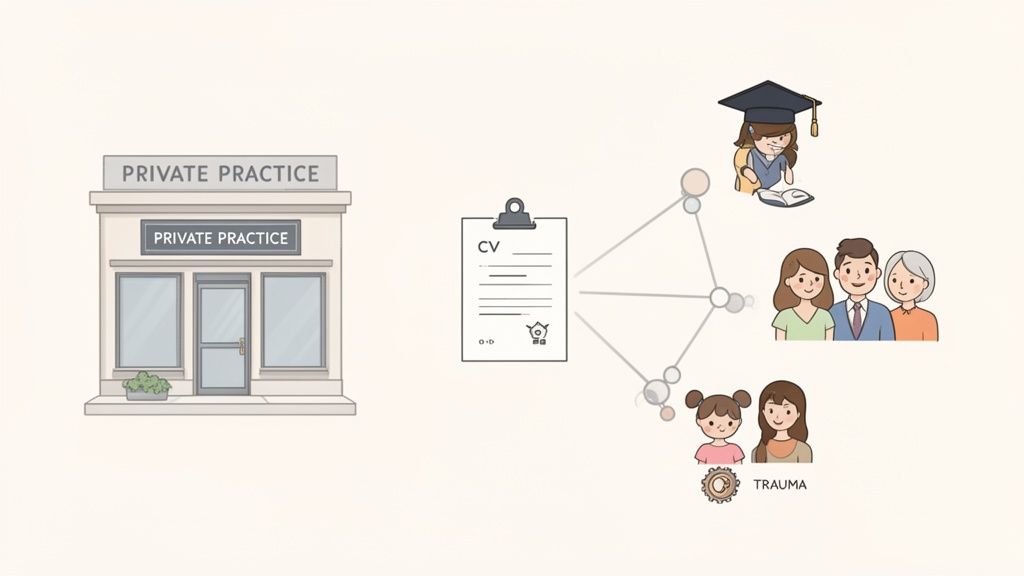
You’ve done the hard yards, completed your training, and now you’re officially registered. This is the moment you’ve been working towards - where all that academic study and clinical practice finally comes together. You're standing at the threshold of your professional life, and a whole landscape of career opportunities is opening up.
The first steps you take now are crucial. They'll help shape your professional identity and lead you toward the areas where you can make the most meaningful impact. For many newly qualified therapists, the journey begins in a structured environment that offers ongoing support and supervision, which is absolutely invaluable in your first few years.
Exploring Diverse Employment Settings
Your qualification is a key that unlocks doors to a wide variety of work environments. Each setting comes with its own unique experiences, challenges, and rewards. Remember, your skills are highly transferable, so you’re not locked into one path.
Take a look at some of the main avenues available:
- Public Health (Te Whatu Ora): Working in the public health system often means you’ll be part of a multidisciplinary team, collaborating with doctors, nurses, and other specialists. It’s a fantastic way to get exposure to a broad range of client issues and complex mental health needs.
- Non-Profit Organisations: If you're mission-driven, a role at a community agency or non-profit could be a perfect fit. These organisations often focus on specific populations, like youth, refugees, or people dealing with addiction, giving you a chance to make a direct impact.
- Educational Institutions: Schools and universities are increasingly hiring therapists to support student wellbeing. This work can involve everything from one-on-one counselling to running workshops and helping foster a supportive learning environment.
- Private Practice: For those with an entrepreneurial streak, setting up your own practice is often the long-term dream. It offers incredible autonomy but also demands solid business skills on top of your clinical expertise.
Crafting a Standout Professional Profile
Breaking into the field takes more than just a qualification; you need to show potential employers what you bring to the table. Your CV and how you present in an interview are your most powerful tools.
Think of your CV as a clinical document, not just a list of jobs. For every placement or relevant role, describe the types of clients you worked with, the therapeutic models you applied, and the specific skills you honed. Use strong, active verbs like "assessed," "facilitated," "developed," and "collaborated" to bring your experience to life.
When it comes to interviews, be prepared for scenario-based questions. They’re less about testing what you know and more about understanding how you think and act.
An interviewer might ask, "Describe a time you faced an ethical dilemma with a client and how you navigated it." They're looking for insight into your thought process, your grasp of professional boundaries, and your ability to uphold ethical practice, even under pressure.
The Value of Finding Your Niche
While it’s great to be a generalist when you start out, developing a specialisation over time will deepen your expertise and make you a more sought-after professional. A niche allows you to focus your ongoing professional development and become the go-to expert in a specific area.
As you gain experience, you’ll likely find yourself drawn to certain client groups or therapeutic approaches.
Some potential areas of specialisation include:
- Working with children and adolescents
- Couples or family therapy
- Trauma and recovery
- Grief and loss counselling
- Addiction services
Deepening your skills in a particular modality is a powerful way to build your niche. For example, undertaking essential training in specific therapeutic modalities like ERP Therapy can open up opportunities to work effectively with clients facing specific challenges, like OCD. This kind of focused learning is key to honing your craft.
Considering Private Practice
For many therapists, running their own private practice is the ultimate career goal. It offers the flexibility to build a service that truly reflects your professional values. But it also means you’re not just a therapist anymore - you’re a business owner.
Before you take that leap, you'll need a firm grasp of business fundamentals, from marketing and financial management to your legal obligations. It’s an incredibly rewarding path, but it's a major undertaking that most therapists build towards after gaining several years of solid experience in other settings.
If private practice is a long-term goal, building a strong foundational understanding of the field is a great place to start. Exploring a Diploma in Psychology and Counselling can offer valuable insights as you map out your future career direction.
Common Questions About Becoming a Therapist
Thinking about becoming a therapist is a huge step, and it’s completely normal for your head to be buzzing with practical questions. It's a massive commitment of time and money, so getting clear answers is the first step toward making a decision you feel good about.
Let’s walk through some of the most common queries we hear from aspiring therapists.
Can I Become a Therapist with an Online Degree?
This is a big one, especially with the flexibility of online learning. While online courses are a brilliant way to dip your toes in, build foundational knowledge, and confirm that this path is right for you, you can't get fully registered with an online-only degree in New Zealand.
Regulatory bodies like the NZ Psychologists Board and the NZAC are very specific about this. They mandate qualifications from universities that offer hands-on, supervised clinical training. This practicum component is non-negotiable - it’s where theory meets reality and you learn to work with real people. It simply can't be replicated in a purely online format.
So, think of online study as your launchpad, but be prepared for on-campus university education to earn your formal qualifications.
How Much Does It Cost to Become a Therapist in NZ?
Let's be upfront: the financial investment is significant. The total cost can swing quite a bit depending on your chosen university, the specific programme, and whether you're studying full-time or part-time.
You’ll need to budget for several key stages:
- Undergraduate Tuition: Your initial three-year bachelor's degree.
- Postgraduate Tuition: This is for a two-to-three-year Master's or postgraduate diploma, and the annual fees are often higher than for your undergrad.
- Extra Costs: Don't forget to add in student levies, textbooks, professional membership fees, and even potential travel or accommodation costs for your clinical placements.
A conservative estimate for the whole academic journey could land anywhere between NZD $30,000 to over $70,000. That figure doesn't even include living costs or the income you might miss out on during unpaid practicums, so careful financial planning is an absolute must.
How Long Does the Entire Process Take?
Patience is definitely a virtue on this career path. From your first day of undergrad to the moment you’re a fully registered therapist, you’re looking at a minimum of six to eight years. It’s a marathon, not a sprint.
Here’s a rough breakdown of that timeline:
- Undergraduate Degree: 3 years
- Postgraduate Qualification: 2-3 years
- Supervised Practice/Internship: 1-2 years
This long-term commitment is there for a reason. It’s designed to build the deep theoretical knowledge, sharp clinical skills, and professional maturity you need to work ethically and effectively with people at their most vulnerable.
Becoming a therapist is a long-term professional journey, not just an academic one. Each stage - from your first psychology lecture to your final supervised session - is designed to build the resilience and competence you'll need for a long and impactful career.
What Personal Qualities Are Important for a Therapist?
While your degree gets your foot in the door, it’s your personal qualities that will define you as a great therapist. This work is deeply human, and your ability to genuinely connect with people is just as crucial as knowing your therapeutic models inside and out.
Beyond the textbooks, the best therapists are always working on themselves. They cultivate qualities like:
- Deep Empathy: The ability to truly understand and share someone’s feelings without casting judgement.
- Exceptional Listening Skills: This is about hearing not just the words, but the emotions and unspoken messages behind them.
- Patience and Resilience: You have to accept that progress can be slow and find the inner strength to hold space for people during incredibly tough sessions.
- Strong Ethical Boundaries: Knowing how to create and maintain a professional relationship that is safe, therapeutic, and confidential is fundamental.
A real desire to help others is what gets you started, but a commitment to your own self-awareness and personal growth is what will sustain you in the long run. This is a career that asks you to keep learning, not just about your clients, but about yourself, too.
Are you ready to explore the first step on your path to a rewarding career? At Get Course New Zealand, we offer a range of foundational online courses that can help you build knowledge and confirm your passion before you commit to a university degree. Discover flexible study options that fit your life by exploring our courses today at https://getcourse.co.nz.
Find Your Course
Compare courses across every field we write about, and enquire in under a minute.