%20(1).png)
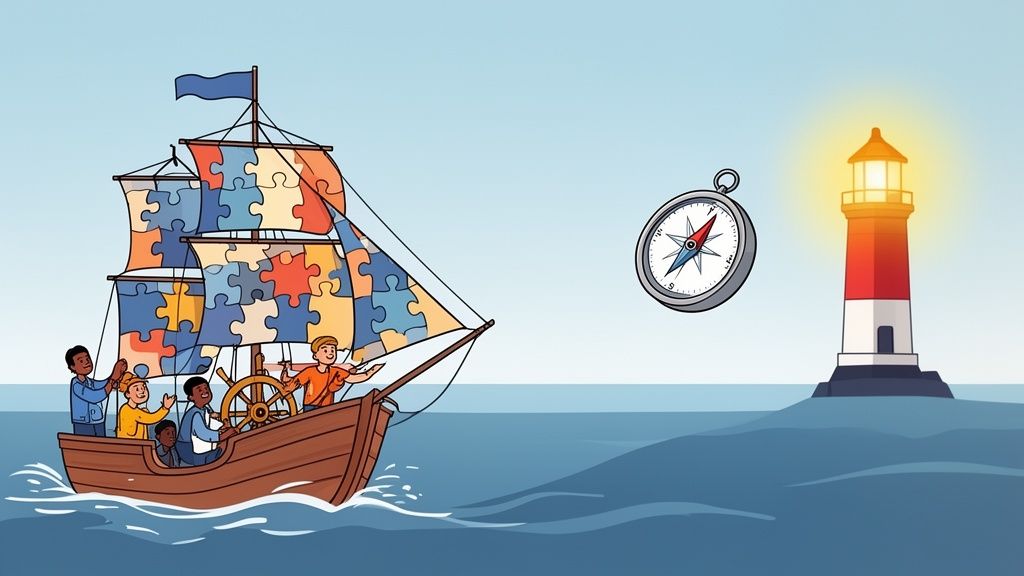
Change management is really about one thing: people. It’s the structured, thoughtful approach organisations take to guide their teams—and the entire business—from where they are today to where they need to be tomorrow. It's not just about rolling out new software or shuffling teams around; it’s about managing the human side of change to make sure a project actually succeeds.
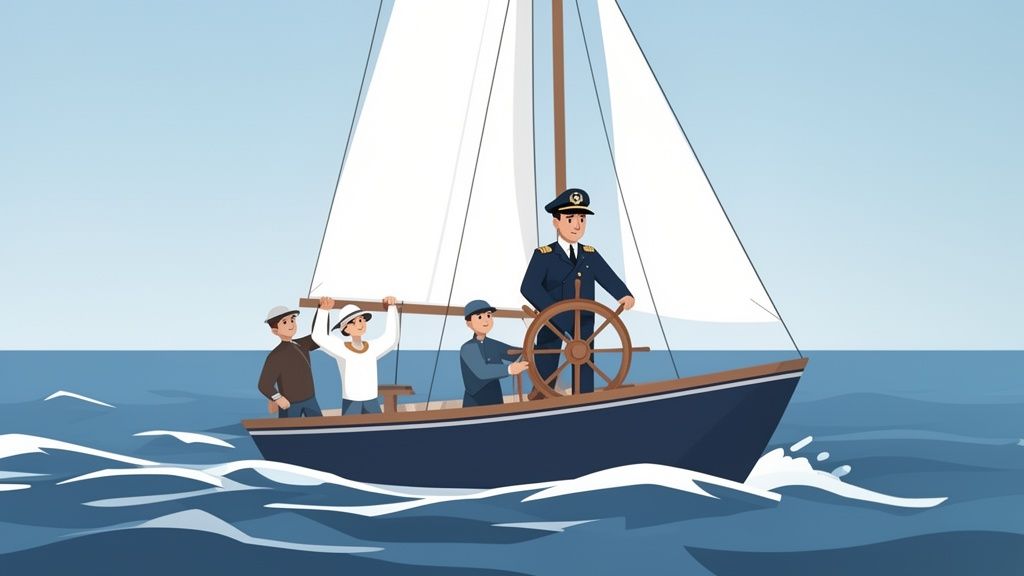
Imagine your organisation is a large sailboat heading for a specific port. Suddenly, a storm brews, or a navigator spots a faster, safer route. The captain can’t just yank the wheel and hope for the best. For the ship to change course safely and efficiently, the entire crew needs to be on board—literally and figuratively.
They need to understand why the heading is changing, learn how to adjust the sails for the new conditions, and work together to navigate the unfamiliar waters. Change management is the art of preparing that crew. It ensures everyone knows the reason for the new direction, has the skills to perform their new tasks, and stays motivated throughout the voyage. Without this careful attention to the people, even the most brilliant strategy is dead in the water.
At its heart, change management is a crucial business skill that smooths out the bumps and maximises the payoff of any big company shift. It tackles the very human reactions to change—like resistance, confusion, and fear—by offering clear communication, genuine support, and a steady hand.
This structured process helps organisations get where they're going by focusing on a few key areas:
Change isn't just about installing new software or redrawing an org chart. It's a deeply human process. It needs empathy, clear communication, and a compelling vision to guide people from what they know to what's next.
Ultimately, it all comes down to enabling people. Most projects don’t fail because the technology was bad; they fail because people didn’t embrace it. To really get a grip on what change management involves, you have to understand the foundational pieces it works with, like organizational design. It's the framework that keeps the human element at the very centre of the process, turning potential chaos into a structured, successful evolution.
Let's be blunt: just dropping a new piece of technology or a different process onto your team without a proper plan is a recipe for disaster. Effective change management is the bridge that connects a brilliant idea on a whiteboard to a successful, everyday reality in the workplace. Without it, even the most promising projects lose steam, burn through resources, and ultimately collapse under the weight of confusion and resistance.
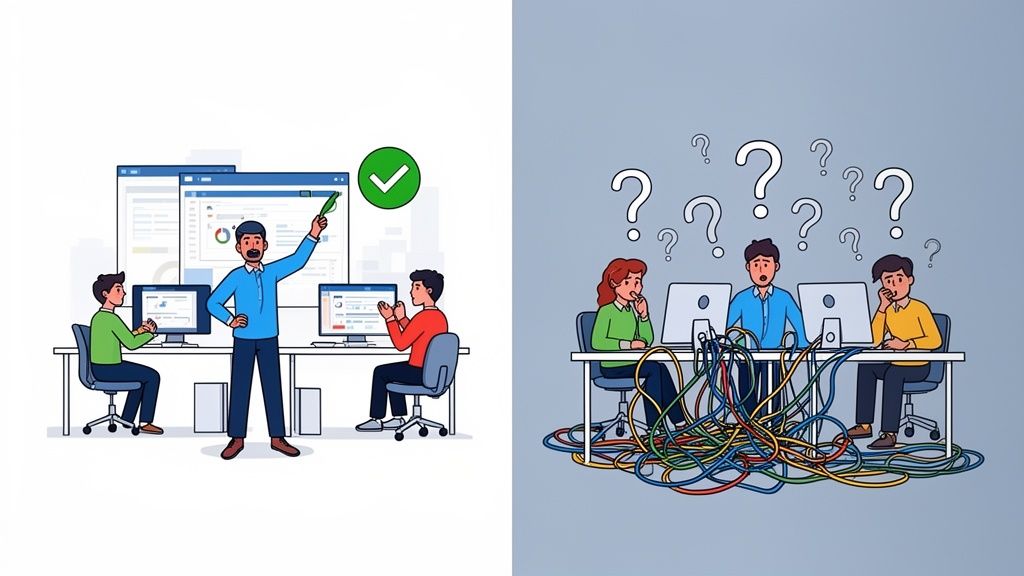
Think about it. An organisation invests in powerful new software meant to make everyone's lives easier. But with poor change management, employees get a single email, a dense user manual, and no real clue why this is even happening. The result is painfully predictable: productivity tanks as people wrestle with an unfamiliar system, morale plummets, and many quietly go back to their old, comfortable ways. That expensive new tool ends up gathering digital dust, a monument to a failed initiative.
Now, let's replay that same software rollout, but this time with a solid change management strategy in place. Weeks before launch, leaders start communicating a clear vision, explaining what’s in it for the company and for individual teams. A few enthusiastic "change champions" are brought on board to offer peer support, and training sessions are tailored to what different departments actually need.
When the software goes live, there's a proper support system ready to handle questions and gather feedback. The difference is night and day:
A project is only truly successful when its intended users embrace, adopt, and become proficient in the new way of working. Neglecting the human element isn't just a minor oversight—it's the primary reason initiatives fail to deliver their expected return on investment.
The connection between dedicated change management and hitting your project goals is undeniable. In fact, research consistently shows that projects with 'excellent' change management are nearly 8 times more likely to meet or exceed their objectives than those with 'poor' practices.
Despite this, a staggering 70% of change programmes fall short of their goals, mostly due to employee resistance and a lack of visible support from management. This data paints a very clear picture: change management isn’t some fluffy "nice-to-have" expense. It is a direct driver of project success and ROI.
A key part of this is knowing how to improve employee engagement, because a team that feels involved and supported is a team that will get behind the change, not fight against it.
Understanding why change management matters is one thing, but knowing how to actually pull it off is another challenge entirely. To get from theory to action, smart leaders lean on structured frameworks. Think of them as roadmaps that guide teams through the fog of transition, making sure no critical steps get missed along the way.
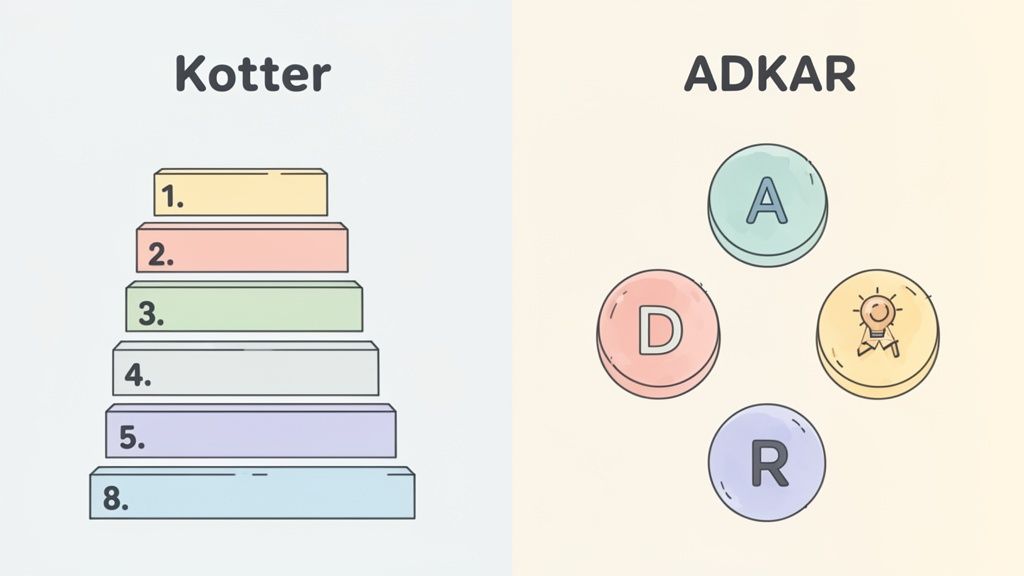
Two of the most trusted and battle-tested frameworks out there are Kotter's 8-Step Process for Change and the Prosci ADKAR Model. While they both chase the same goal—a successful, lasting change—they tackle the problem from different angles. Kotter’s model is a top-down, big-picture strategy for the whole organisation, while ADKAR zooms in on the personal journey each individual has to make.
Developed by Harvard Professor John Kotter, this model is all about building momentum for large-scale change. Its core idea is simple: to make a big shift stick, you first have to create a powerful sense of urgency and then build a strong coalition of support to see it through.
Imagine a retail company deciding to shut its physical stores and go 100% online. Here's how they'd use Kotter's model:
While Kotter provides the grand strategy, the ADKAR model gets personal. It zeroes in on the building blocks of individual change because it recognises a simple truth: an organisation doesn't change until its people do.
ADKAR is an acronym for the five key outcomes every single person needs to achieve for a change to truly take hold:
While organisational strategy sets the direction, true change only happens when individuals make a personal decision to come along. The ADKAR model provides the blueprint for enabling that personal journey, one person at a time.
This model is a fantastic diagnostic tool. If employees aren't adopting a new software system, is it because they lack the Knowledge (they haven't been trained) or the Desire (they don't see what's in it for them)? Pinpointing that specific gap lets leaders offer targeted support that actually works.
At a glance, it's easy to see how these two powerhouse frameworks differ. Kotter’s process is a strategic, top-down sequence designed to drive organisational transformation, while ADKAR is a bottom-up model focused on ensuring individuals are ready, willing, and able to adopt new ways of working.
The table below breaks down their key differences.
Ultimately, the most successful change initiatives don't choose one over the other. They use them together. Kotter’s framework can steer the ship, while ADKAR ensures every single crew member is on board, knows their role, and is ready for the voyage ahead.
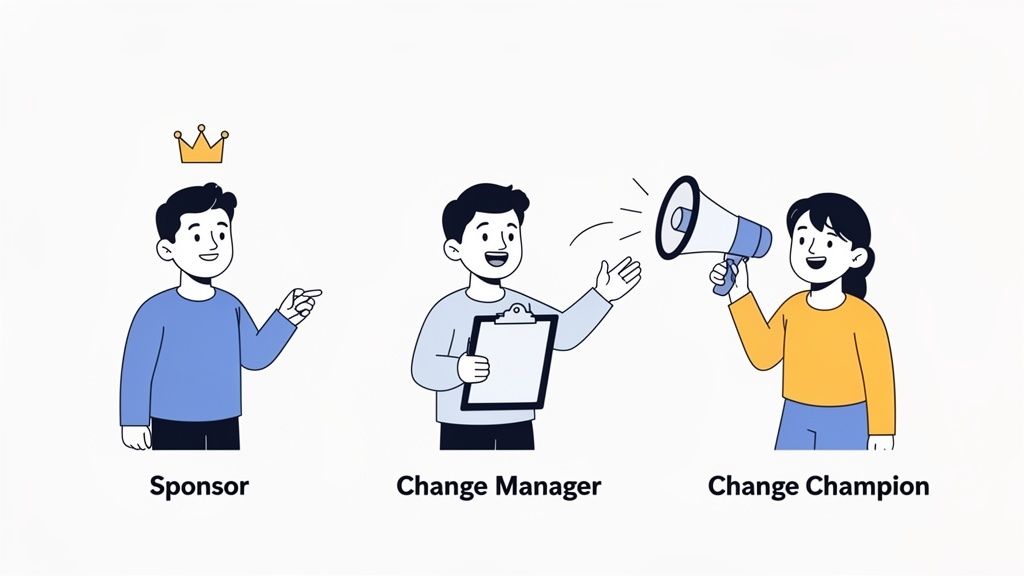
Successful change isn’t the work of one person. It’s a team effort, with different players taking on critical roles to drive things forward. Think of it like a movie production – you need a producer, a director, and lead actors to create the final picture.
Understanding who does what provides a clear blueprint for turning a change strategy into a real-world success. Without this structure, even the best plans can fall apart from a simple lack of ownership and direction. By defining these roles, an organisation creates the human infrastructure needed to guide everyone through the transition smoothly.
Every successful change initiative needs a Sponsor. This is usually a senior leader or executive who has the clout to champion the change and secure the resources needed to make it happen. They are the project's most visible and vocal supporter.
The Sponsor’s main job is to build commitment from the top down. Their responsibilities include:
A change initiative without an active and visible Sponsor is like a ship without a captain. Their leadership provides the legitimacy and authority needed to navigate resistance and keep the project on course.
While the Sponsor sets the vision, the Change Manager is the director who handles the day-to-day execution. This person (or team) is responsible for developing and implementing the change management plan itself. They focus squarely on the people side of things, ensuring employees are prepared and supported.
The Change Manager’s role is tactical and hands-on. They work closely with project teams and often have ties to departments like HR. Learning more about what is human resources management can provide great context for this role's people-centric duties. Key tasks involve creating communication plans, designing training programmes, and gathering feedback to address employee concerns.
Finally, we have the Change Champions. These are the enthusiastic and influential employees from various levels and departments who genuinely believe in the change and advocate for it among their peers. They are the lead actors who bring the story to life on the ground.
These individuals build momentum from the bottom up by translating the official vision into relatable terms for their colleagues. They also act as a vital feedback loop, bringing frontline concerns back to the Change Manager and helping to bust myths and rumours before they can spread.
Even the most meticulously planned change initiatives can hit a snag. Knowing the common pitfalls isn’t about being pessimistic; it's about being smart and developing the foresight to steer clear of trouble. So many organisations fall into the same traps, turning promising projects into expensive learning curves.
Often, these mistakes happen when the human side of change is overlooked. For example, a classic blunder is just assuming everyone gets why a change is happening without actually communicating it over and over. By spotting these challenges early, you can turn potential roadblocks into opportunities to make your approach even stronger.
One of the quickest ways to lose buy-in is through patchy or poor communication. When your team doesn't understand the real reason for a change, they tend to fill in the blanks themselves—usually with rumour and anxiety. A single all-staff email doesn’t count as a communication strategy; it’s more like a starting gun for confusion.
To get ahead of this, leaders need to build a clear, compelling case for the change and share it relentlessly across different channels. It’s not just about explaining what is changing, but more importantly, why it’s happening and painting a picture of what the future will look like.
A void in communication is inevitably filled by misinformation. Proactive, transparent, and consistent messaging is the only way to ensure the official narrative is the one that takes root.
Resistance isn't just people being difficult; it's a completely natural human reaction to uncertainty and upheaval. Dismissing it as negativity or simply ignoring it is a massive mistake that has torpedoed countless projects. Resistance is actually valuable data—it tells you what people are afraid of losing, where the plan is fuzzy, or where more support is needed.
This is where active listening becomes critical. Use surveys, feedback sessions, and one-on-one chats to truly hear people's concerns. Tackling these issues head-on shows you respect your team and helps you fine-tune the change plan. Good change management plans for these hurdles from the start, which ties in closely with the principles in our guide on what is risk management.
Momentum can be a fragile thing. After a successful launch or hitting an early milestone, the temptation to tick the box, declare victory, and move on is huge. But real, lasting change only happens when the new ways of working become second nature.
Celebrating small wins is fantastic for morale, but leadership needs to keep reinforcing the change long after the initial buzz has faded. This means providing ongoing training, recognising people who are embracing the new processes, and weaving the change into the very fabric of the organisation’s culture. Without that sustained push, teams almost always slide back into old habits, and all that initial effort goes to waste.
If you're looking to boost your professional value or become the person who leads change instead of just reacting to it, developing a specific set of skills is your clearest path forward. The demand for leaders who can confidently guide teams through transformation is huge, creating real opportunities for anyone with the right expertise. Organisations aren't just looking for people who know the theory; they're actively searching for professionals who understand what change management looks like on the ground.
Today’s business leaders know they need to get their teams ready to handle constant change. According to PwC's 2023 CEO Survey, a massive 86% of CEOs are pouring resources into upskilling their workforce. And what’s at the top of the list? Developing leadership is the number one priority for 92% of organisations. This tells you everything you need to know about the demand for people with proven change capabilities. You can dig deeper into these numbers in the full PwC report on their website.
To really make a mark in this field, you need a smart mix of people skills and strategic thinking. It’s never just about the process; it’s about the people going through it. These skills feed into each other—strong communication makes you a more empathetic leader, and sharp analytical thinking strengthens your strategic planning.
Here are the essential skills that truly define a great change practitioner:
A successful change leader is part strategist, part communicator, and part coach. They build the roadmap for the organisation while also holding the hands of the individuals walking the path.
Building these skills often starts with some structured learning. Short online business courses can give you a solid grounding in change principles and the practical tools you’ll use every day. Many of these skills also overlap with other leadership roles. For instance, you’ll find a lot of common ground when you learn how to become a project manager. By focusing on these key areas, you can create a clear and accessible roadmap to start or advance your career in this vital field.
Even after you get your head around the models and roles, a few practical questions always seem to pop up. When you start picturing how this all works in the real world, things can get a bit fuzzy. Let’s clear that up with some straight answers to the most common queries.
It’s a classic question, and for good reason. They’re two sides of the same coin, and you can’t have one without the other if you want a project to succeed.
Project management is all about the technical side of the change. It focuses on designing, building, and delivering a new system or process. Think timelines, budgets, resources, and tasks – it’s the nuts and bolts of getting the "thing" done.
On the other hand, change management is purely focused on the people side. Its entire job is to help employees understand, get on board with, and actually use the new solution. A project can be delivered perfectly on time and under budget, but if no one uses what was built, it's a failure. Project management builds it; change management makes sure it gets used.
A simple way to think about it: Project management builds the shiny new bridge. Change management gets everyone to stop taking the old ferry and confidently walk across it.
Absolutely. The core ideas of guiding people through change aren’t just for massive corporations. They're universal and scale down perfectly. A small business might not have a dedicated ‘Change Manager,’ but the owner or a team leader can apply the same principles to great effect.
In a smaller, tight-knit team, these actions can have a powerful and immediate impact. It could be as simple as:
A great way to start is by building a solid foundation of the key concepts. Many online business or leadership courses have excellent modules on change management that offer a structured and easy-to-digest introduction to the big ideas and models.
If you’re looking for more hands-on experience, keep an eye out for opportunities in your current job. Putting your hand up to be a ‘change champion’ for an upcoming project is a fantastic way to see the principles in action and start building practical skills that are valuable in any role.
At Get Course New Zealand, we connect you with flexible online courses designed to build the in-demand skills you need to lead with confidence. Explore our business and leadership options today. Find your perfect fit at https://getcourse.co.nz.


